Table of Contents
- Intro
- Why Renting in Omaha Can Sometimes Be the Smarter Choice
- How Mortgage Interest Works and Why Equity Builds Slowly at First
- The True Cost of Homeownership in Omaha
- Budgeting Beyond Your Lender’s Preapproval Amount
- When Renting in Omaha Makes More Financial Sense
- New Construction vs. Existing Homes in Omaha
- Emotional and Relationship Factors in the Rent vs. Buy Decision
- A Practical Checklist for Deciding Whether to Rent or Buy in Omaha
- Understanding the ROI of Buying a Home in Omaha, NE
- Common Rent vs. Buy Mistakes Omaha Buyers Make
- Final Thoughts on Renting vs. Buying in Omaha
- Frequently Asked Questions About Renting vs. Buying in Omaha, NE
Intro
The rent vs buy in Omaha question has become more complicated heading into 2025. High interest rates, rising insurance costs, and general market uncertainty mean the old rules of thumb do not always apply. Renting is not automatically “throwing money away,” and buying is not always the financial win it once seemed. This guide explains the tradeoffs, gives practical numbers, and walks through real-life situations so you can decide which side of the rent vs buy in Omaha equation makes sense for you.
Why Renting in Omaha Can Sometimes Be the Smarter Choice
Rent provides three things people often overlook: shelter, stability, and flexibility. Those are real benefits. With renting you know the maximum you will pay for housing each month—your rent. With buying, the monthly payment is the floor; taxes, insurance, maintenance, and other costs can push that number up.
Rent caps your monthly cost
When you rent, the most you pay in any month is the rent amount. When you own, the least you pay is your mortgage payment. But other line items—property taxes, homeowner insurance, mortgage insurance if your down payment is under 20 percent, HOA fees, and maintenance—can and do rise.
Maintenance matters (really)
A simple rule of thumb for maintenance:
- Newer homes:~1% of purchase price per year
- Older homes (20+ years):~2% to 4% or more per year
Example: on a $300,000 house you should budget about $3,000 per year for maintenance in a newer property and roughly $9,000 per year for an older one. That’s not optional; it’s real money that many first-time buyers forget to save.
How Mortgage Interest Works and Why Equity Builds Slowly at First
Interest on a standard 30-year mortgage is front-loaded. Early on most of your principal and interest payment goes to interest, not principal. People expect equity to grow quickly, but the amortization schedule tells a different story.
Numbers that matter
Consider a 30-year loan for $300,000 at 6.5 percent. Monthly principal and interest would be about $1,896.20.
After one year:
- Amount applied to principal: approximately $3,353
- Amount applied to interest: approximately $19,410
- Loan balance after 12 months: about $296,647
Over the life of that loan the total interest paid would be approximately $382,633, meaning the total cost to borrow the $300,000 is roughly $682,633. Those are eye-opening numbers when considering the rent vs buy in Omaha question.
Small extra payments go a long way
Adding a modest amount to your monthly principal payment accelerates payoff and cuts interest dramatically. For the example above, an extra $160 a month (rounded from dividing the monthly P&I by 12) applied to principal could shorten the loan by about six years. That turns a 30-year commitment into roughly 24 years and saves a significant chunk of interest.
The True Cost of Homeownership in Omaha
A fixed-rate mortgage only fixes the interest rate. Your payment still moves if taxes or insurance rise. In Nebraska, home prices tend to be reasonable compared with national averages, but property taxes and insurance rates are often higher than people expect. When thinking about rent vs buy in Omaha, factor in rising insurance premiums, potential reassessments, and local tax changes.
New construction tax reassessment
If you build, your first year of taxes often covers the lot only. The following year the county reassessor typically taxes the improvement (the house itself), which can create a noticeable tax increase. Many buyers are surprised by that jump if they did not budget ahead.
Budgeting Beyond Your Lender’s Preapproval Amount
Preapproval gives a maximum price based on income, assets, and liabilities, but it does not know your tolerance for risk or whether you want an emergency fund. Lenders and some agents may push the max number, but nobody cares about your budget more than you do.
Why you should not max out your preapproval
- Homes near the top of your budget tend to be older and need more maintenance.
- If you deplete savings for down payment and closing costs, you won’t have reserves for repairs or emergencies.
- Financial stress from an oversized mortgage can impact relationships and long-term stability.
If your preapproval allows you to buy a $400,000 home but you’re uncomfortable with the monthly payment or lack reserves, choosing a lower-priced home or renting longer might be wiser.
When Renting in Omaha Makes More Financial Sense
The rent vs buy in Omaha decision depends on lifestyle and timeline. Renting can be the right choice when your life or work situation is uncertain.
Relocating for a job
Renting during your first year in a new city lets you:
- Learn neighborhoods and traffic patterns
- Decide whether you want new construction or existing stock
- Avoid rushing into a 30-year mortgage before you understand local schools, commute times, and community fit
For example, many people who relocate to Omaha rent for a year, then decide where in the metro they want to buy. Building a home often takes 9 to 12 months; renting gives the breathing room to plan without pressure.
Seasonal living or long trips
If you plan to spend winters abroad, owning a vacant house in an Omaha January is risky. A furnace failure or frozen pipes can lead to tens of thousands of dollars in damage, and insurance may not cover prolonged vacancy. In cases like this, renting a low-maintenance condo or apartment is often safer and cheaper.
Split-time workers and two households
If your job keeps you in Omaha only half the month, owning a second property or managing two households—mowing lawns, shoveling snow, maintaining utilities—can be a headache. Renting or buying a low-maintenance condo may be a better match.
New Construction vs. Existing Homes in Omaha
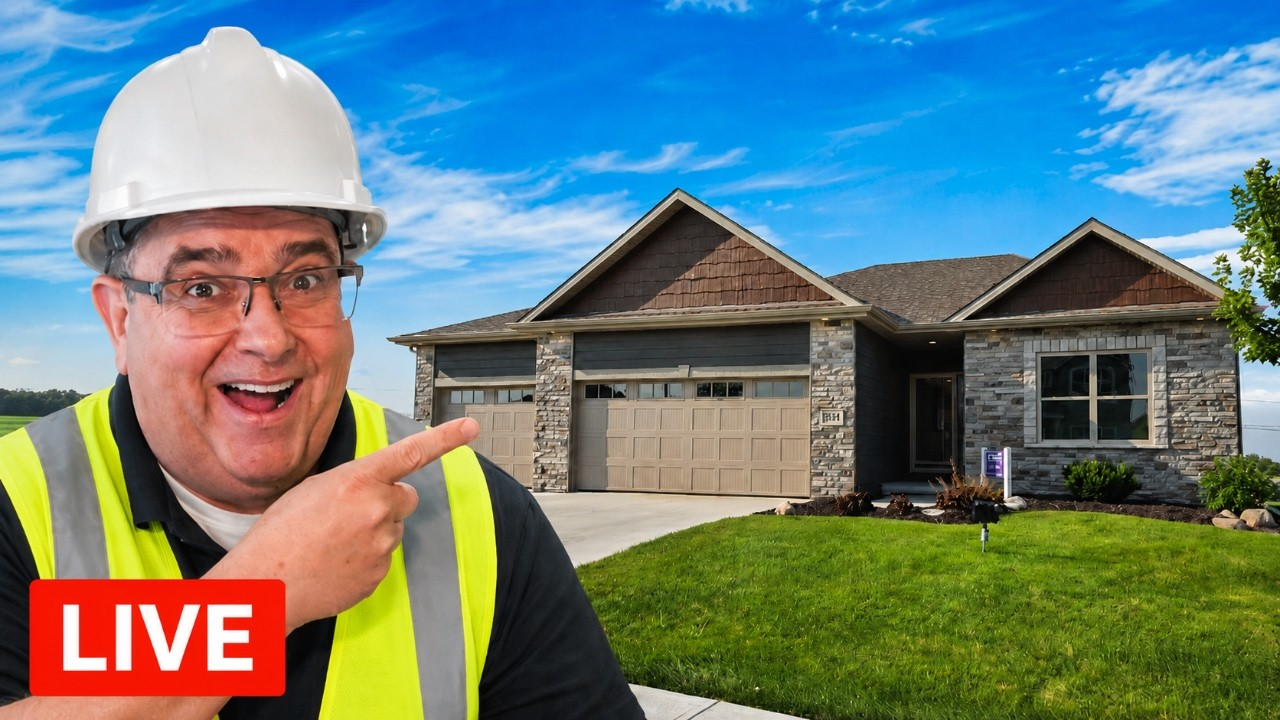
Omaha offers compelling new construction pricing compared with many cities. You can often build a three-bedroom, two-bath with a two-car garage on a quarter acre for starting around $325,000. That changes the rent vs buy in Omaha conversation for many buyers.
Builders to know
Two high-volume builders in the market are DR Horton and Celebrity Homes. Their approaches differ:
- DR Horton: Faster build times, fewer options, lower complexity—good for buyers who want quick delivery.
- Celebrity Homes: Builds across the metro with homes at different stages—some listings are at drywall or basement stage, allowing faster completion plus selection choices.
Not all new construction appears on popular search portals like Zillow. Working with someone who knows local builder inventory can surface opportunities that search engines miss.
Emotional and Relationship Factors in the Rent vs. Buy Decision
Buying a home is not just a financial decision. It’s an emotional and relational one too. Major life events—marriage, cohabitation, divorce—change what makes sense.
Getting married or moving in together
Rushing to sell your home to move in with someone new can be risky. If the relationship ends soon after, you may be left without a place to return to. Consider renting for at least a year after a major relationship change before making a new long-term housing commitment.
Divorce and housing choices
I have seen buyers stretch to their maximum purchase price and later experience severe financial stress that contributes to relationship breakdown. If you’re coming out of a divorce, give yourself at least a year before buying again with a new partner. That time helps you rebuild reserves and make thoughtful decisions.
A Practical Checklist for Deciding Whether to Rent or Buy in Omaha
Use this checklist to evaluate your situation before moving from renting to buying.
- Do you have an emergency fund after down payment and closing costs?
- Have you budgeted annual maintenance (1% for new, 2–4%+ for older homes)?
- Are you comfortable with your projected monthly payment if taxes and insurance increase?
- Is your job situation stable in Omaha for at least 3–5 years?
- Have you explored new construction options that may be more affordable than expected?
- Have you accounted for potential reassessment after building a new home?
- Are you prepared to pay a little extra on principal each month to shorten the loan and save interest?
If you’d like help weighing the pros and cons for your specific situation, reach out—I’m happy to run the numbers with you. Call or text at 402-490-6771 to schedule a free 1‑on‑1 relocation strategy call.
Understanding the ROI of Buying a Home in Omaha, NE
Buying returns value beyond simple equity accumulation. Homeownership provides stability, predictability of a fixed mortgage principal and interest component, and the freedom to customize a property. But the immediate financial return can be small in the first years because of front-loaded interest and carrying costs. When comparing rent vs buy in Omaha, always run the numbers for your specific scenario, including:
- Projected appreciation (conservative)
- Monthly carrying costs (mortgage, taxes, insurance, HOA, utilities, maintenance)
- Opportunity cost of down payment and cash reserves
- Estimated selling costs and timing if you plan to move within a few years
Common Rent vs. Buy Mistakes Omaha Buyers Make
- Buying because they are approved for more than they can comfortably afford
- Skipping or waiving inspections just to win a bid, only to face large repairs after closing
- Underestimating property taxes and insurance increases
- Running out of emergency savings during the purchase
- Assuming every market will keep rising—markets can flatten or dip
Final Thoughts on Renting vs. Buying in Omaha
There is no one-size-fits-all answer to rent vs buy in Omaha. The right move depends on your finances, timeline, lifestyle, and risk tolerance. Renting is often the smarter choice when you need flexibility, time to learn the market, or are managing complex life transitions. Buying can make sense when you plan to stay, have reserves, and choose a property that fits your budget and maintenance capacity.
Time is one of your best assets. Renting for a year can give you the experience and clarity to buy the right home rather than the first one you see.
Frequently Asked Questions About Renting vs. Buying in Omaha, NE
When does renting make more sense than buying?
Renting usually makes sense if you are relocating and need time to learn neighborhoods, if you expect to be in the area less than three years, if you do not have emergency funds after closing costs, or if your lifestyle is seasonal or split between locations. Renting caps your out-of-pocket housing cost and avoids maintenance risk.
How much should I budget for home maintenance?
As a rule of thumb, budget roughly 1 percent of purchase price per year for newer homes and 2 to 4 percent or more for older homes (20 years or older). For a $300,000 home that translates to about $3,000 per year for newer properties and $6,000 to $12,000 for older properties depending on condition.
Is a 30-year fixed mortgage truly fixed?
The interest rate on a 30-year fixed mortgage is fixed, but your total monthly housing bill can change. Property taxes and homeowner insurance can increase, and mortgage insurance may apply if your down payment is under 20 percent. Plan for future increases when comparing rent vs buy in Omaha.
Should I rent for a year after relocating to Omaha?
Renting the first year is a sound strategy for most relocations. It gives you time to learn the city, traffic, and neighborhoods; decide on new construction versus an existing home; and build local knowledge that online searches alone cannot provide.
My lender preapproved me for a higher amount—should I use it?
Use preapproval as a maximum, not a target. Make sure you keep emergency savings after closing and choose a monthly payment you can comfortably manage even if taxes or insurance increase. It is safer to buy below your preapproved maximum if it preserves financial breathing room.
Are new construction homes cheaper in Omaha?
Omaha provides competitive new construction pricing compared with many markets. Entry-level new builds can start around $325,000 for a three-bedroom, two-bath with a two-car garage on a quarter acre, though prices vary by builder, lot, and options. Exploring local builders beyond online portals can reveal options not listed on major search sites.
Read More: Best Areas to Live in Omaha, NE: Neighborhoods, Suburbs, Schools & Commutes