Table of Contents
- Why Omaha Feels Like a Smart Trade-Off
- The Real Pros of Living in Omaha
- The Real Cons of Living in Omaha
- How to Tell If Omaha Fits Your Lifestyle and Budget
- Picking the Right Omaha Neighborhoods
- Bottom Line
- FAQs About Pros and Cons of Living in Omaha
Why Omaha Feels Like a Smart Trade-Off
The phrase pros and cons of living in Omaha captures the core idea: Omaha gives you a high quality of life for the money, but it asks for some tradeoffs. If you want practical everyday living, predictable commutes, and housing that stretches your dollars, Omaha makes a lot of sense. If you want year-round mild weather, nonstop nightlife, or transit-first living, you’ll be making concessions.
Think of the pros and cons of living in Omaha as a balanced checklist rather than a sales pitch. This city is about easing day-to-day friction more than delivering nonstop spectacle. That approach is the reason many people relocating from pricier metros call Omaha a reset — more space, more choices, and fewer compromises.
The Real Pros of Living in Omaha
Pro 1 — Strong, livable day-to-day quality of life
What it is: Omaha runs. Routines work. Errands, school drop-offs, and basic life logistics rarely feel like a struggle.
What it feels like: You can get across town without losing your afternoon.
Local tip: Test drive your real routine. Drive your commute at rush hour and do a typical grocery run on a weekday before you commit.

Pro 2 — Affordable to reasonable housing for what you get
What it is: Homebuyers often buy more space and fewer compromises than in coastal metros.
What it feels like: It’s easier to avoid being house poor.
Local tip: Compare total monthly payments with taxes and insurance, not just purchase price. That’s where the real math shows up.
Pro 3 — A reset if you’re coming from the coast
If you relocate from California, the Pacific Northwest, or the Northeast, Omaha can feel like a budget reset. The pros and cons of living in Omaha shift in your favor when you compare what your budget buys here versus a high-cost metro. Write down three things you couldn’t afford back home; you’ll probably be able to get two in Omaha.
Pro 4 — Built for long-term, practical living
Strong parks, solid schools, and neighborhood amenities mean Omaha favors stability. The city is designed around practical quality of life rather than showy one-off attractions.
Local tip: Choose neighborhoods that put you close to your weekly pattern, not just a pretty house.

Pro 5 — More to do than you expect
There are events, restaurants, sports, and weekend options. It isn’t a nonstop party city, but if you like to get out, you’ll find plenty to do — you just need to know where to go.
Local tip: Visit on a weekend with a big event to see Omaha’s energy at its best.

Pro 6 — Strong business and job environment
Omaha has a diversified, steady employer base. That steadiness matters when you’re buying a home: low volatility makes housing decisions less risky.
Local tip: If you’re job-driven, plan your housing search around commute lanes to reduce daily friction.
Pro 7 — Low unemployment and market stability
This is not a boom-and-bust place. Employment tends to run healthy, and housing markets historically show steadier cycles than single-industry metros.
Local tip: When you want long-term resale value, consider established areas and new construction options. Builders sometimes keep inventory off major aggregator sites, so work with an agent for full access.
Pro 8 — Economic variety and resilience
Healthcare, education, transport, insurance, defense, and tech all have footprints here. A spread-out economy reduces the risk of dramatic downturns tied to one sector.
Local tip: In wobble markets, the most resilient pockets are convenient, established neighborhoods—not always the farthest new developments.
Pro 9 — Shorter commutes and manageable traffic
On average, commute times are short and traffic predictable by metro standards. That gives you back time every day.
Local tip: Traffic piles up in predictable places—interstate merges and construction zones. Choose location based on daily route, not just map distance.
The Real Cons of Living in Omaha
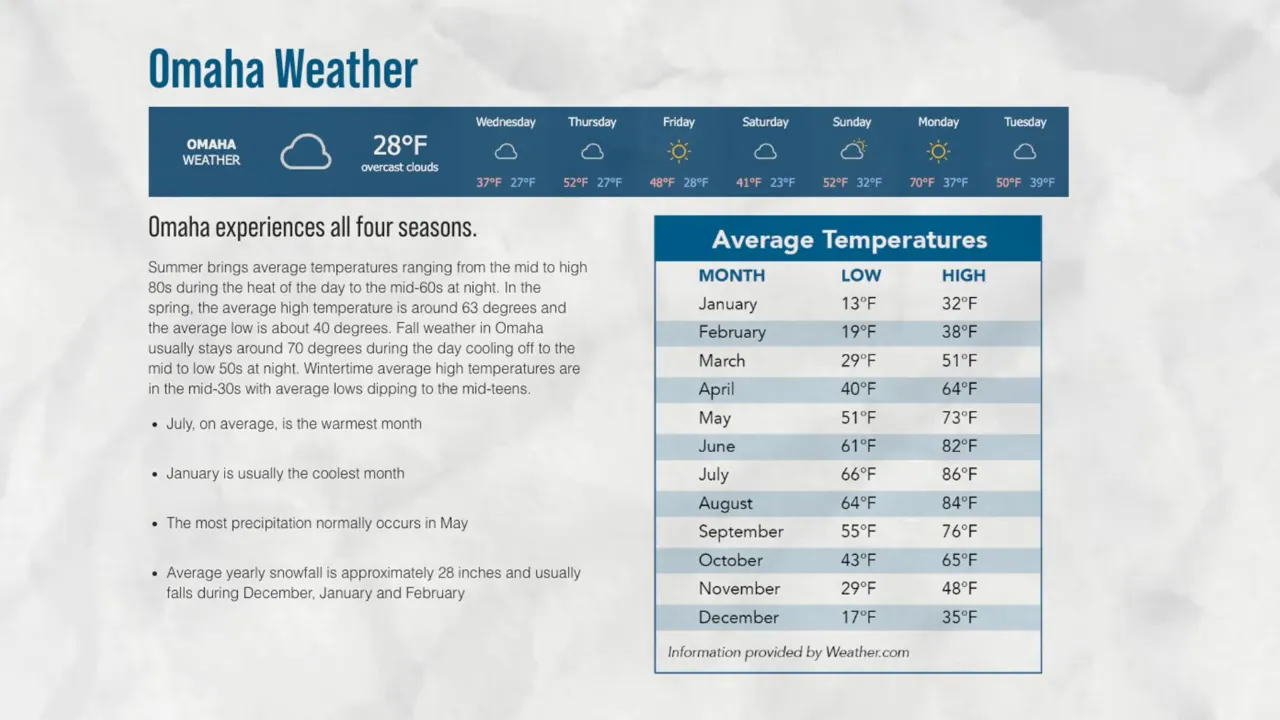
Con 1 — Weather is a real adjustment
Omaha has true four-season swings. You can see wide temperature shifts in a short time, and summer storms with high winds and tornado risk are real.
What to do: Budget for all four seasons, plan for winter car maintenance, and invest in good tires and a reliable battery.
Con 2 — Road construction feels constant
Projects are frequent and sometimes feel repetitive. Combined with freeze-thaw damage, potholes and detours are part of daily driving.
Local tip: Drive the exact time you will commute. Construction impact is location-specific.
Con 3 — Taxes can surprise people
Nebraska has property tax and state income tax components. A bargain purchase price can look less exciting once taxes are added into your monthly payment. Mill levies vary by area and newer developments sometimes carry higher levies.
Local tip: Always compare total monthly payment, not just purchase price. Expect property tax increases over time and run the numbers before deciding.
Con 4 — Nightlife is quieter than a major metro
Omaha has bars, restaurants, and live music, but it does not stay loud every night. Weekends can be lively, weekdays are typically chill.
Local tip: If nightlife matters, live close to the action. A 20–30 minute drive significantly reduces how often you go out.
Con 5 — Road conditions can be rough
Potholes and rough pavement are especially visible after winter. Over time you’ll learn which streets to avoid, but that learning curve is real for daily commuters.
Local tip: When touring, pay attention to roads between your potential home and major routes—not just the street in front of the listing.

Con 6 — Public transportation is limited
Omaha is primarily a drive-first city. Transit exists and is improving—examples include a streetcar and the ORBT rapid bus along Dodge Street—but most people rely on cars for daily life.
Local tip: If you need walkable life or want to go car-light, choose neighborhoods that realistically allow that.
Con 7 — It can feel isolated compared to larger metros
Omaha is not adjacent to another major city. Weekend hops to different large metros require longer drives or flights.
Local tip: If frequent travel matters, prioritize proximity to the airport and major highways to reduce friction.
How to Tell If Omaha Fits Your Lifestyle and Budget
Deciding whether the pros and cons of living in Omaha line up with your life requires two straightforward checks: lifestyle fit and budget fit.
Lifestyle fit checklist
- Do you value predictable routines and shorter commutes?
- Are you comfortable with four-season weather and the occasional severe storm?
- Will a quieter weekday nightlife suit you, with busier weekends?
- Is owning a car acceptable or necessary for your daily life?
Budget fit checklist
- Run total monthly payments: mortgage, taxes, insurance, HOA, utilities.
- Compare what your budget buys here versus your current metro.
- Account for property tax variations by neighborhood and likely increases.
If most of your answers lean toward "yes" on the lifestyle checklist and the math works on the budget checklist, Omaha is worth serious consideration. The pros and cons of living in Omaha look different depending on whether you’re relocating from a high-cost coastal city or moving from within the Midwest.

Picking the Right Omaha Neighborhoods
Choosing the right pocket is the difference between loving Omaha and wanting to move in a year. Look for neighborhoods that match your weekly pattern—not just the house.
- Dundee: Established, close to amenities, resilient in market shifts.
- Elkhorn: Family-oriented newer builds with good schools and community feel.
- Papillion and Gretna: Suburban options with room and growing amenities.
- Millard and Bellevue: Practical choices with strong local services.
When touring, do these two things: drive your real commute at the exact time you will be driving it, and complete your normal errands to test cadence and traffic. Pay attention to mill levies and road quality between the house and the main routes. Those are the small details that become big daily realities.
Bottom Line
Pros and cons of living in Omaha boil down to a trade-off: you get a practical, stable, and affordable city where daily life is easier, with shorter commutes and a steady job market. You trade off milder weather, nonstop nightlife, extensive transit, and the dense buzz of a large coastal metro.
If your priority is getting more life for your money—space, convenience, reliable employers—Omaha checks a lot of boxes. The common mistake is assuming “cheaper” means cheap in every way. Taxes, weather adjustments, and car dependence are real. Run the payment math, test-drive your routine, and choose a neighborhood that supports the way you live.
VIEW HOMS FOR SALE IN OMAHA, NE
FAQs About Pros and Cons of Living in Omaha
How does the cost of living compare to coastal cities?
Overall, housing and daily costs are lower than most coastal metros. You can usually afford more space and better schools on the same budget. However, include property taxes and insurance in your monthly payment calculation to get a true comparison.
Is public transit an option if I want to go car-light?
Public transit exists and is improving, but Omaha remains drive-first. Certain corridors like Dodge Street have better service. If car-light living is essential, pick walkable neighborhoods and test daily errands on foot before moving.
What neighborhoods are most resilient in down markets?
Established, centrally convenient neighborhoods with steady demand tend to hold value better. Examples include Dundee and other areas with easy access to major corridors and amenities.
How should I account for property taxes when budgeting?
Always calculate total monthly payment including estimated property taxes and insurance. Mill Levies change by neighborhood, and newer developments can have higher rates. Factor in small annual increases into your long-term budget.
Will I need special car prep for Omaha winters?
Yes. Budget for good winter tires, a reliable battery, and basic winter supplies. Freeze-thaw cycles affect roads, so car maintenance is a real recurring consideration.
The pros and cons of living in Omaha are straightforward if you define what you value. This city rewards people who want lower daily friction and more buying power, and it challenges those who need mild weather, constant nightlife, or transit-first living. Plan, test your routine, and run the numbers. If practicality and stability matter most, Omaha is a strong choice in 2026.
Read More: Moving to Omaha, NE? 12 Things to Know Before You Move