Omaha Real Estate Market Update: Home Prices Reach a New High
David Matney • July 8, 2026
The Omaha real estate market is not crashing. Despite all the dramatic headlines, clickbait predictions, and folks waiting for a giant price drop, the local numbers tell a much different story. Home prices in Douglas
and Sarpy Counties
have reached an all-time high, while sales activity remains more measured than it was during the low-rate pandemic frenzy.
That does not mean every house sells instantly or that buyers should throw caution out the window. It means we need to look at the actual local data, understand seasonality, factor in interest rates and jobs, and make decisions based on our own financial situation instead of trying to predict the next headline.
Omaha Home Prices Are Still Rising
The biggest takeaway from the current Omaha real estate market data is simple: prices remain high and have continued to move upward.
For June, the median closed sale price across Douglas and Sarpy Counties, including both new construction and existing homes, was $357,990. That was a 5.3% increase year over year.
That is an important distinction. We do not want to compare June prices to May prices and make a giant conclusion from one month. Real estate is seasonal. Prices typically rise through spring, peak around summer, taper into fall, and then begin ramping back up as we move toward the next spring market.
The right comparison is June to June, not June to May.
Looking at the long-term trend makes the growth even more obvious. The June median price was about:
$184,000 in 2016
$265,000 in 2021
$310,000 in 2022
$335,000 in 2023
$357,990 today
Now, none of us can promise that prices will never decline. Markets move. But the current data does not support the idea that the Omaha real estate market is in the middle of some giant collapse. Folks were calling for a crash back in 2016 too, and they have been waiting a long time.
Sales Are Flat, Not Collapsing
Prices are up, but the number of homes sold is not anywhere close to the wild levels we experienced in 2021. That is not a surprise. When mortgage rates jumped from the 2% and 3% range into the 6% range, affordability changed and many households hit pause.
Combined new and existing home closings totaled 1,159
in June. The existing-home side accounted for 963 sales, while new construction accounted for 196 sales.
Sales have been relatively flat rather than rebounding sharply. In June 2021, the local market recorded 1,509 closed sales. We are now roughly 400 sales below that level.
That does not mean nobody is buying. There are still buyers out there. It means higher rates have reduced the number of people who can comfortably make the payment, and some homeowners are staying put because they do not want to give up a very low existing mortgage rate.
There is also a normal seasonal pattern here. Closings tend to increase in spring and summer, slow into fall, bottom out in winter, and then ramp back up. A slower July or winter season is not automatic evidence that prices are falling.
Inventory Is Back to a Healthier Level
Inventory is another place where context matters. The pandemic market was not normal. In February 2021, there were only about 667 homes
available across the combined new and existing market. That was an unhealthy shortage.
As rates increased, inventory rose back toward a more normal level. Inventory usually bottoms out around late winter or early spring, increases during the selling season, and tends to peak around October.
More inventory is not bad news. It gives buyers more choices, reduces some of the panic, and creates a more balanced environment. Sellers still need to price correctly, present the property well, and understand the competition. We cannot just stick a number on a house and expect the market to do the work for us.
Existing-home inventory was down modestly year over year, but the broader pattern remains much healthier than the very thin inventory conditions of 2021.
New Construction Versus Existing Homes
New construction is growing as a share of the Omaha real estate market, but existing homes still make up the overwhelming majority of closed sales.
The June median closed price for new construction was $454,772, up 5% year over year. Existing homes had a median closed price of $328,000, up 3.8%.
One thing that gets misunderstood all the time is active new construction inventory. A home may show as active on the MLS even though it is already effectively spoken for, under contract, or being built for a specific buyer.
Builders often use a beautiful model home to show a floor plan. Buyers are generally not purchasing that exact staged model. They may be selecting that same floor plan on another lot, buying one already in progress, or starting a new build with their own selections.
That is why a pile of active new construction listings does not automatically mean there is an excess of vacant homes sitting around. Builders do not want completed homes sitting for long either. If a home is done, they want it sold.
There are also construction costs to consider. Lumber prices spiked sharply during the pandemic supply disruptions, when mills were shut down and materials became hard to get. Those costs, along with tariffs and overall inflation, affect what it costs to build a home.
Mortgage Rates and the Omaha Real Estate Market
Mortgage rates absolutely matter because they affect monthly payments and buying power. At the time of this update, the 30-year fixed mortgage rate was around 6.63%.
That feels high compared with the 2% and 3% rates available during the pandemic. But those pandemic rates were an anomaly, not a normal baseline. Looking back historically, 30-year mortgage rates reached roughly 18% in the early 1980s. Even in the early 2000s, rates around 5% to 5.5% were considered very good.
We should not pretend that 6.5% feels like 3%. It does not. But we also should not compare every current rate to the most unusual period in mortgage history.
Mortgage rates tend to follow the 10-year Treasury yield, not the Federal Reserve rate directly. Another piece of the puzzle is the spread between the 10-year Treasury and the 30-year fixed mortgage rate. That spread had widened significantly in recent years, then narrowed to around 2 percentage points. A tighter spread helps keep mortgage rates lower than they otherwise would be.
The United States is also fortunate to have the 30-year fixed-rate mortgage. Many countries require homeowners to refinance every few years. Locking in a fixed payment for 30 years gives households stability, even if most people do not stay in one house for three decades.
Why Local Jobs Matter
The Omaha real estate market is local. What happens in Omaha is not the same as what happens in Atlanta, New Jersey, Florida, or any other market people talk about online.
Omaha has a diverse employment base that includes Offutt Air Force Base, Nebraska Medicine, Creighton University, the University of Nebraska at Omaha, Bellevue University, Berkshire Hathaway, Union Pacific, Kiewit, Mutual of Omaha, insurance, education, healthcare, and technology employers.
Growth continues west and south, particularly around west Omaha, southwest Omaha, Gretna, Bennington, and the Highway 6 and Highway 370 corridors.
Local unemployment matters because a buyer is ultimately somebody with a job. In the latest data discussed here, Douglas County unemployment fell from 3.2% to 2.8%, while Sarpy County stood at 2.4%. Those are meaningful indicators of local demand.
Rates determine how much a buyer can afford. Jobs determine whether there is a buyer in the market to begin with.
Buying New Versus Buying Older
There is no universal winner between new construction and an existing home. We need to look at the actual property, total cost, location, condition, our timeline, and what we are comfortable maintaining.
Benefits and tradeoffs of older homes
Older homes may offer more character, established neighborhoods, mature trees, hardwood floors, and sometimes a lower initial price. But we need to budget for maintenance. Older windows, roofs, HVAC systems, and electrical systems do not become new because somebody installed quartz counters and fresh flooring.
A smart rule is to build in an extra 10% cushion
for surprises, repairs, and items that do not show themselves until after move-in. We also need to be realistic about DIY projects. Some people have the skill and time. Others may need contractors, permits, and a bigger budget than expected.
Benefits and tradeoffs of new construction
New homes can offer newer systems, warranties, current building practices, passive radon systems, drain tile systems, and less immediate maintenance. Sometimes buyers are surprised to learn that a brand-new home is only modestly more expensive than an older option after repair needs and updates are considered.
There can be lower first-year property taxes before a new home is fully assessed, but we need to plan ahead. Once the assessment catches up, the payment may increase. Insurance can also differ depending on the age and condition of the property.
The best approach is not to dismiss either category. Look at both. Establish a baseline. Rate homes honestly on a one-to-ten scale, and remember that a true ten is rare. An eight can be a great home if there are a few things we can live with and a few things we can change.
What Buyers and Sellers Should Do Now
For buyers, the key is not timing some imaginary 38%, 50%, or 95% crash. A massive nationwide collapse would not create a happy bargain-shopping environment. It would likely come with major job losses and broader economic pain. If we are waiting for a 95% price crash, we are basically running east looking for a sunset.
Instead, buying should come down to readiness:
We have a stable job and reliable income.
We can afford the payment at today’s rate.
We have savings for the down payment, closing costs, repairs, and emergencies.
We have accounted for rising taxes, insurance, and maintenance.
We plan to stay long enough for ownership to make sense.
If we expect to move again in two or three years, renting may be the better choice. Homeownership is not for everybody, and it is not risk-free. But for households planning to stay, budget responsibly, and maintain the property, time in the market is generally more important than trying to time the market.
For sellers, high prices do not eliminate the need for good strategy. We still need to consider condition, competing inventory, location, price range, and the difference between what we want for a house and what the market will support.
The current Omaha real estate market is active, prices are high, inventory is more balanced than the pandemic years, and buyers are payment-sensitive. That is not a crash. It is a market where good information and realistic expectations matter.
Frequently Asked Questions
Is the Omaha real estate market crashing?
No. Current Douglas and Sarpy County data shows median home prices at an all-time high, while sales activity is flatter than the pandemic period. The market has slowed from the frenzy of 2021, but local numbers do not show a crash.
Why are Omaha home prices rising when sales are slower?
Sales volume and home prices are different measures. Higher mortgage rates have reduced the number of transactions, but local demand, jobs, limited supply, and continued growth have supported prices.
Should we wait for mortgage rates to return to 3%?
We should not make plans around pandemic-era rates returning. Rates in the 2% and 3% range were unusual. Buyers should focus on whether today’s payment works within their budget and whether homeownership fits their longer-term plans.
Is new construction always more expensive than an older home?
Not always. New construction often has a higher price, but it may also offer newer systems, fewer immediate repairs, and lower maintenance needs. An older home may cost less upfront but require a roof, windows, HVAC work, updates, or contractor expenses.
Are there too many new construction homes for sale in Omaha?
Not necessarily. Active new construction listings can be misleading because many homes are already under contract, assigned to buyers, or being built as part of a builder’s normal process. Existing homes remain the much larger portion of the local market.
What should we budget beyond the mortgage payment?
We need to plan for property taxes, homeowners insurance, maintenance, repairs, utilities, and an emergency fund. New construction buyers should also prepare for taxes to rise once the home receives a full assessment.
Mortgage rates above 7%, rising prices, and higher costs make 2026 tough for Omaha buyers. But there's a room to negotiate. Here's what you need to know.
Omaha's housing ladder has stalled. First-time buyers now enter in their 30s and 40s, equity-rich sellers won't move, and multi-generational living is reshaping demand.
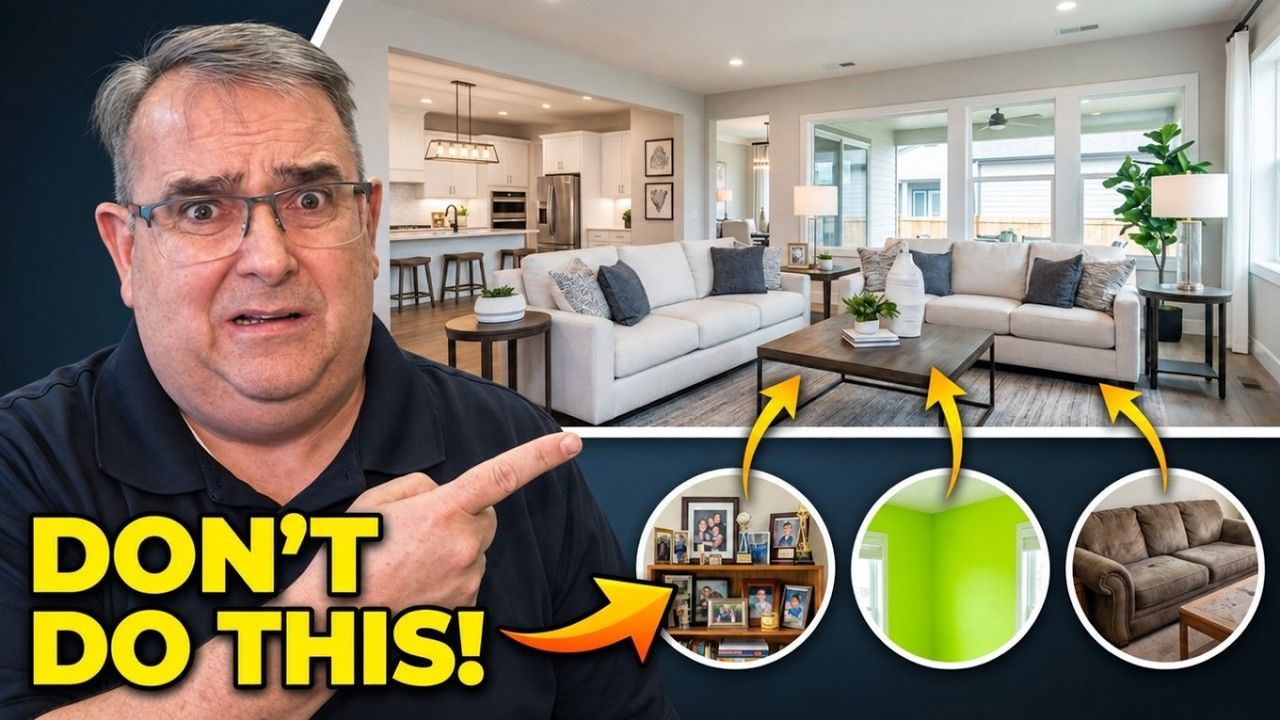
Omaha agent David Matney and professional stager Susan Evans reveal the biggest staging mistakes sellers make and how to present your home to sell faster.
Data centers are reshaping Douglas and Sarpy Counties. Learn how proximity to these facilities affects home values and what you need to know before relocating.
From Field Club to Old Loveland, discover where Omaha's wealthiest families lived as the city grew west. Historic mansions, architectural character, and what these neighborhoods are like today.
Thinking about buying hunting land or a weekend getaway in Nebraska? Learn what to ask about access, utilities, financing, and hidden costs before you buy.
Omaha's housing market is shifting as mortgage rates climb above 7%. I break down prices, and what higher rates mean for Douglas and Sarpy County buyers.