Omaha real estate can be a great way to build stability and wealth, but it can also get expensive in a hurry when we make the wrong moves. A bad pricing strategy, skipped inspections, poor prep work, or an emotional reaction during negotiations can cost thousands of dollars and months of frustration.
What makes this especially tricky in Omaha real estate is that small decisions often create big ripple effects. A seller who overshoots on price can chase the market down. A buyer who skips due diligence can inherit a very expensive problem. And both sides can get so focused on one issue that they lose sight of the bigger picture.
Below are 10 mistakes we see all the time in Omaha real estate, split between sellers and buyers, along with practical ways to avoid them.
Table of Contents
Five seller mistakes in Omaha real estate
When we sell in Omaha real estate, the goal is simple. We want the home sold for the best price the market will support, with the fewest headaches possible. That sounds obvious, but plenty of sellers end up doing the exact opposite.
1. Overpricing the home
This is the big one.
In Omaha real estate, the best opportunity to capture attention is when the property first hits the market. That is when it is fresh. That is when buyers are curious. That is when the home has momentum. Once it sits for too long, the conversation changes from excitement to suspicion. People start wondering what is wrong with it.
And most of the time, what is wrong with it is the price.
A lot of sellers believe they can start high and just test the market. The problem is the market tests right back. If the response is weak, we need to adjust quickly and meaningfully. Tiny price reductions usually do not do much. Dropping a price by a sliver is like a store advertising a one percent discount. Nobody gets excited.
If a reduction is necessary, it needs to be big enough to get attention again.
There is another pricing mistake that does not get talked about enough. In Omaha real estate, price points matter in search filters. If a home should be at $400,000, pricing it at $399,000 can actually reduce exposure. Why? Because many buyers search in clean ranges such as $400,000 to $500,000 or $300,000 to $400,000. A home at $399,000 may disappear from the higher bracket entirely.
Sometimes an even break point gives us more visibility, not less.
And one more hard truth. The market does not care what we paid for the home, what we need from the sale, or how much we spent on improvements. A repair bill is not the same thing as added value. Some expenses are just maintenance. A roof, for example, makes a house salable. It does not automatically add dollar for dollar to the asking price.
We also need to be careful about over improving a property for the neighborhood. A seller can pour a mountain of money into an older home, only to discover that buyers still compare it against newer homes nearby. The market sets the value, not our receipts.
2. Ignoring obvious repairs before listing
If we know something is broken, it is almost always better to deal with it before listing.
Buyers do not look at one visible problem and stop there. They see one obvious issue and start imagining five hidden ones. A peeling wall, a broken handrail, a sticky door, or a neglected furnace can create doubt fast.
In Omaha real estate, some repairs are especially important because financing may depend on them. Peeling paint can become a problem for FHA or VA financing. Missing smoke detectors or carbon monoxide detectors can create issues as well. If we refuse to address these things upfront, we shrink the pool of qualified buyers.
And when we shrink the buyer pool, we often attract more investors. Investors are not usually paying top dollar. They are looking for upside and negotiating room.
A smarter approach is to be proactive with the basics:
- Fix the clearly broken items
- Address peeling paint
- Service the furnace
- Install proper detectors
- Handle health and safety issues before they become deal killers
Well cared for homes create confidence. Neglected homes create resistance.
3. Presenting the home poorly
In Omaha real estate, presentation matters more than many sellers want to admit.
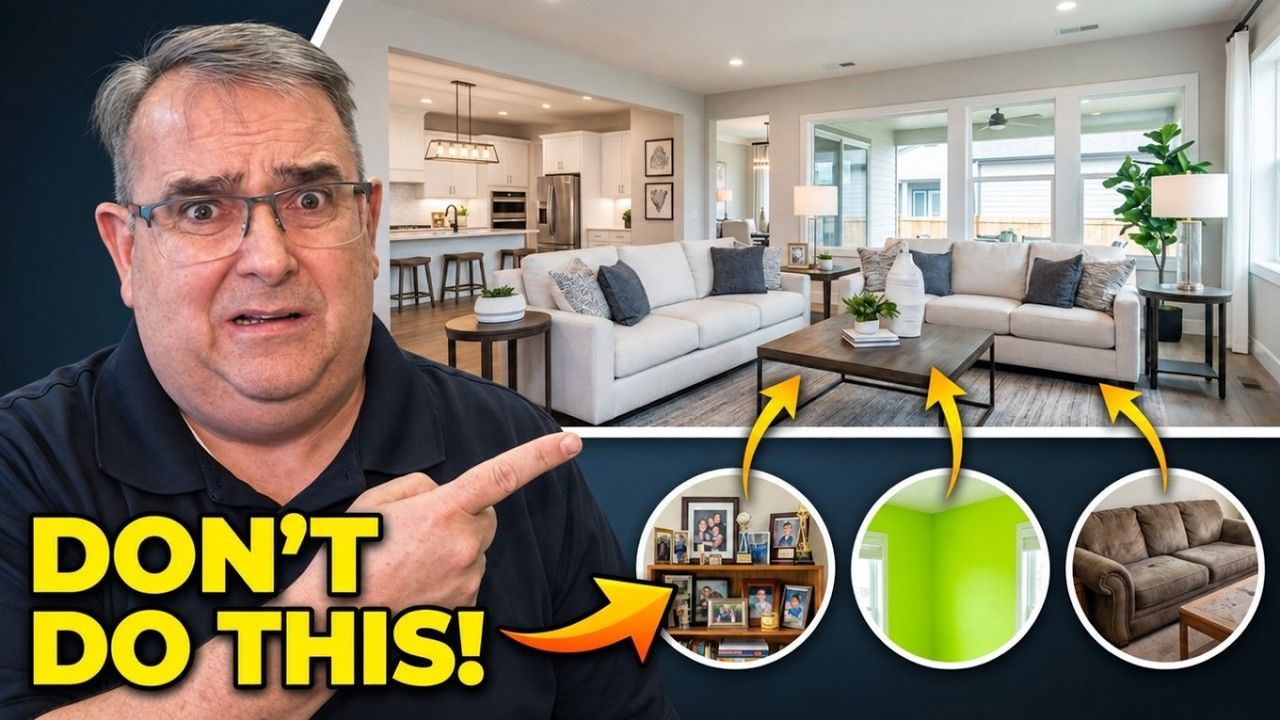
Clutter, dark rooms, dirty windows, too much furniture, overstuffed closets, pet odors, smoke smells, and bad listing photos can absolutely drag down the result. We are moving anyway, so this is the time to start packing.
Closets are a great example. Sellers think they are hiding clutter when they stuff everything behind closed doors. Buyers open the door and immediately think the storage is too small. The same goes for oversized furniture. How we live in a home and how a home should look when it is marketed are two different things.
If the house looks crowded, it feels smaller.
And because the first showing now happens online, the photos matter enormously. If the listing photos are weak, many buyers will never take the next step. That is why staging, decluttering, and cleaning are not optional if we want top results in Omaha real estate.
Smell also matters. There is an old saying in real estate that if we can smell it, we will struggle to sell it. Pet odors and smoke are especially risky. Even if we love our pets, we need a plan for showings and we need to remove as much evidence as possible. Clean bedding, clean carpet, clean blinds, clean yard. Every bit helps.
4. Making showings difficult
We only get so many chances with a buyer.
If the house is hard to show, some buyers will simply move on. In Omaha real estate, convenience matters. If a seller requires excessive notice, blocks evenings and weekends, declines overlapping showings, or makes entry awkward, that can directly reduce interest.
Even simple things matter. If the lock sticks, fix it. If the front entry is dirty, clean it. If the seller stays home during showings, that often makes buyers uncomfortable. People do not speak freely when they feel like they are intruding.
One point worth emphasizing is overlapping showings. Some people hate them, but there is a real psychological benefit when buyers know others are interested too. It reinforces desirability and creates healthy urgency.
The easier we make it to access the home, the better our odds.
5. Getting emotional during negotiations
This one can get expensive in a hurry.
Let us say we agree on a price and get under contract. Then the inspection happens, and the buyer asks for a reasonable repair. Maybe it costs a few hundred dollars. Some sellers dig in on principle and refuse.
That can be a terrible trade.
If the buyer is still within their contingency window, they may walk away. Suddenly we did not save a few hundred dollars. We effectively bought our own house back over a relatively small issue.
That means more mortgage payments, more time on the market, more stigma, and sometimes a lower final sales price later.
In Omaha real estate, the goal is not to win every tiny point. The goal is to get the home sold on the best terms available. If a request is reasonable and tied to health, safety, or a known defect, it often makes sense to take care of it.
One excellent way to get ahead of this is a pre-listing inspection. That allows us to find problems early, disclose them properly, and fix them on our own schedule instead of under pressure.
Five buyer mistakes in Omaha real estate
Buyers can make expensive mistakes too, especially when excitement starts driving the process.
1. Not understanding the real budget
A lot of buyers in Omaha real estate focus almost entirely on the purchase price. That is not enough.
The real budget also includes:
- Property taxes
- Insurance
- Maintenance
- Future repairs
- Mortgage insurance if applicable
- Commute costs
Sometimes a slightly newer home with a higher sticker price is actually safer financially than an older bargain that needs constant work. This is especially true if we are not handy. Older homes can be wonderful, full of charm and character, but they can also bring more maintenance than buyers expect.
We also need to remember that homeownership is not always the best move for every person at every stage. If we are likely to move again soon, the costs of buying and then selling can eat up a lot of money. Omaha real estate is generally a longer term play, not a quick in and out move.
2. Skipping or minimizing inspections
This is one of the most dangerous mistakes buyers make.
And yes, inspections is plural.
A general home inspection is important, but sometimes it is only the beginning. Depending on the property, we may also need:
- A radon test
- A sewer scope
- A roof inspection
- An HVAC evaluation
- A foundation specialist
Eastern Nebraska has elevated radon levels, so that test matters in Omaha real estate. Sewer lines can be expensive. Roofs can be extremely expensive. Flat roofs, older mechanical systems, and foundation issues deserve specialized attention.
If we think we cannot afford inspections, that is a sign we may not be in a position to buy the house. Spending money on due diligence and walking away is painful, but it is usually much cheaper than buying the wrong property.
There is also a strategic reason inspections matter. They create an exit window if the property turns out to be unacceptable. When buyers waive inspections in a competitive situation, they give up leverage and protection at the same time.
3. Ignoring location and neighborhood factors
We can change paint, flooring, fixtures, and countertops. We cannot change where the house sits.
That is why in Omaha real estate we are really buying the neighborhood first and the house second. Location issues can follow us every day:
- Noise levels
- Traffic
- Commute time
- Nearby development
- School boundaries
- Flood concerns
- General neighborhood fit
A lower price does not always mean better value if the tradeoff is a significantly longer commute or a location we will regret later.
Insurance should also be part of this due diligence. If a home may be in a flood-prone area, if the roof is older, or if there have been prior claims, we want our insurance professional involved early.
4. Underestimating repairs and maintenance
Homes do not stay frozen in time. They require money and attention.
In Omaha real estate, buyers sometimes fall in love with the payment and forget the upkeep. An older roof may not qualify for full replacement coverage. An aging HVAC system may work today but be near the end of its useful life. A condo may look simple until we discover the building has a huge roofing expense coming.
The lesson is straightforward. We have to estimate not only what the home costs today, but what it is likely to cost over the next few years.
That is also why new construction deserves a fair look. Some buyers dismiss it too quickly. But a newer home can mean a new roof, new furnace, modern drainage improvements, updated building practices, and in some cases lower insurance costs. It is not perfect, and no home is, but it can reduce surprise expenses.
In Omaha real estate, it is wise to compare new and existing homes honestly instead of relying on assumptions.
5. Making emotional instead of strategic decisions
Emotion is part of buying a home. That is normal. But emotion cannot drive the whole decision.
There is no perfect house. Not in Omaha real estate, not anywhere. Even custom homes come with compromises, surprises, and second guesses. If we expect perfection, we will either overpay, overlook problems, or keep chasing something that does not exist.
Strategic buyers keep a broader perspective. They read the contract before signing it. They ask questions. They understand that electronic signatures make it easy to click too fast, but a contract is still a binding legal document.
The best time to understand the agreement is before we sign it, not after.
Strategic buyers also remember that if one house gets away, there will be another one. That mindset helps us avoid panic, bad waivers, and impulsive offers.
Final thoughts on Omaha real estate
Whether we are buying or selling, most expensive mistakes in Omaha real estate come back to the same themes:
- Failing to prepare
- Ignoring the market
- Overlooking details
- Letting emotion override strategy
Sellers need to price realistically, fix the obvious issues, present the home well, make access easy, and stay practical in negotiations.
Buyers need to understand the full budget, inspect thoroughly, evaluate location carefully, account for maintenance, and make calm decisions.
Omaha real estate rewards patience, clear thinking, and a willingness to deal with reality instead of wishful thinking. If we can do that, we put ourselves in a much better position to save money, reduce stress, and make smarter moves.
Ready to avoid these costly mistakes and make your next move with confidence?
If you’re buying or selling in Omaha or the surrounding metro, contact David Matney
with Nebraska Realty for tailored guidance and a clear plan—no pressure, just help. Call/Text: 402-490-6771 or email davidmatney@nebraskarealty.com.
FAQ: Omaha Real Estate
What is the biggest mistake sellers make in Omaha real estate?
Overpricing is usually the most expensive mistake. A home gets the most attention when it first hits the market. If it starts too high and sits, buyers begin to assume something is wrong, and the seller often ends up chasing the market downward.
Should sellers fix things before listing a home?
Usually yes, especially for obvious repairs and health or safety issues. In Omaha real estate, items such as peeling paint, missing detectors, broken handrails, or neglected systems can limit financing options and reduce the buyer pool.
Why are inspections so important for buyers?
Inspections help uncover expensive problems before closing and give buyers a chance to renegotiate or walk away during the contingency period. In Omaha real estate, radon, roofs, sewer lines, HVAC systems, and foundations are all worth careful review.
Is new construction worth considering in Omaha real estate?
Yes. New construction can offer lower maintenance, newer materials, updated drainage systems, and sometimes lower insurance costs. It is not automatically better, but it deserves a side by side comparison with older homes.
What should buyers focus on besides the purchase price?