Omaha Real Estate Market: A Bigger Problem Than a Housing Crash?
Everybody keeps asking me the same question: when is the housing market going to crash? But here's the thing, home prices haven't crashed. What has happened is something much slower and harder to detect. Look at the numbers. Home prices have gone up substantially over the last ten years. Obviously, people are feeling that when they're looking to purchase. But meanwhile, there are other factors causing something worse in today's market: the erosion of affordability.
A crash is when prices fall. Erosion is when affordability slowly deteriorates and fewer and fewer people are able to participate in the market. I want to walk you through how we got here, why prices haven't fallen even though rates went up, why some homes still get good activity while others sit, and how affordability actually improves. If you're thinking about buying or selling a home in the Omaha metro, this is the conversation we need to have.
Now, if we haven't met before, my name is David Matney with Nebraska Realty. My team and I help people just like you buy, sell, and relocate to the Omaha metro. Let's get into it.
Table of Contents
- How We Got Here: The COVID Effect on Omaha's Housing Market
- What Really Drives Mortgage Rates (and Why the Fed Doesn't Set Yours)
- Why Homeowners Aren't Selling: The Lock-In Effect
- Why This Isn't Another 2008 Crash
- The Hidden Costs of Homeownership in Omaha: Taxes, Insurance, and SIDs
- Why Some Homes Sell and Others Sit
- Why First-Time Buyers Are Struggling in Omaha
- Four Ways Housing Could Become Affordable Again
- Should You Buy a Home in Omaha or Wait?
How We Got Here: The COVID Effect on Omaha's Housing Market
To understand today's market, you have to understand what happened during COVID, and it follows a pretty clean chain. It starts with mortgage rates falling to historic lows. When rates drop that far, a buyer's purchasing power goes way up. The same monthly payment buys a lot more house. That pulled demand forward. People who might have bought in three or four years decided to buy now while money was so cheap.
But at the same time, inventory was extremely limited. So you had more buyers with more purchasing power chasing fewer homes. And you know what happens next? Bidding wars. Buyers offering over list price, waiving contingencies, covering appraisal gaps with their own cash. This created inflation. Market value isn't what a home should be worth. Market value is what a buyer is willing and able to pay. During COVID, cheap money made buyers both willing and able to pay a lot more.
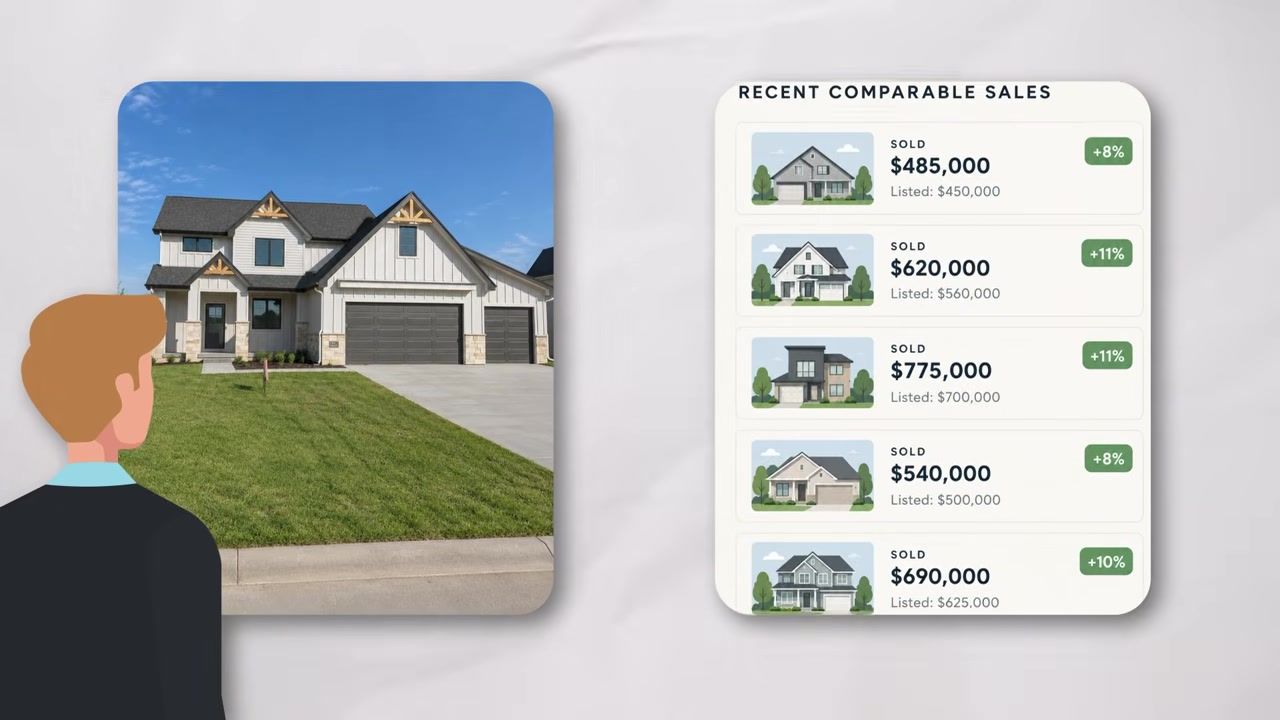
When an appraiser values a home, they look at the most recent comparable sales. So every one of those over-list sales became a comparable for the next house. At the same time, millions of homeowners either bought or refinanced into those record low rates. So we ended up with two things happening at once: home values reset much higher, but existing owners were sitting on unusually cheap financing. Then when rates reset higher, prices mostly didn't reset with them. That gap between higher prices and higher rates is the affordability problem we're living with today.
What Really Drives Mortgage Rates (and Why the Fed Doesn't Set Yours)
The Federal Reserve does not set mortgage rates. The Fed controls a short-term overnight rate called the federal funds rate. Your thirty-year mortgage rate is set in the bond market. The Fed absolutely influences that environment, but there's no rule that says the Fed cuts a quarter point and your mortgage rate drops a quarter point.
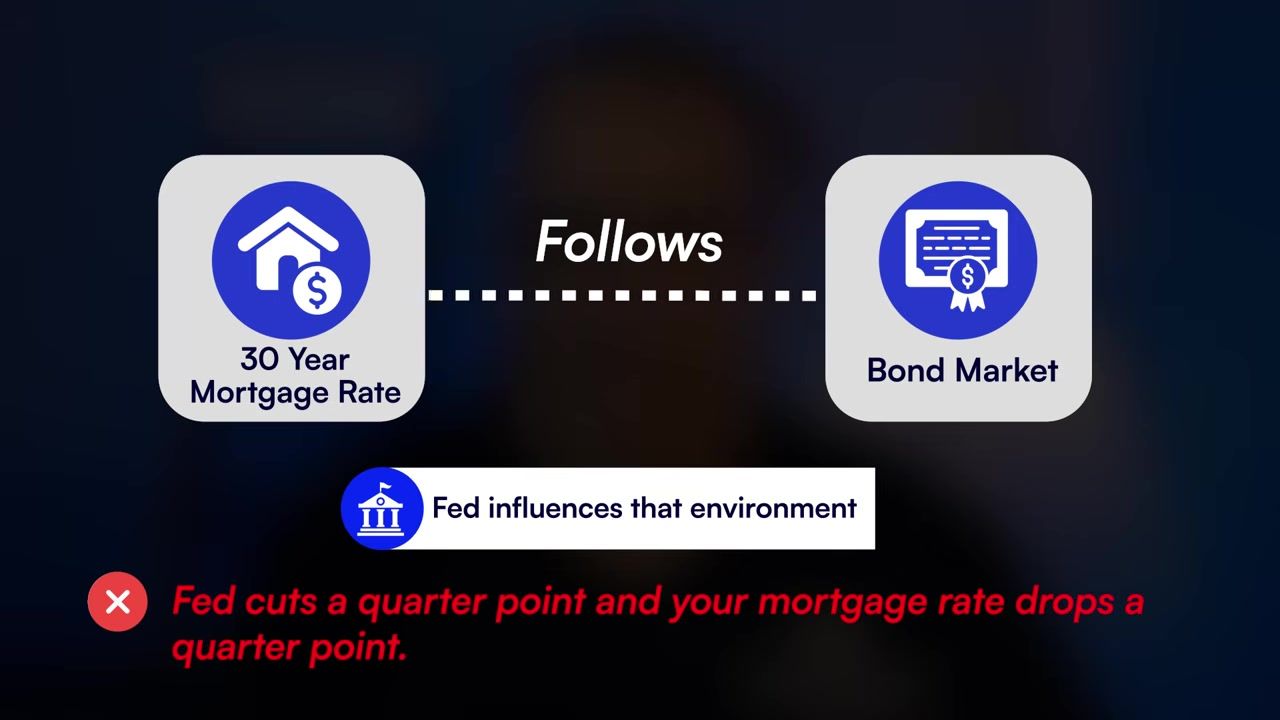
So what drives your rate? Think of it as three layers. One layer is the ten-year Treasury yield. Mortgage rates track the ten-year Treasury much more closely than they track the Fed. Why is that? Because almost nobody keeps a thirty-year mortgage for thirty years. People sell, refinance, or pay off early. So investors price mortgages more like a ten-year bond.
What moves the ten-year? Mainly inflation and inflation expectations, how strong the economy looks, what investors expect the Fed to do next, and how much government is borrowing. When investors worry that inflation will eat into the money they're paid back years from now, they demand a higher yield. That pushes mortgage rates up.
Layer two is the spread. Mortgage rates always sit above the ten-year Treasury yield. When markets get nervous, that spread widens. So the ten-year can sit still and mortgage rates can still move. Layer three is you. Two buyers can have two different rates on the same day because of credit score, down payment, loan type, loan term, whether it's a primary home or an investment property, and whether they paid points or not.
So where are we at today? Freddie Mac's weekly survey had the average thirty-year fixed-rate mortgage at 7.4% as of October 5th, 2026. That's the first time it topped 7% since early 2025. A 7%, 7.25%, or even a 7.5% interest rate compared to the 3% a lot of people already have creates one of the biggest problems in today's market.
Why Homeowners Aren't Selling: The Lock-In Effect
For a lot of homeowners, moving doesn't just mean buying another house. It means trading exceptionally cheap debt for much more expensive debt. Think about the seller's dilemma. You sell your home, you give up your 3% mortgage interest rate, and you buy another home at today's prices and you finance it at 7%. Your taxes are higher, your insurance is higher, your payment might be dramatically higher, and your life might not be meaningfully better.
That's the lock-in effect, and it has real consequences. Fewer homeowners sell. Fewer sellers mean fewer buyers. Transactions slowed down. Inventory stays limited. The lock-in effect isn't permanent. People still get married, have kids, change jobs, get divorced, and retire. Every one of those events creates a real estate transaction. The market is loosening, just very slowly.
Why This Isn't Another 2008 Crash
This is usually where someone says prices just haven't crashed yet. So let's talk about why today looks so different from 2008. In 2008, the crash wasn't caused by high prices alone. It was caused by forced selling. Lots of loans had adjustable rates that reset higher. Borrowers had little or no equity, and a lot of those loans should have never been made. So when payments jumped and values dipped, people couldn't pay and couldn't sell for enough. Foreclosures flooded the market and pushed prices down further.
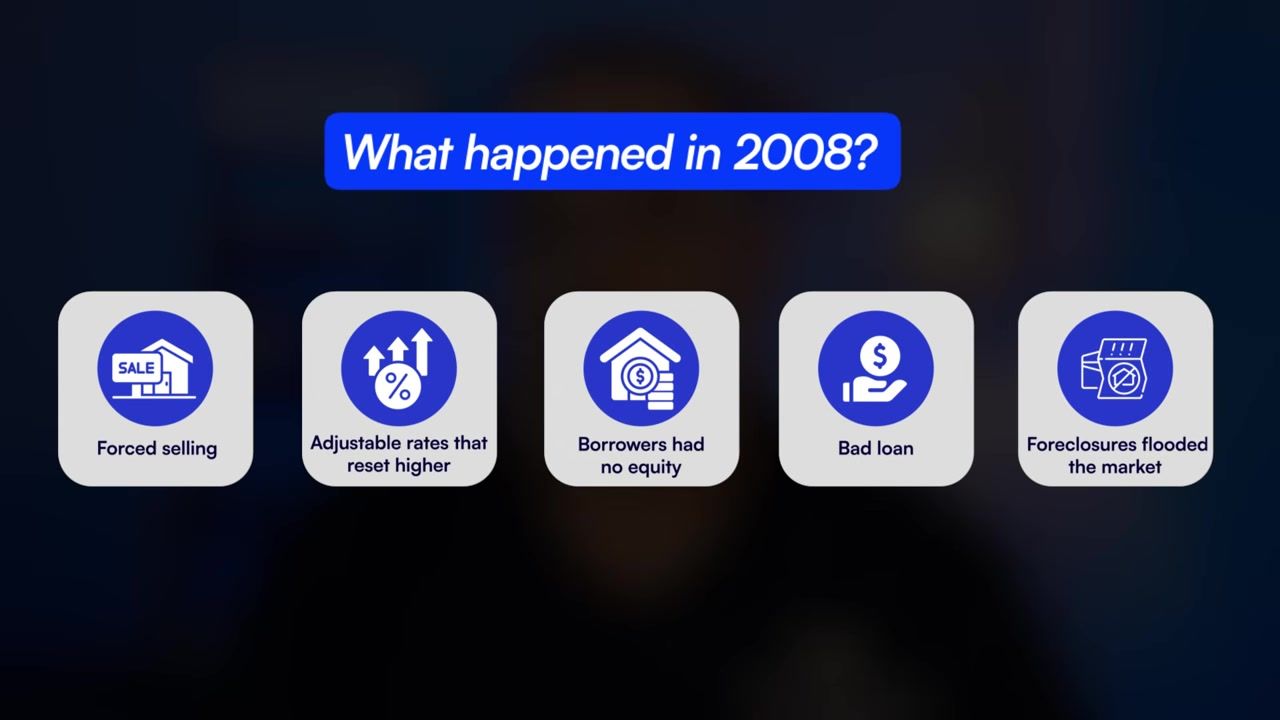
Now, Omaha fared fairly well during 2008. Was there lots of inventory? Yes. Did it take a while for homes to sell? Yes. But we didn't have the significant price crash that you saw in other markets. Today is different. Most homeowners have a fixed-rate loan, so their payment doesn't jump unexpectedly. A crash needs a lot of people who have to sell. Right now, most homeowners don't have to, they just don't want to. And that's different.
That doesn't mean prices can never fall. It means the pressure shows up somewhere else, not in prices, but in people.
The Hidden Costs of Homeownership in Omaha: Taxes, Insurance, and SIDs
Here's something a lot of buyers don't think about until after closing. Your monthly payment is made up of four elements: principal, interest, taxes, and insurance. Sometimes it also includes HOA dues. On a fixed-rate mortgage, your principal and interest never change, but your taxes and insurance do. So a buyer can qualify for a mortgage and still the total cost of owning the home is uncomfortable, and that total will keep rising after you move in.
Property Taxes and SIDs in Douglas and Sarpy County
In Nebraska, your property tax bill is your assessed value times the total mill levy. In Douglas and Sarpy County, that combined rate often lands somewhere between 1.5% to 2% of your home's value. The biggest piece is usually the school district. Omaha Public Schools just voted to raise its levy from $1.21 per $100 of value after a $50.6 million state aid shortfall. For a $250,000 home, that's about $200 more per year from just that one change.
Then there are SIDs, Sanitary Improvement Districts. When a developer builds a subdivision outside the city limits, a SID borrows the money for streets, sewers, and utilities. The homeowners pay that back through an extra levy on their tax bill, often for twenty years or more, until the city annexes the neighborhood. SIDs are actually very good to promote development and add new inventory for buyers to select from. Just because a house is in a SID doesn't mean you pay thousands more in taxes.
Homeowners Insurance and Roof Age
Insurance. Nebraska has become one of the most expensive states in the country for homeowners insurance at roughly double the national average. The big reason is hail. Wind, severe storms, and tornadoes add to it, but so do rising construction costs, which makes every claim more expensive.
What your insurance agent will do is ask you about the age of the roof. An older roof can mean higher premiums, fewer insurance companies willing to write the policy, required inspections, and sometimes what a lot of buyers haven't heard of is a thing called actual cash value. With replacement cost coverage, the insurer pays you to replace your roof minus your deductible. With actual cash value, they subtract the depreciation first. So if an older roof gets totaled by hail, the check can be a fraction of what a new roof actually costs.
Cheap homes with an old roof isn't necessarily an affordable house.
Why Some Homes Sell and Others Sit
If affordability is so bad, why are some homes still getting good activity? Because this isn't one housing market. There are dozens of mini markets broken down by price point, condition, location, and school district. Here's what's happening. The pool of buyers who can still afford to participate has gotten smaller, but those buyers tend to want the same homes. So even with fewer buyers overall, the competition for the best homes stays intense.
What are they competing for? Homes that are priced right, updated, move-in ready, in desirable locations like Elkhorn , Gretna , and Bennington , and homes free of big repairs right after closing.
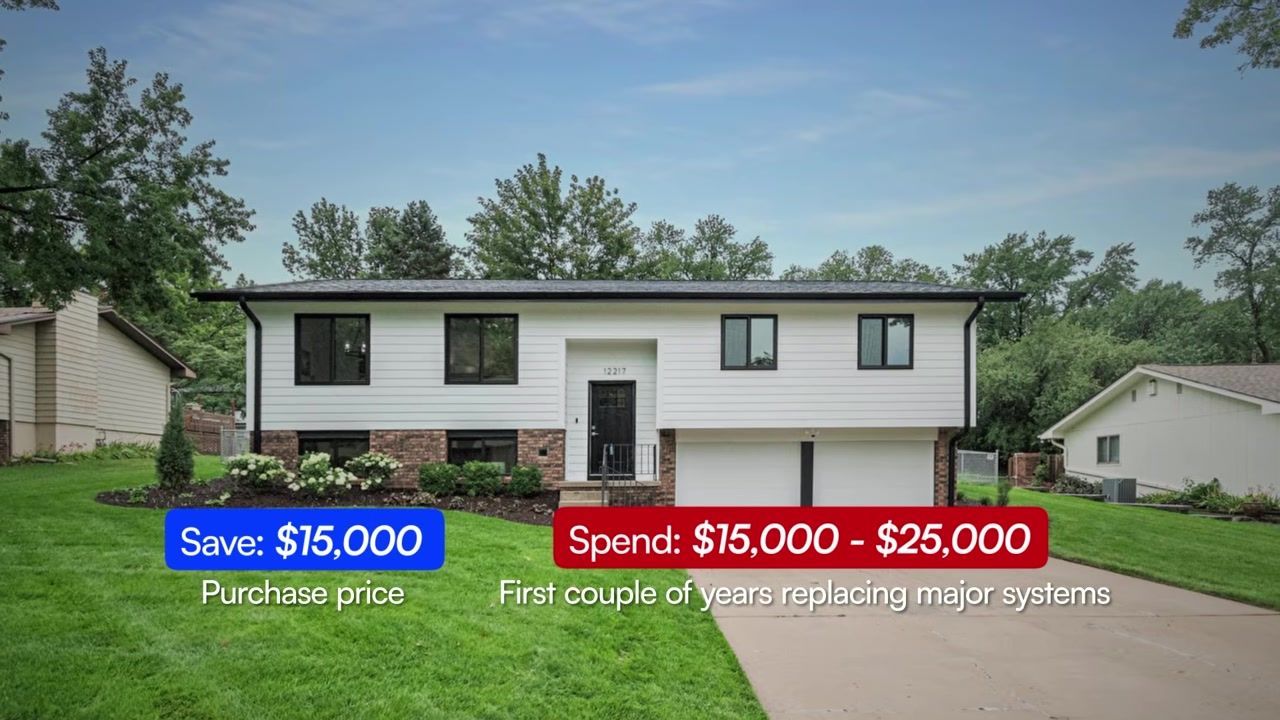
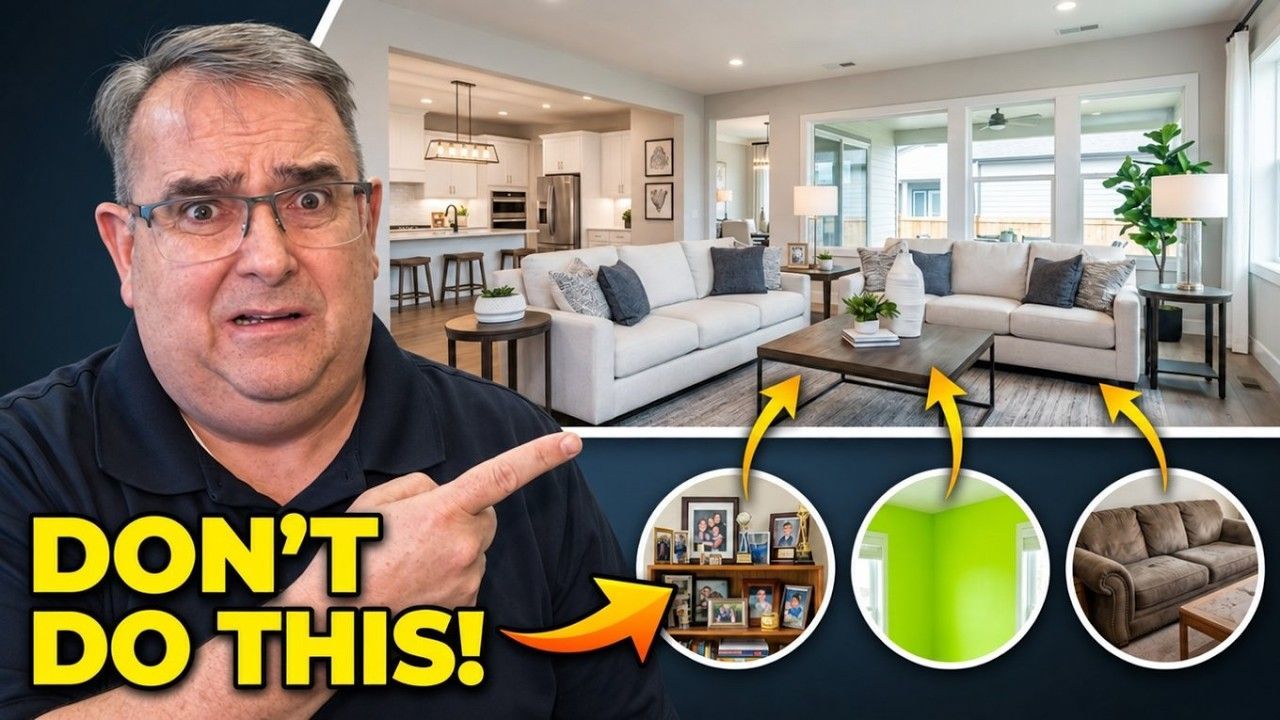
Now flip that around. What about homes that need work? Let's say you save $15,000 on the purchase price of a dated home. Then you spend $15,000 to $25,000 in the first couple of years replacing major systems. The discount on the price of the house gets spread over a thirty-year loan. The repair bill is due right now in cash, and an old roof can raise your insurance on top of that.
Houses need something called maintenance, and you must budget for maintenance. I recommend 3 to 4% of the purchase price as a rule of thumb. Homes sell in any condition. The issue is price. The price has to reflect the condition, the location, the competition, the repairs, and what buyers expect. And pricing it right in the beginning matters more than anything else. A new listing gets its strongest attention in the first days on the market. If you start off too high, you can burn that window, and when you finally cut the price, it doesn't always bring back the attention that you would have had on day one.
The market isn't frozen. It's sorting. And sorting is changing who gets to participate.
Why First-Time Buyers Are Struggling in Omaha
This is where erosion really shows up, not in prices, in who gets to buy. The National Association of Realtors 2025 Profile of Home Buyers and Sellers found that first-time home buyers made up just 21% of the purchases. That's the lowest share since NAR started tracking in 1981. Historically, that number has been closer to 40%. And the median age for the first-time home buyer is now forty years old. That's a record.
That matters because people haven't lost the desire to own a home. The hurdle to get in has just gotten a lot higher. More and more buyers need some combination of incomes, a bigger down payment, help from relatives, higher earnings, low debt, or equity from the home they already own.
NIFA Home Buyer Assistance Program
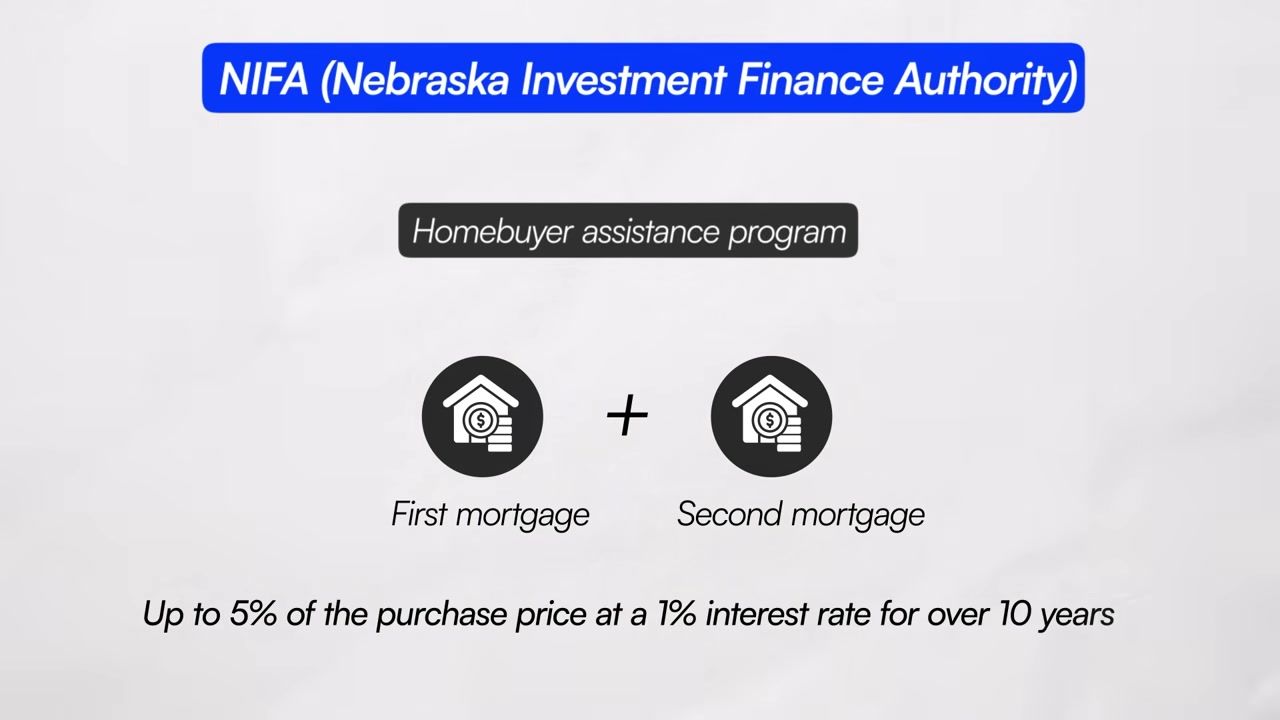
If you are a first-time home buyer here in Nebraska, there is help. There is a program called NIFA, which stands for Nebraska Investment Finance Authority, and they have a home buyer assistance program. It pairs a first mortgage with a second mortgage up to 5% of the purchase price at a 1% interest rate for over ten years to help with down payment and closing costs.
Two things you need to know. Number one, it's a loan, not a grant, so you do need to pay it back. And the first mortgage usually carries a somewhat higher rate than NIFA's programs without assistance.
The big picture: the houses haven't disappeared and the people haven't stopped wanting them, but the financial requirements to participate have changed.
Four Ways Housing Could Become Affordable Again
So how does all of this get better? There are really only a handful of ways affordability gets better.
Number one: prices fall. That's the crash everybody talks about. And to be fair, it can happen. Some parts of the country that built a lot of new homes have seen prices soften. So I'm not saying prices can never go down. I'm saying a crash isn't the only path. And for the reasons we talked about, it's not the most likely one here either.
Number two: mortgage rates fall. That sounds simple, but lower rates have two effects. First, buyers get more purchasing power. Second, all the buyers sitting on the sidelines come back into the market. More buyers competing for the same homes can push prices right back up. Lower rates don't automatically mean cheaper homes. They mean cheaper financing. Those aren't the same thing.
Number three: more homes get built. More supply eases competition, but construction takes years, and land, labor, materials, financing, and infrastructure are all still expensive.
Number four, and I think this one is the most realistic path: prices simply grow more slowly than incomes for several years in a row. Say home prices rise 1 to 2% a year and household incomes rise 3 to 4% per year. Nothing dramatic happens, no crash, but every year incomes catch up a little bit more. Affordability can improve without prices ever crashing.
Should You Buy a Home in Omaha or Wait?
What does this all mean for you? First, I'm not saying everybody should go out and buy a home today. Some people should absolutely wait. But buying generally makes more sense when the payment is comfortable and you have cash reserves left over, your income and job are reasonably stable, you plan to stay several years, and the numbers work today, not based on a refinance you're hoping to do later.
I don't want you to refuse to buy because somebody promised you a crash. Nobody knows exactly what prices or rates will be a few years from now. Make the decision based on your payment, your finances, your reserves, your job stability, how long you plan to stay, and your overall life.
If you're in the Omaha area or if you're looking to move to the Omaha area and you want to run your own numbers including taxes, insurance, and what a specific house will really cost you to own, reach out. That's exactly what I'm here for. I can walk you through the numbers, show you what homes are available in Douglas and Sarpy County, and help you make a decision based on your situation, not the headlines. Let's have a conversation. Call me at 402-490-6771 if you have questions about Omaha housing market.
FAQ
What caused the affordability crisis in Omaha's housing market?
Affordability eroded when home prices reset higher during COVID due to record-low rates and limited inventory, then rates jumped back up to 7%+ while prices stayed elevated. Buyers who locked in 3% mortgages aren't selling, so inventory stays tight and fewer people can afford to participate.
Will mortgage rates going down make homes more affordable in Omaha?
Lower rates give buyers more purchasing power, but they also bring buyers sitting on the sidelines back into the market. More competition for the same homes can push prices right back up. Lower rates mean cheaper financing, not necessarily cheaper homes.
Why are property taxes and insurance so high in Omaha?
In Douglas and Sarpy County, property taxes run between 1.5% to 2% of your home's value, with the biggest piece going to the school district. Nebraska homeowners insurance is roughly double the national average due to hail, wind, severe storms, and rising construction costs. An older roof can mean higher premiums or actual cash value coverage instead of replacement cost.
What are SIDs and how do they affect my monthly payment?
SIDs, Sanitary Improvement Districts, are special levies that pay back the cost of streets, sewers, and utilities in subdivisions built outside city limits. You pay the SID through an extra levy on your tax bill, often for twenty years or more. Just because a house is in a SID doesn't mean you pay thousands more, but it does add to your monthly cost.
Why are some homes in Omaha selling quickly while others sit?
The pool of buyers who can afford to participate has gotten smaller, but those buyers want the same homes: priced right, updated, move-in ready, in desirable locations like Elkhorn, Gretna, and Bennington, and free of big repairs. Homes that need work or are overpriced burn their strongest attention window in the first days on the market.
Is now a good time to buy a home in Omaha or should I wait?
Buying makes sense when the payment is comfortable and you have cash reserves left over, your income and job are stable, you plan to stay several years, and the numbers work today, not based on a refinance you're hoping to do later. Make the decision based on your situation, not on waiting for a crash that may never come.
DAVID MATNEY
David Matney is a trusted Realtor® and local expert with over 20 years of experience in Omaha’s real estate market.