Why MASSIVE Data Centers Are Hurting Omaha Real Estate
Here's a statistic that stopped me dead in my tracks: 92% of US counties have zero data centers, and only 1% of US counties have 10 or more. So where does Nebraska fit into this picture? Somehow Nebraska has become a major data center destination. Douglas County alone has 15 active data centers with more than 4.2 million square feet of data center space. Sarpy County has 10 active data centers with approximately 1.1 million square feet of data center space. Douglas County has actually added 5 more data centers since 2025.
I started doing a little bit of digging. Why is Nebraska attracting so much investment in data centers? If you're thinking about moving to Omaha, buying a home in Omaha, selling a home in Omaha, or even just trying to understand where this metro is headed over the next 10 to 15 years, you need to understand what's happening with data centers. Today I want to break down exactly what a data center is, why companies are pouring enormous amounts of money into this infrastructure, and what makes Nebraska such an attractive place for these facilities. More importantly, what does this mean if you're buying or selling real estate in Douglas or Sarpy County?
A data center is basically a specialized facility designed to house enormous amounts of computing infrastructure, servers, storage, and networking equipment, along with all of the electrical and cooling infrastructure necessary to keep that equipment running. Modern facilities are built around one fundamental requirement: they can't go down. That means redundant electrical systems, industrial battery systems, backup generators, and layers upon layers of redundancy. Thousands and thousands of computer chips running at extremely high capacity generate incredible amounts of heat, so data centers need massive cooling systems. These facilities need enormous amounts of fiber infrastructure because they're moving incredible amounts of data. When you look at a modern data center, you're not just looking at a traditional office building. You're looking at a piece of critical infrastructure.
You've probably heard the names, companies like Meta, Amazon, Google, and Microsoft. Data centers themselves are not new. We've had data centers for decades. What's different now is the size and scale. The biggest reason for that change is something you've probably already heard about every single day: artificial intelligence. Artificial intelligence is changing the way people live, work, and even move. AI factories require enormous amounts of electricity. They require cooling, fiber, land, and a tremendous amount of infrastructure.
Table of Contents
- Why Nebraska and Omaha Are Attracting Billions in Tech Investment
- The Power Problem and LB 1261
- Douglas County: Google's 450-Acre Campus and Northwest Development
- Sarpy County: Amazon Web Services and Southern Development
- Hyperlocal Impact: Why Proximity to Data Centers Matters
- The Infrastructure You Don't See
- Which County Is Right for You?
- Conclusion
Why Nebraska and Omaha Are Attracting Billions in Tech Investment
There are a few reasons Nebraska has become a major data center destination. First, Nebraska has lots of cheap flat land compared with dense data center markets like California or Virginia. That's a pretty big deal. Second is geography. Nebraska has relatively predictable climate. We don't have hurricanes and we don't have the same earthquake risk you see in other parts of the country. While drought and water availability are certainly issues that need to be considered, the state has historically had significant water resources. You have the Platte River running through the southern and western portions of the Omaha region, along with the Missouri River to the east. In addition, the Ogallala Aquifer covers a large portion of Nebraska and other Midwestern states.
Then there's electricity. Nebraska has a unique advantage here. It's the only state in the country fully served by public power utilities. Then there's location. Nebraska sits roughly in the middle of the country, and Omaha is able to offer the labor needed to help build these data centers. Major fiber optic corridors also cross the state connecting east and west. For companies trying to build a national or global infrastructure network, that central location matters.
There are incentives. The Nebraska Advantage Act provided long-term sales and use tax exemptions on expensive equipment. That program ran from 2005 until 2020. Then in 2020, the Imagine Nebraska Act replaced the Advantage Act. Imagine updated the state's incentives, offered tiered tax refunds, job creation credits, and property tax exemptions for large capital investments. Between 2021 and mid-2026 alone, Nebraska granted personal property tax exemptions on roughly $15 billion worth of data center equipment, saving companies more than $500 million in local property taxes. The goal was pretty straightforward: attract enormous capital investment and jobs to Nebraska with a regulation-friendly environment. We're talking about projects involving hundreds of millions and potentially billions of dollars.
The Power Problem and LB 1261
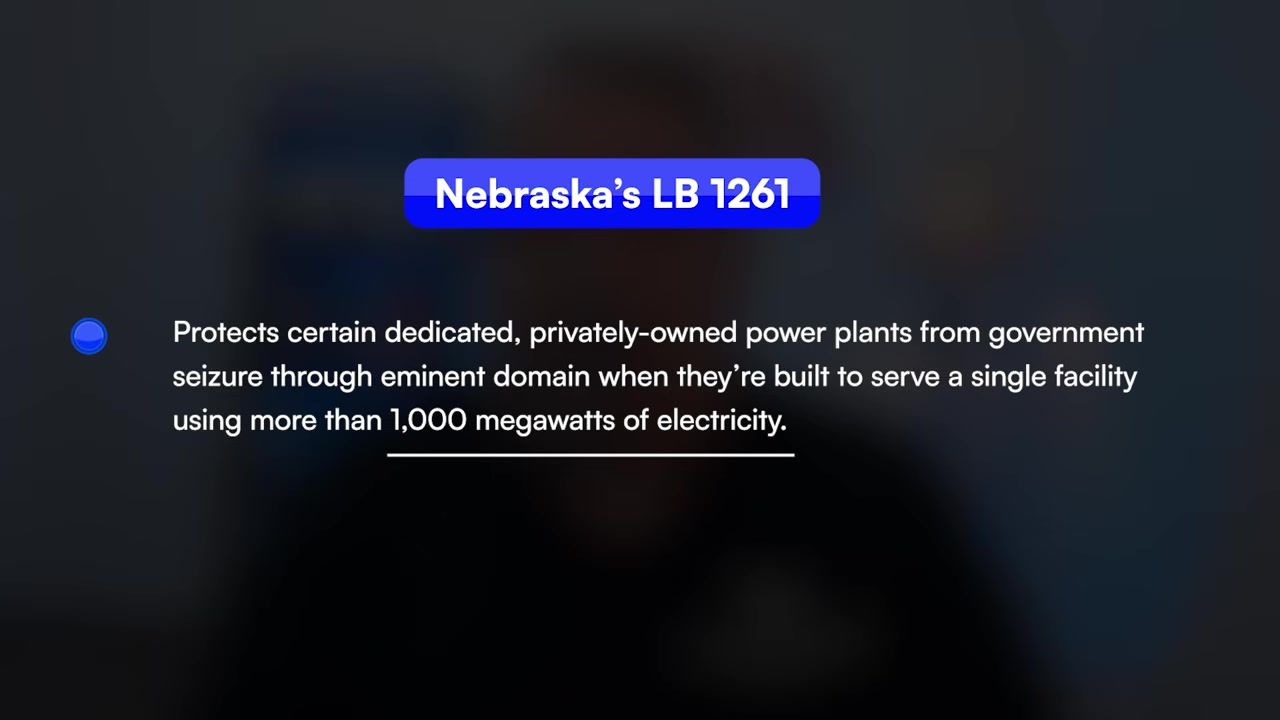
One of the biggest questions surrounding these projects is this: where is all of this electricity gonna come from? That's why legislation like Nebraska's LB 1261 matters. LB 1261 protects certain dedicated privately owned power plants from government seizure through eminent domain when they're built to serve a single facility using more than 1,000 megawatts of electricity. This allows hyperscale data center developers to build co-located power plants to help meet their massive energy needs without necessarily putting the entire burden on local public power grid.
Instead of simply saying, hey, public utility, give us more power, a massive technology company could potentially help build the power infrastructure needs. That can accelerate development, and it can potentially reduce the risk that existing residential customers are forced to bear infrastructure costs associated with massive new industrial load. That's really important because one of the biggest concerns people have is, are homeowners going to end up paying for this? That's exactly the type of question policymakers are addressing in the Nebraska legislature.
Douglas County: Google's 450-Acre Campus and Northwest Development
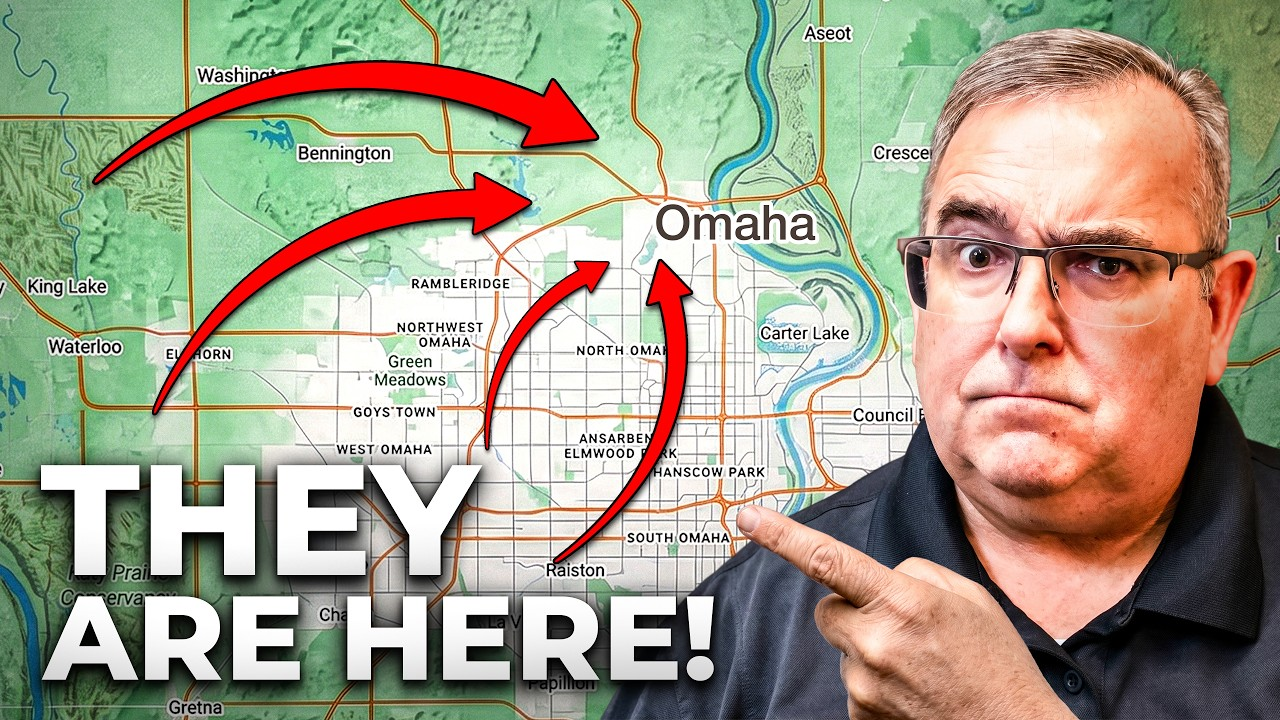
Douglas County has 15 active data centers with more than 4.2 million square feet of data center space, and the county has added 5 more data centers since 2025. The central US location, public power utilities, major fiber corridors, and labor force availability make Douglas County attractive for these facilities. We're seeing major development in Northwest Douglas County, and the biggest example is Google's project there.
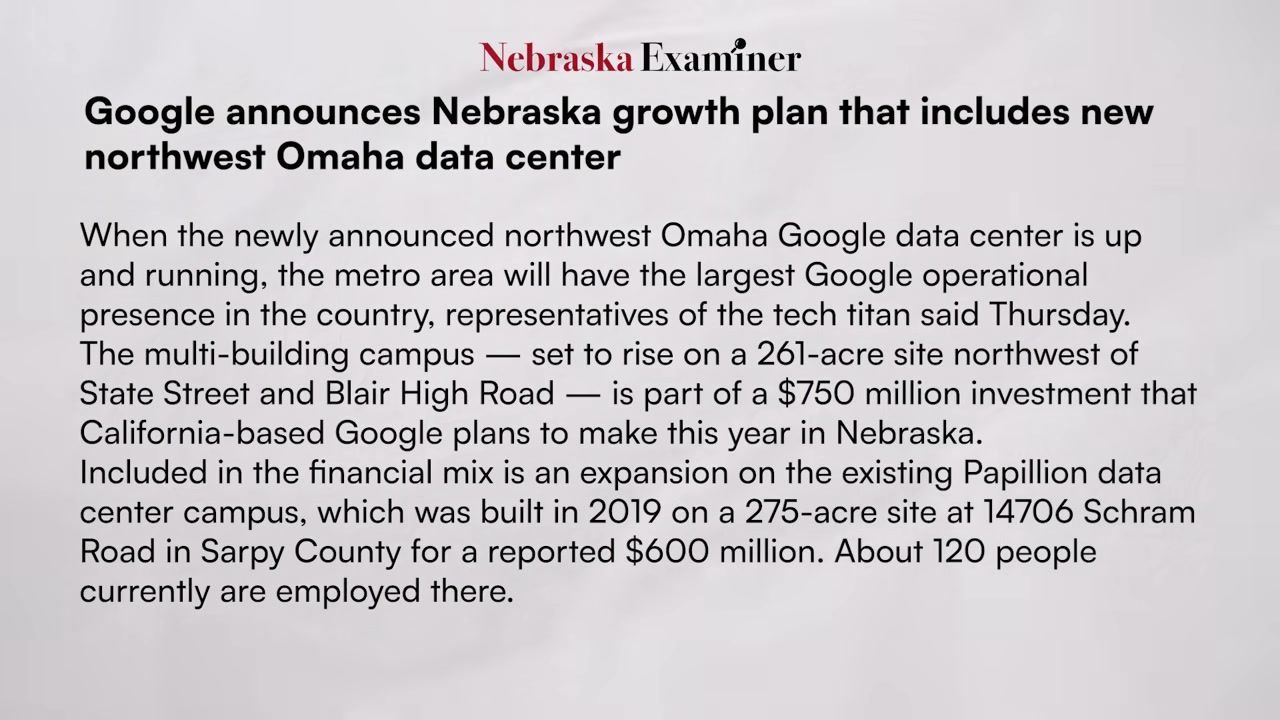
Google has announced a major project in Northwest Douglas County. They formally launched the project with an initial $750 million capital allocation aimed at constructing a multi-building campus. The site has a footprint of more than 450 acres in Northwest Douglas County. The master plan accounts for a multi-phase buildout totaling approximately 1.4 million to 2.2 million square feet. Infrastructure expansion is ongoing for roads, water, sewer, electricity, and fiber. High-income tech workers relocating creates housing demand. These projects require enormous numbers of specialized workers and all kinds of specialized trades. These projects are not necessarily built overnight. They can take years. During the construction cycle, you're bringing people into the area, and those people need places to live. They also need everything else people normally need. From a real estate perspective, that's real tangible demand.
Some of these are high-income workers, and high-income workers increase demand for housing, whether they're renting a home or purchasing a home. That doesn't necessarily mean every house in Omaha suddenly becomes more valuable, but it can strengthen the overall economic foundation of the metro. When massive development occurs, you're often forced to expand roads, water, sewer lines, electricity, fiber, and other infrastructure. Once it's built, that infrastructure can support additional development, and that's where you can have an economic ripple effect, because one major development can make additional development possible. That's one of the ways communities grow, and for a metro like Omaha that is actively expanding, that's significant.
Douglas County has a development-friendly environment, which means open fields are often temporary. If you're buying property based on the assumption that it's going to remain surrounded by open fields, you need to understand something. Open fields are often temporary, especially in a development-friendly environment. If a place is completely frozen in time, then you probably aren't looking at a growing metro. But if you like the idea of living somewhere where new things are constantly being built, that can be exciting. The question is whether that development happening around your home is development you actually want.
The ASARCO Lead Superfund Site and What It Teaches Us About Proximity
There's actually an example in the Omaha market today, and I think it's comparable to what data centers could look like in the future. Until the late 1990s, the ASARCO lead smelting plant was actively contaminating parts of eastern Omaha. The EPA would later identify a large area as an environmental hazard requiring action to address some of the damage. The lead smelting plant was located near the riverfront and where the Kiewit Luminarium are today. The contamination affected some iconic locations, including areas around the Old Market, Millwork Commons, downtown Omaha, North and South Omaha. As part of the cleanup effort, some homeowners had portions of their yards removed because of lead contamination in the soil. I know because I owned one of those homes.
Here's what I want you to walk away with: just because a home is located within the lead Superfund site doesn't automatically mean that is a bad house or a bad neighborhood. I've never heard anyone say, you know, Dave, Country Club is in the lead Superfund site, so I can't buy a house there, because being within the larger Superfund area is simply one consideration. When someone is weighing the historic charm and architectural character of a neighborhood like Country Club, that style of housing isn't something you can easily reproduce in today's new construction. Just because a home is located near a data center doesn't automatically mean it's bad. It's something you need to consider.
Sarpy County: Amazon Web Services and Southern Development
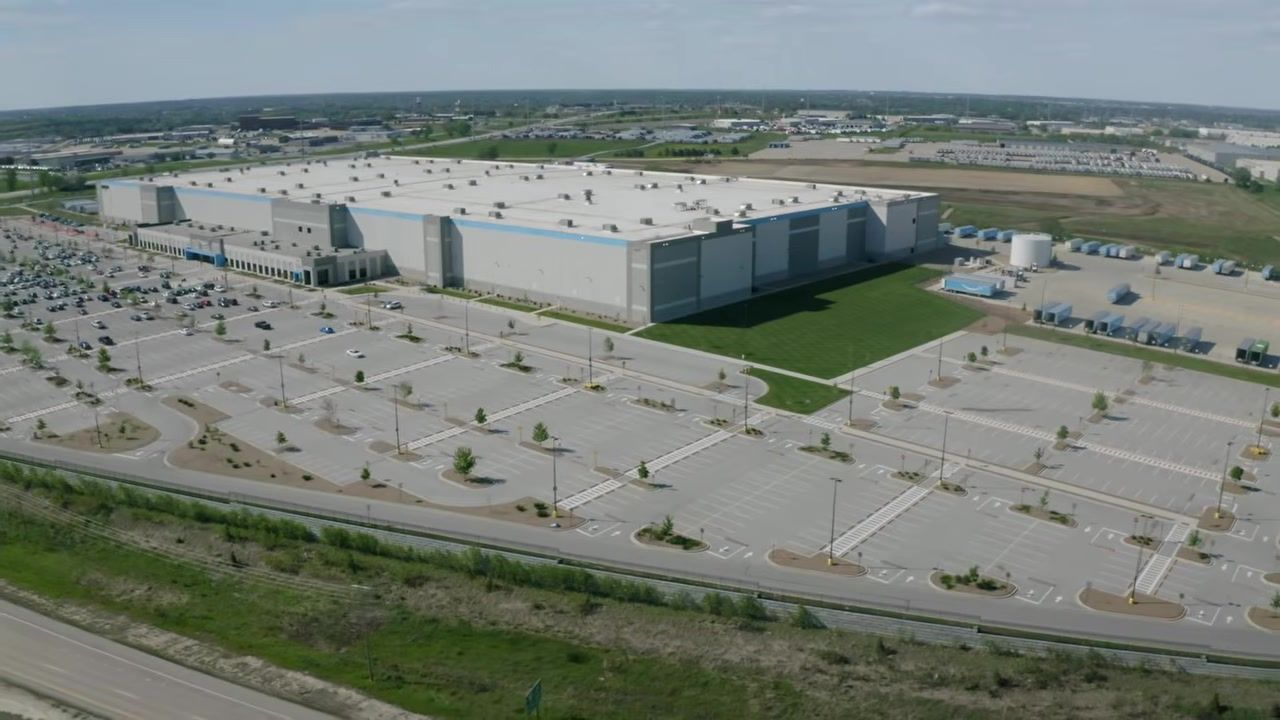
Sarpy County has 10 active data centers with approximately 1.1 million square feet of data center space. Southern Sarpy County is a major focus area for development. Amazon Web Services has an ongoing development footprint in Sarpy County. We're seeing water infrastructure expansion, electrical infrastructure expansion, and transmission infrastructure. Water and electrical infrastructure expansion is underway. The Platte and Missouri Rivers provide water resources, and access to the Ogallala Aquifer is another consideration. Drought and water availability are considerations.
Bellevue's economy is tied to Offutt Air Force Base. Let's use a hypothetical example. Imagine if Offutt Air Force Base closed. That would have an enormous impact on the local Bellevue economy. People would have less reason to relocate to Bellevue, Nebraska. Housing demand would decline and prices would come under pressure. Now, that, thankfully, that's not happening. But the point is, there's much more to housing demand than simply the construction of a data center.
People moving further out want space, newer homes, quieter environment, more land, but open fields often temporary in development-friendly areas. One of the reasons people move further out is because they want something different. They want more space, newer homes, a quieter environment, and maybe even more land. But if you're buying that property based on the assumption that it's going to remain surrounded by open fields, you need to understand something. Open fields are often temporary, especially in a development-friendly environment.
I polled my audience about 90 days ago to gauge how people felt about data centers, and the results were overwhelming. Just under 70% of the people who responded said they had concerns about water, power, and traffic impacts. People want answers. They want to know what my neighborhood is going to look like in 5 years, what are interest rates going to be when I buy, what will this property be worth. Those questions become difficult when you're buying into an area that's rapidly developing because you don't necessarily know the answer, and that's okay.
Hyperlocal Impact: Why Proximity to Data Centers Matters
Here's the distinction I want you to make: a data center can be good for the metro while potentially being bad for a specific property. Those aren't contradictory statements. You can have strong economic growth across the metro while a house sitting directly next to a massive data center becomes less desirable. The reason is simple: proximity matters.
Think about buying a house next to a busy road. Does a busy road mean the entire neighborhood is bad? Of course not. But would you rather have the house backing directly onto a highway? Probably not. The same principle applies here. If you're 5 miles away from a data center, you may barely notice it. But if you're across the street from a 50-foot-tall industrial facility that's operating 24 hours a day, that's a different conversation.
A giant data center isn't exactly the same thing as a park. These are massive industrial buildings. They are large and windowless with substantial security lighting. In many cases, they also have security fencing and gates. While those things might be perfectly acceptable to one buyer, another buyer might walk into a backyard and say, absolutely not. That matters in real estate because a real estate value is ultimately based on what people are willing to pay. If you're trying to sell a house directly adjacent to a facility and the location eliminates a large percentage of potential buyers, that's gonna matter. You may still sell it, but you may have to compete on price.
The Infrastructure You Don't See
Don't just look at the data center. Look at what's happening around the data center, because massive data centers require massive infrastructure. I was recently showing a home to someone who was relocating from California to Omaha because of Offutt Air Force Base, and he was shocked by some of the power infrastructure and industrial development in rural Sarpy County. When people hear there's a data center going up over there, they picture the building, but the building isn't the only thing that changes the landscape. Sometimes the bigger impact is the infrastructure required to support it.
You may not have a data center next door, but you might have new high-voltage transmission lines running nearby, and that's something I would want to know before buying a property. New high-voltage transmission lines and industrial infrastructure may appear in previously rural areas. Parts of eastern Omaha are within the EPA lead Superfund site from the historic ASARCO smelting plant, though that doesn't automatically make neighborhoods undesirable. The same nuance applies to data center proximity.
Which County Is Right for You?
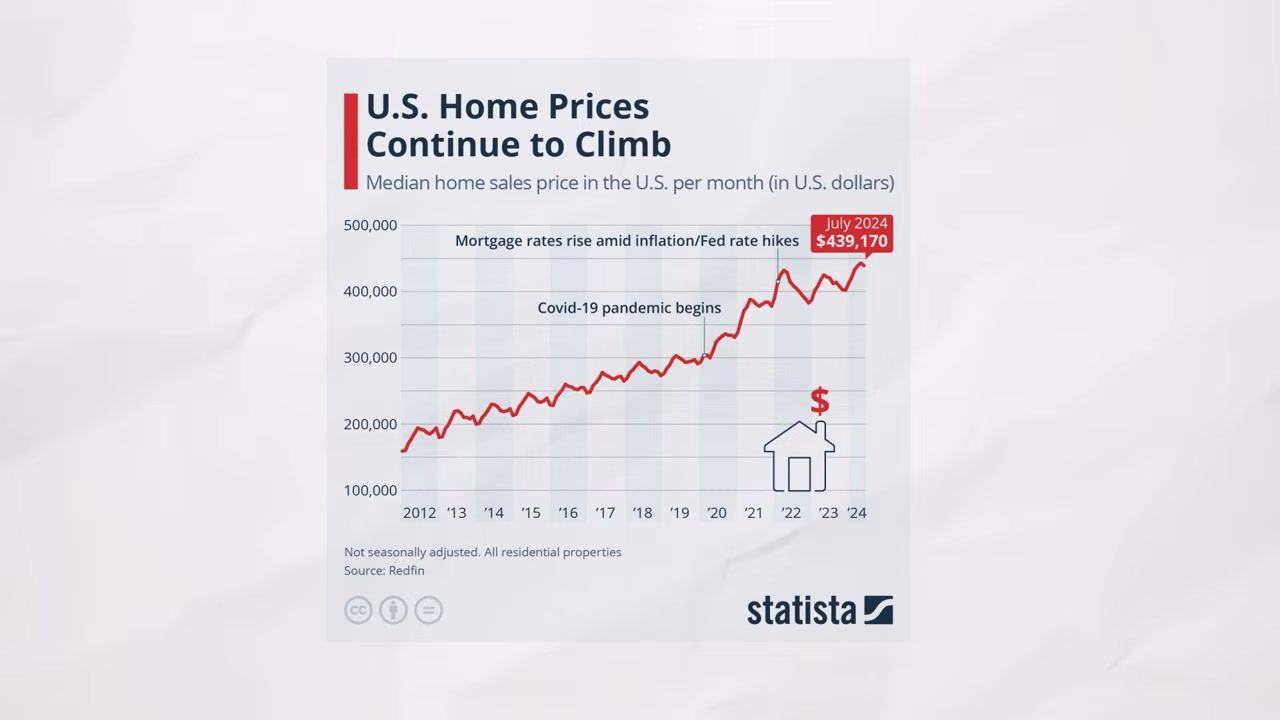
I don't think there's a catch-all answer. There's no single data center market. People need to understand the local dynamics of real estate. You have interest rates which affect buying power and can slow demand. If there's not enough housing supply, you can get unsustainable price growth, which isn't healthy for a housing market. Look at what happened to prices after COVID. Prices increased dramatically. Real estate is hyperlocal and people don't fully know what the long-term impact of data centers will be.
Choose Douglas County if you want proximity to Google's massive Northwest development, access to major fiber corridors, and a central US location. You're accepting that Northwest Douglas County is seeing major infrastructure expansion and that open fields may not stay open. High-income tech workers relocating creates housing demand, but properties directly adjacent to data centers may be less desirable due to industrial appearance, 24/7 operations, and security lighting and fencing.
Choose Sarpy County if you want newer homes, more space, and a quieter environment, but understand that Southern Sarpy County is a major focus area for development. Amazon Web Services has an ongoing development footprint. Water and electrical infrastructure expansion is underway. You're further from downtown Omaha but closer to Offutt Air Force Base, which drives Bellevue's economy. Rapid industrial development is changing the rural character, and 70% of people polled had concerns about water, power, and traffic impacts.
What ultimately matters to buyers and sellers is demand for housing. If people are moving into an area and living there, that can make property more desirable and put upward pressure on values. If you're living in a city experiencing growth and development like Omaha, that's something you have to understand and accept. Ultimately, I think this is bigger than data centers. It's really about the future of Omaha. We're seeing enormous investments across the metro that represents tangible economic activity and demand, and Omaha is continuing to change, and that's exciting. But it also means that some of the things that people love about Omaha today aren't necessarily going to look exactly the same 10 or 20 years from now, and that's okay. Every successful city changes. The key is to understanding how it's changing.
Conclusion
A data center isn't automatically good, and it isn't automatically bad. It's development, and development creates different outcomes depending on where you sit. I think that's the nuance that's missing from a lot of the conversations surrounding these projects. The Omaha Metro isn't going to stop growing. Sarpy County isn't going to stop developing. Northwest Omaha isn't going to stop developing.
If you're thinking about moving to Omaha , buying a home here, or if you're simply trying to figure out which parts of the Metro make the most sense for you, that's exactly what we're here to help. There's so much more to moving to a new area than just price or the pretty pictures you see on Zillow. Those don't tell you what each area really offers. That's why I built the Living in Omaha quiz. It allows you to see how Omaha stacks up against 91 different communities. It uses AI to compare 91 different communities and help you see which ones may fit what you're looking for. You can take the quiz by scanning the QR code or visiting the link in the description.
Even if you're not looking to buy right now, keeping an eye on the market in Douglas and Sarpy County is important. If home ownership is in your future, having the most up-to-date information and access to an experienced real estate team can make a big difference. Book a free consultation call and we'll walk through the parts of the metro that align with what you're looking for.
FAQ
What is a data center and why does it matter for Omaha real estate?
A data center is a specialized facility designed to house enormous amounts of computing infrastructure, servers, storage, and networking equipment, along with all of the electrical and cooling infrastructure necessary to keep that equipment running. Modern facilities can't go down, so they need redundant electrical systems, industrial battery systems, backup generators, and massive cooling systems. They matter for Omaha real estate because Douglas County has 15 active data centers with more than 4.2 million square feet of space, and Sarpy County has 10 active data centers with approximately 1.1 million square feet of space. These facilities bring high-income tech workers who need housing, but proximity to a data center can make a specific property less desirable even as the metro benefits economically.
Why are data centers being built in Nebraska instead of California or Virginia?
Nebraska has lots of cheap flat land compared with dense data center markets like California or Virginia. Nebraska has relatively predictable climate without hurricanes or the same earthquake risk you see in other parts of the country. Nebraska is the only state in the country fully served by public power utilities. Nebraska sits roughly in the middle of the country, and major fiber optic corridors cross the state connecting east and west. Between 2021 and mid-2026 alone, Nebraska granted personal property tax exemptions on roughly $15 billion worth of data center equipment, saving companies more than $500 million in local property taxes.
Will homeowners have to pay for the electricity data centers use?
That's one of the biggest concerns people have, and it's exactly the type of question policymakers are addressing in the Nebraska legislature. Nebraska's LB 1261 protects certain dedicated privately owned power plants from government seizure through eminent domain when they're built to serve a single facility using more than 1,000 megawatts of electricity. This allows hyperscale data center developers to build co-located power plants to help meet their massive energy needs without necessarily putting the entire burden on local public power grid. That can potentially reduce the risk that existing residential customers are forced to bear infrastructure costs associated with massive new industrial load.
How does living next to a data center affect home value?
Proximity matters. A data center can be good for the metro while potentially being bad for a specific property. If you're 5 miles away from a data center, you may barely notice it. But if you're across the street from a 50-foot-tall industrial facility that's operating 24 hours a day, that's a different conversation. These are massive industrial buildings that are large and windowless with substantial security lighting, security fencing, and gates. If you're trying to sell a house directly adjacent to a facility and the location eliminates a large percentage of potential buyers, that's gonna matter. You may still sell it, but you may have to compete on price.
What infrastructure changes should I look for when buying near a data center?
Don't just look at the data center. Look at what's happening around the data center, because massive data centers require massive infrastructure. You may not have a data center next door, but you might have new high-voltage transmission lines running nearby, and that's something I would want to know before buying a property. We're seeing water infrastructure expansion, electrical infrastructure expansion, and transmission infrastructure in Southern Sarpy County and Northwest Douglas County. Infrastructure expansion is ongoing for roads, water, sewer, electricity, and fiber.
Are data centers good or bad for Omaha real estate overall? I don't think there's a catch-all answer. A data center isn't automatically good, and it isn't automatically bad. It's development, and development creates different outcomes depending on where you sit. What ultimately matters to buyers and sellers is demand for housing. If people are moving into an area and living there, that can make property more desirable and put upward pressure on values. These projects bring economic activity during the construction phase and high-income tech workers who may relocate permanently. When massive development occurs, you're often forced to expand roads, water, sewer lines, electricity, fiber, and other infrastructure, and once it's built, that infrastructure can support additional development. Real estate is hyperlocal and people don't fully know what the long-term impact of data centers will be.
DAVID MATNEY
David Matney is a trusted Realtor® and local expert with over 20 years of experience in Omaha’s real estate market.