Douglas and Sarpy County Housing Market Update (October 2026)
Mortgage rates are back in the mid-7 range. Inflation is heating up. The conflict in Iran continues, and the midterm elections are just a few weeks away. But here's what's interesting: unemployment is actually lower than it was a year ago, and the economy grew at 2.2% in the second quarter. We're getting plenty of mixed signals about where the economy is headed, and there's no shortage of uncertainty.
But here's the question: what does this all mean for the Omaha housing market as we head into fall? Are we starting to see opportunities for buyers, or would they be better off sitting on the sidelines? And what about sellers, is now a good time to put your home on the market, or have you missed your opportunity window? More importantly, are we seeing a fundamental shift in the Omaha housing market, or is this just a normal seasonal slowdown that we see every year?
I've been helping people buy, sell, and relocate to the Omaha area for over 23 years, and I'm going to walk you through the numbers for Douglas and Sarpy County, Nebraska. We'll look at what's happening with inventory, sales, prices, and what it all means for you.
Table of Contents
- Douglas County: Inventory Down, Days on Market Still at 8
- Sarpy County: Slower Sales, Lower Unemployment
- Opportunities for Buyers and Sellers This Fall
- Why the Housing Market Isn't Going to Crash
- New Construction vs. Existing Homes: Two Separate Markets
- Home Sales Are Falling, Here's Why
- Mortgage Rates: Should You Wait for 6%?
- Inflation, Interest Rates, and Omaha's Economy
- Which Market Is Right for You: Douglas or Sarpy County?
- Conclusion: Focus on Your Own Economy
Douglas County: Inventory Down, Days on Market Still at 8
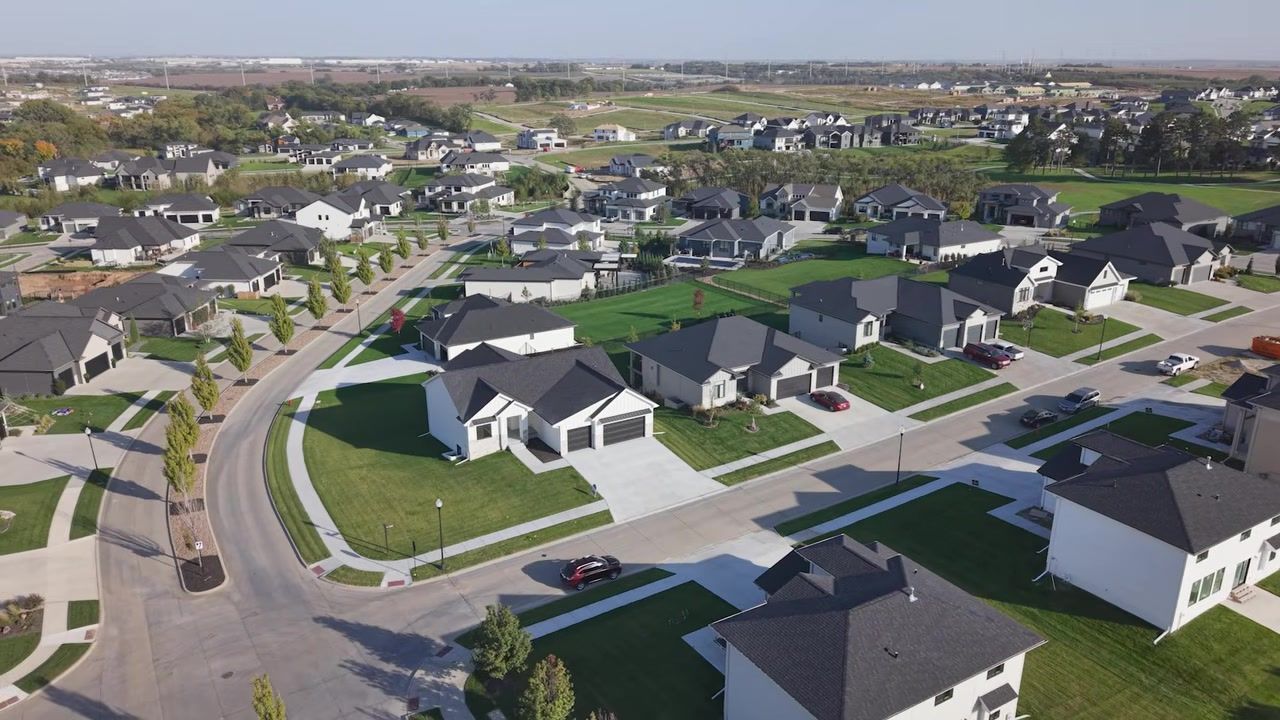
Douglas County is home to the city of Omaha, the towns of Ralston, Bennington, Waterloo, and Valley, Nebraska. Right now, combined with Sarpy County, we have 2,290 total homes on the market. That's down 6.3% from 2025. Most people would think, isn't the market just getting tougher with rates increasing? And yes, it is. However, remember that most sellers are buyers. They sell their current home and then they buy another home. When rates increase, some sellers will decide, you know what, I'm not selling. So inventory can decrease even in a tougher market.
This is a little bit counterintuitive. Most people would think that when the market is shifting in favor of buyers, that inventory has to increase. The same thing applies with new construction. When fewer buyers are in the market, builders will adjust to the market and build fewer homes.
Existing Homes in Douglas County
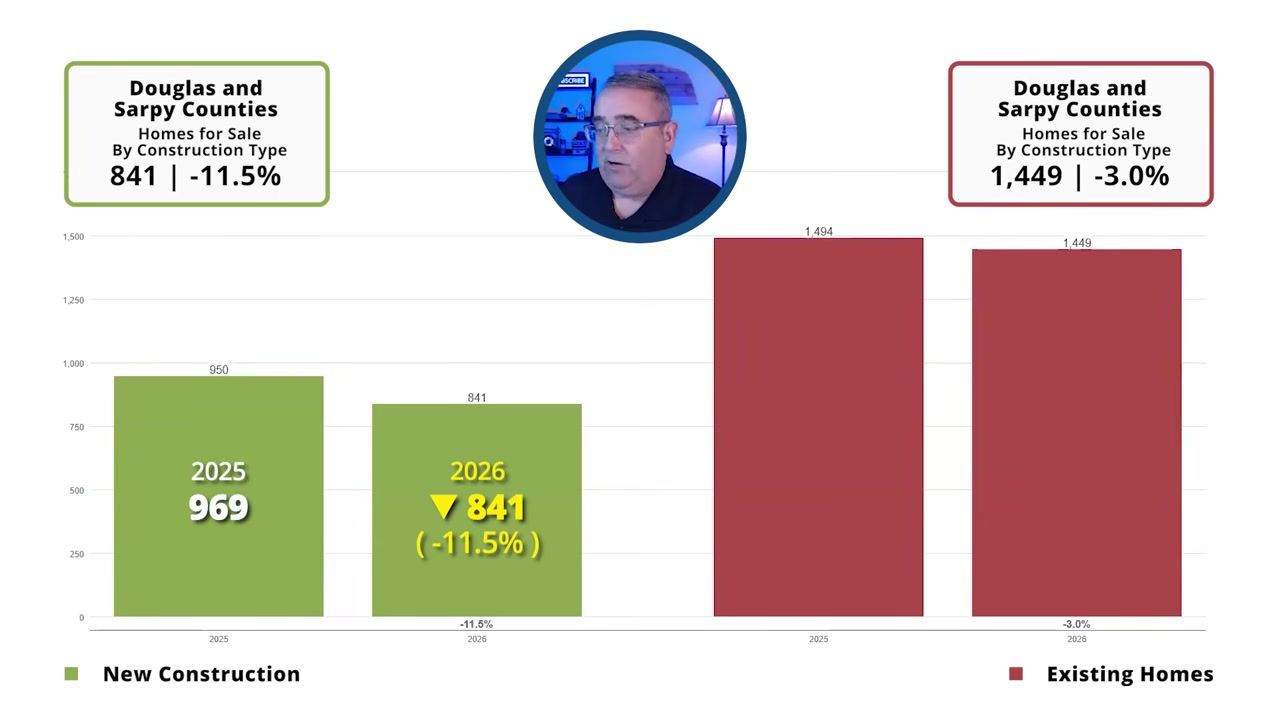
On the existing side, we currently have 1,449 homes on the active market in Douglas and Sarpy County. That is down 3% compared to September of 2025. Right now in the existing market, we have 1.9 months of inventory. That is by definition a seller's market. It also means that in the existing market, if no other homes came on the market, it would take 1.9 months to exhaust the current inventory of homes.
Another number I want to look at is days on market. This tells us how long it's taking homes to sell, and it's another good indicator of what's happening in the housing market. In September, the median days on market for existing homes in Douglas and Sarpy County was 8 days on the market. And that's equal to what it was in September of last year.
Why is this important? Because even when inventory is declining, good homes can still sell quickly in a market, even when there are fewer buyers in the market. For buyers, that means you want to see homes when they first hit the market. Good homes sell quickly. For sellers, it means pricing your home correctly from the very beginning is becoming even more important.
List-to-Sale Price Ratio and Concessions
Another number I like to look at is the difference between the asking price and what a home actually sells for. This is called the list-to-sale price ratio. In September, homes in Douglas and Sarpy County sold for an average of 100% of their final asking price compared to 100% in September of last year. So for example, if a home was listed for $400,000 and sells for $392,000, that is 98% of the asking price.
Now, this is a little bit misleading because it looks like homes are selling for full list price. What this doesn't tell you is that many sellers are paying concessions. For example, let's say a seller sold for full list price at $400,000, but the seller is paying $8,000 of the buyer's closing costs. The stats look like they got 100% of the listing price, but in reality they sold for 98% of the list price. The other thing is the increase in expired and canceled listings. Let's say a seller puts their home on the market for $420,000. After 30 days, they do what they call a cancel relist. They cancel the listing and then relist the home for $400,000.
New Construction Inventory
Right now we have 841 new construction homes on the market in Douglas and Sarpy County. That is down 11.5% compared from September of 2025. The existing market and the new construction market are entirely two separate markets. Also, the new construction market has homes that are already under contract listed as active listings. We also have some builders who will not list all of their available inventory on the MLS. So this is gonna skew the numbers a bit. That is why we strictly look at the existing market when we calculate absorption rate.
Douglas County Pricing and Sales
Overall, the median closed sales price for Douglas and Sarpy County in the month of September was $330,000, which is up 3.1% compared to September of 2025. Again, this shows us that even when the housing market slows down, home prices can continue to increase.
Last month in Douglas and Sarpy County, we had a total of 850 closed sales, which is down 11.7% compared to September of 2025. If we separate new from existing, we had a total of 131 new construction closed sales in Douglas and Sarpy County, which is down 10.3% compared to September of 2025. On the existing side, we had a total number of closed sales of 719, which is down 12% compared to last year.
In Douglas County, we have a 3% unemployment rate, which is down from 3.1% from last year. More people working means more buyers in the market to buy a home.
Sarpy County: Slower Sales, Lower Unemployment
Sarpy County is located just south of Douglas County and includes the cities of Bellevue, Papillion, LaVista, Gretna, and Springfield, Nebraska. Sarpy County shares the same market statistics as Douglas County since we track them together: 2,290 homes on the market, down 6.3% from 2025, and a median closed sales price in September of $330,000, up 3.1%.
In Sarpy County, we have a 2.6% unemployment rate, which is down from 2.7%. That's even lower than Douglas County, and it's a good economic signal. Jobs determine who is in the market, and interest rates determine where they fit in the market, or simply where their budget is.
As we move into fall, inventory tends to increase. This happens every year. For buyers, this presents an opportunity. That means buyers have more choices, sellers have more competition, showings decrease. That means buyers have more negotiating power. Buyers can ask for closing costs. Buyers can do inspections. Buyers can ask for repairs.
Even though inventory is declining despite the market cooling, the fall season still brings more options than summer. If you're a buyer, I absolutely believe you should stay in the market.
Opportunities for Buyers and Sellers This Fall
Always remember, there is opportunity in any market. Just because there is opportunity out there doesn't mean you should buy now. For example, if you have no savings and no money set aside for emergencies or repairs, you should not buy a home. There are all types of programs out there to get people into a home, which are great, but once you're in a home, you need to be able to stay in the home. You can get down payment assistance, you can ask the seller to pay some of your closing costs, but even with these types of strategies, you still need to have some money set aside. If you don't do this, you're going to end up playing homeownership on hard mode.
For Buyers
If you're looking at new construction, now is the time. As things tend to cool, builders will offer more incentives. And with some builders, now is the time to go under contract because let's say they have a 9-month build cycle. You can go under contract now, get your home started, then in the spring you can put your existing home on the market. If you're considering new construction, if you visit a model, make sure your agent is with you on your first visit.
For buyers, the fall presents an opportunity. Buyers have more choices, sellers have more competition, showings decrease, and buyers have more negotiating power. Buyers can ask for closing costs, do inspections, and ask for repairs.
For Sellers
If you're thinking about selling your home, here's my advice. You need to understand we're not in the same market we were in 4 or 5 years ago. Buyers are more sensitive to price, and with mortgage rates where they are, affordability is a real concern. Homes will sell in almost any condition. It's a matter of pricing them correctly from the beginning.
One of the biggest mistakes sellers make is starting too high, letting the home sit, and then chasing the market down with price reductions. Your first couple of weeks on the market are so important. You want to make sure you make the most of that initial exposure.
Why the Housing Market Isn't Going to Crash
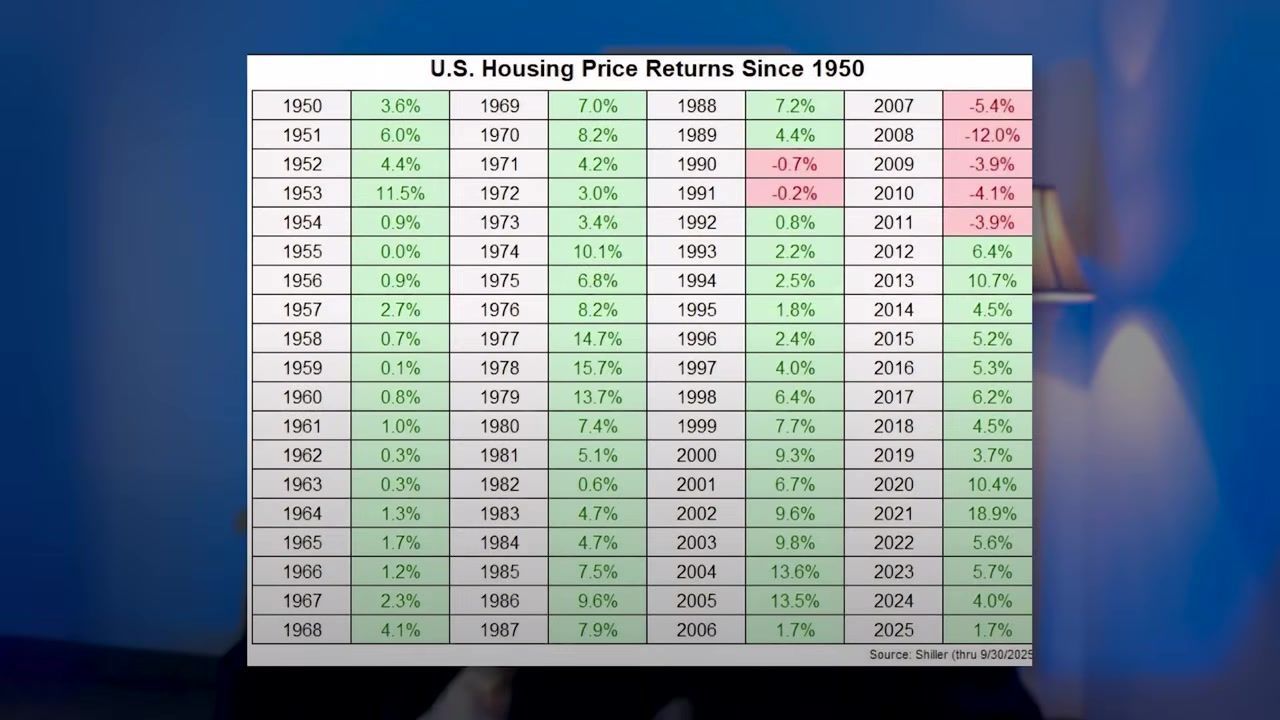
If you're one of those people sitting on the sidelines waiting for the housing market to crash, you're betting against decades of history. In fact, a lot of people say: "The housing market is going to crash so hard over the next decade. There are so many boomers who are completely delusional about the actual value of the property. The government is artificially pumping up the home prices and they're going to be disappointed when they have to sell for far less than what they expected. The whole system is unsustainable. The math doesn't math."
I understand why people feel this way. Home prices are high, mortgage rates are higher than what we've gotten used to, and affordability is a real problem. But here's where I disagree.
Decades of History
When you look back at the history of the housing market, major national price declines have been relatively rare. And think about everything this country has been through over the past 76 years. We've had the Korean War, the Cold War, the assassination of President Kennedy, Vietnam, Watergate, the collapse of the Soviet Union, the Gulf War, September 11th, the wars in Afghanistan and Iraq, the great financial crisis, and the COVID-19 pandemic.
We've had recessions, inflation, unemployment, political uncertainty, and interest rates that were significantly higher than what we're experiencing today. And through all of that, guess what? People still need a place to live. That's something that hasn't changed. You can either rent or you can buy, but everybody needs housing.
Now, that doesn't mean prices can't fall. Absolutely not. We saw what happened during the Great Financial Crisis and the individual markets that can experience significant corrections. But there's a big difference between a housing market that is slowing down and one that's about to crash. And just because homes are expensive doesn't automatically mean prices are going to collapse.
The Problem with Quick Fixes
Are home prices too high for a lot of people? Yes. Are mortgage rates higher than what I'd like to see? Absolutely. But here's the problem. There's no magic lever that someone can pull that suddenly is going to make housing affordable again. It took years to get into the situation, and it's going to take years to work our way out of it.
For example, let's say the government decided to give every first-time homebuyer $25,000 toward purchasing a home. Sounds pretty good, right? But what happens when you suddenly give thousands of buyers more purchasing power without increasing the number of homes available? You increase demand, and that additional demand can push prices even higher.
Same thing happens with mortgage rates. Let's say rates were magically dropped to 5% tomorrow. Would that make monthly payments more affordable? Absolutely. But do you know what else would happen? A lot of buyers who have been sitting on the sidelines would jump back into the market, and if we don't have enough homes available to meet that demand, prices would start climbing again.
That's the problem. You can't fix a housing shortage by simply giving people more money or making it easier to borrow. Ultimately, we need more housing. We need to make enough of it at prices that people can actually afford. But that's not something that's going to happen overnight.
Focus on What You Can Control
And that brings me to my final point. The one thing you have the most control over is your own economy. Can't control interest rates, you can't control inflation, you can't control what happens in Washington, D.C. and you certainly can't control the housing market. But you can control how much debt you take on, how much money you save, and what you can comfortably afford, and whether buying a home makes financial sense for you.
Nobody's going to come to your rescue, and waiting for a housing market crash that may never happen isn't a financial plan.
New Construction vs. Existing Homes: Two Separate Markets
Let's take a look at home prices for both the new and existing market. For new construction, the median closed sales price in Douglas and Sarpy County was $441,690, which is up 2.3% compared to September of 2025. On the existing side, the median closed sales price was $310,000, which is up 1.6% compared to September of 2025.
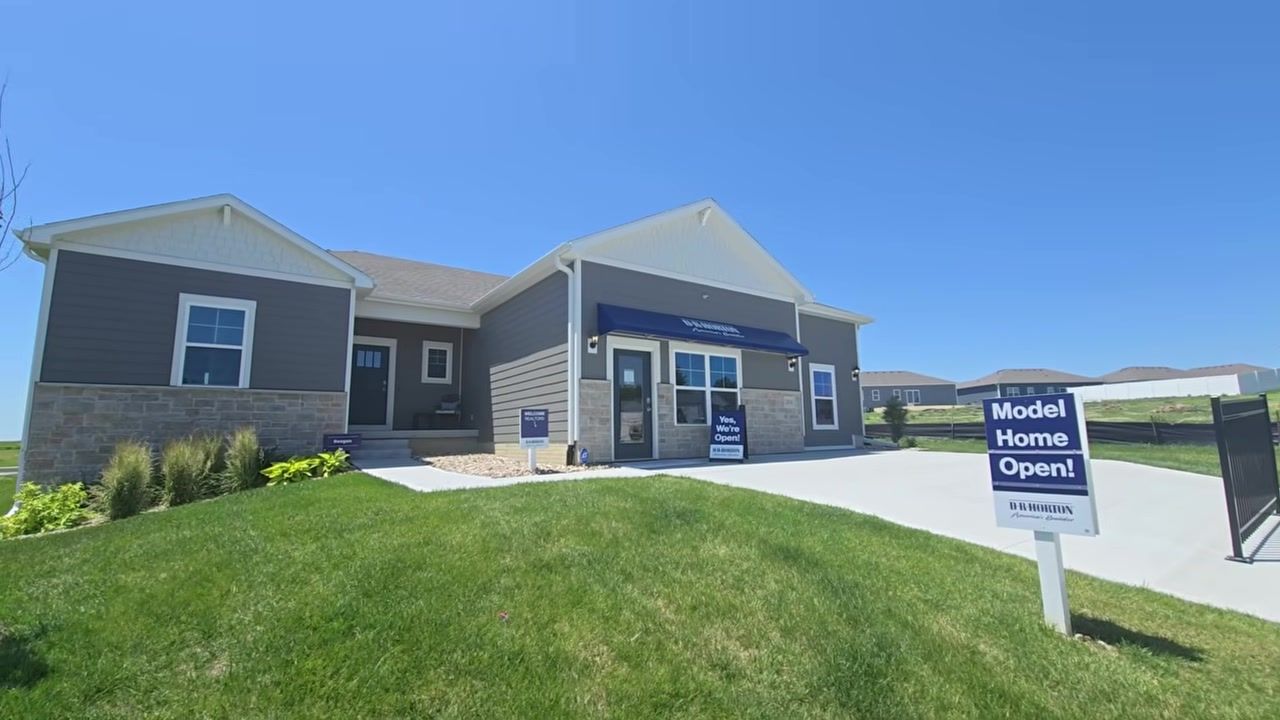
Look at that difference: new construction at $441,690 versus existing homes at $310,000. That's a significant gap, and it shows why these are two entirely separate markets with different dynamics.
Why Price Growth Is Slowing
This is good to see the growth of home prices decrease. In order for home prices to become more affordable, wages have to grow. According to the latest Bureau of Labor and Statistics employment report, the average hourly wages increased approximately 3% over the last 12 months from September of 2025 to September of 2026. However, even when wages increase, if inflation eats into those gains, affordability still takes a hit.
Wage growth at 3% is positive, but when inflation is running at 3.4%, that purchasing power gain gets eroded. That's why affordability remains a challenge even when wages are technically increasing.
Home Sales Are Falling, Here's Why
Sales are down. Why are sales down? When interest rates go up, homes become less affordable, buyers have less buying power, and more buyers decide to sit things out.
Here's what I find interesting about these numbers. Closed sales are down almost 12%, but inventory is down more than 6%. And despite fewer homes selling, our median sale price is up 3.1%. Think about that for a minute. We're seeing fewer buyers in the market, but we're also seeing fewer homes available for sale. And that's one of the reasons why we can have a slowing housing market without seeing home prices collapse.
There's still demand for housing, and when the available supply is limited it can help support prices. Now, that doesn't mean every home is increasing in value, but it does show why fewer sales don't automatically mean falling home prices.
Five-Year Sales Patterns
Let's look at closed sales over the past 5 years. The monthly closed sales chart over the past 5 years shows a pattern, sales tend to bottom out in the winter, increase in the spring, peak in the summer and decrease in the fall. When you look at this chart, the peaks have not been as high as compared to the boom years of 2021 and 2022. We had more sales in those years because interest rates were low and homes were much more affordable. Back then, we needed more inventory, and sellers were getting 10, 15 offers because low interest rates increased demand.
Looking at the 12-month rolling average, you can see how sales tanked over the past 4 years. We went from close to 14,000 closed sales to well below 11,000 sales. Then starting in around 2024, sales started to increase. Then you can see in mid-2026, as interest rates went up, sales began to decrease again.
Mortgage Rates: Should You Wait for 6%?
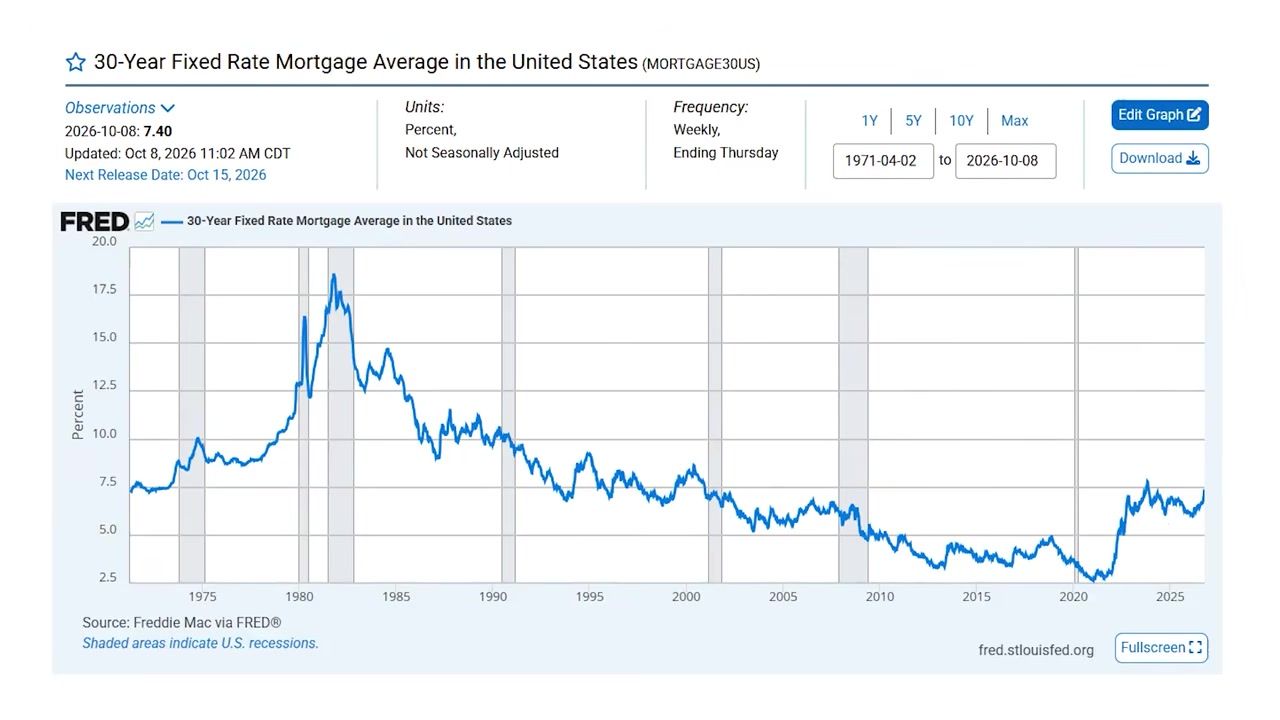
Currently, the 30-year fixed-rate mortgage interest rate is around 7.5%. Rates are up. When rates go up, more buyers are unable to buy a home. This year, rates have moved in the wrong direction.
What is the impact of a 7.5% interest rate versus a 6% interest rate? Let's say you have a home with a $300,000 loan amount. At 7.5% mortgage interest rate, your monthly payment is $2,098, and that's principal and interest. At a 6% mortgage interest rate, your monthly payment is $1,799, and that's principal and interest. At the current interest rate, you're spending roughly $300 more per month.
The 1973 Lesson
Now, what are rates going to do? Nobody knows. When will rates come down? Again, nobody knows. Should you wait for rates to come down? Who is to say rates will come down?
I want to share a graph from the Federal Reserve Bank of St. Louis. This is the 30-year mortgage interest rate going back to the early 1970s. Looking at this graph, back in 1973, rates were approximately 7.5%. What if you were buying a home in 1973 but rates were too high, so you decided to wait for rates to come back down. Look what happened. Rates remained elevated, and they stayed elevated for the next 20 years. Interest rates remained above 7.5% until 1993.
Long story short, nobody knows what rates will do. Hopefully they'll come back down again, but again, nobody knows. If you can afford a home you should buy a home when you are ready. Again, nobody knows when or if rates will come back down.
Inflation, Interest Rates, and Omaha's Economy
Let's take a look at what's keeping interest rates elevated, inflation. Inflation is defined as the general continuous increase in the overall price of goods and services in our economy over time, which reduces the purchasing power of money. Some inflation is good. The target the Federal Reserve shoots for is around 2%.
When inflation runs higher, the Fed likes to hike the Fed funds rate to tap the brakes on the economy. Understand, the Federal Reserve does not control mortgage interest rates. The Fed controls the federal funds rate. This is the rate that banks charge each other for overnight lending. When inflation is too high, the Fed may raise rates to slow borrowing and spending. When the economy slows, the Fed may lower rates to encourage borrowing and spending.
How Treasury Yields Drive Mortgage Rates
The federal funds rate can influence mortgage interest rates, but it does not have direct control. Mortgage rates are more closely tied to the 10-year Treasury yield. The 10-year Treasury and the 30-year fixed-rate mortgage move in tandem. The difference between the 10-year and the 30-year fixed-rate mortgage is called the spread.
Right now inflation is running at 3.4%. The target for the Fed is 2%, so when inflation is higher, don't expect the Fed to cut the federal funds rate.
Local Economic Signals
Overall, how is the economy doing? When inflation is running high, simple everyday items cost more money, including housing. When people have less money to spend, it is unlikely they're going to buy a big-ticket item like a home. Again, that's why you're seeing a decrease in sales. Sales will still occur because there are still people in the market.
Unemployment across the nation is currently at 4.3%, which is down from 4.5% last year. In Douglas County, we have a 3% unemployment rate, which is down from 3.1% from last year. In Sarpy County, we have a 2.6% unemployment rate, which is down from 2.7%. More people working means more buyers in the market to buy a home.
How is overall economic growth? If you watch the news or watch YouTube, it looks like the overall economic outlook is very bleak. Why? Well, it's election season. Locally, drive around and look at the development. When you see lots of cranes and construction, that's a good economic signal. Omaha is growing.
Now, are there people hurting in this economy? Absolutely. Ultimately, the real focus should be your economy. Are you making smart financial decisions? You don't have to be Warren Buffett. Financial literacy is something like anything else, it can be learned. It is a skill that can be learned over time.
Which Market Is Right for You: Douglas or Sarpy County?
Both Douglas and Sarpy County share the same overall market statistics since we track them together, but there are some differences worth noting. Sarpy County has a slightly lower unemployment rate at 2.6% compared to Douglas County's 3%. Both are excellent numbers and both are down from last year.
If you're relocating to Omaha, here's what you need to know:
Choose Douglas County if you want to be in the city of Omaha itself, with access to Ralston, Bennington, Waterloo, and Valley. This is where you'll find the urban core and the most established neighborhoods.
Choose Sarpy County if you're looking at Bellevue, Papillion, LaVista, Gretna, or Springfield. These areas tend to attract buyers looking for newer development and suburban living south of Omaha.
Both counties are seeing the same market dynamics: inventory down, sales down, prices up slightly, and days on market holding steady at 8 days for good homes. The existing market has 1.9 months of inventory, which is a seller's market by definition. New construction inventory is down more than 11%, and builders are adjusting to fewer buyers in the market.
The key is to focus on where you want to live based on commute, schools, and lifestyle, not on trying to time the market or predict where prices are headed next.
Conclusion: Focus on Your Own Economy
The Omaha housing market has flipped in the sense that we're seeing fewer sales, declining inventory, and mortgage rates in the mid-7 range. But prices are still up 3.1% year-over-year, and good homes are still selling in 8 days. This isn't a crash. This is a market adjusting to higher rates and lower affordability.
Closed sales are down almost 12%, but inventory is down more than 6%. That's why we can have a slowing housing market without seeing home prices collapse. There's still demand for housing, and when the available supply is limited, it can help support prices.
If you're a buyer, stay in the market. Fall brings more choices and more negotiating power. If you're looking at new construction, now is the time to lock in incentives. If you're a seller, price your home correctly from the beginning. Your first couple of weeks on the market are the most important.
And if you're waiting for a crash, remember: nobody knows what rates will do, nobody knows when or if prices will fall, and waiting for a housing market crash that may never happen isn't a financial plan. The one thing you have the most control over is your own economy. Focus on how much debt you take on, how much money you save, and what you can comfortably afford.
If you're relocating to Omaha or thinking about buying or selling, I'd love to help. I've been doing this for over 23 years, and I can walk you through what's happening in Douglas and Sarpy County and help you make a decision that makes sense for your situation. Let's schedule a time to talk, you can reach me at 402-490-6771
FAQ: Omaha Housing Market Questions
Is the Omaha housing market in a buyer's or seller's market?
The existing market in Douglas and Sarpy County has 1.9 months of inventory, which is by definition a seller's market. A seller's market is 3 months of inventory or less. However, buyers have more negotiating power in the fall as inventory tends to increase seasonally, showings decrease, and sellers face more competition.
Why are home sales down but prices still rising?
Closed sales are down almost 12%, but inventory is down more than 6%. When there are fewer homes available for sale, it can help support prices even when there are fewer buyers in the market. There's still demand for housing, and limited supply prevents prices from collapsing.
Should I wait for mortgage rates to come down before buying?
Nobody knows what rates will do or when they will come down. In 1973, rates were approximately 7.5%, and they remained elevated for the next 20 years, staying above 7.5% until 1993. If you can afford a home, you should buy a home when you are ready. Waiting for rates that may never come down isn't a financial plan.
What's the difference between new construction and existing home prices?
New construction median closed sales price in September was $441,690, up 2.3% year-over-year. Existing home median closed sales price was $310,000, up 1.6% year-over-year. These are two entirely separate markets with different dynamics. New construction has homes under contract still listed as active, and some builders don't list all inventory on the MLS.
How long are homes taking to sell in Omaha?
The median days on market for existing homes in Douglas and Sarpy County was 8 days in September, equal to last year. Good homes still sell quickly even when there are fewer buyers in the market. For buyers, that means you want to see homes when they first hit the market. For sellers, it means pricing correctly from the beginning is critical.
Is the Omaha housing market going to crash?
Major national price declines have been relatively rare when you look back at the history of the housing market over the past 76 years. People still need a place to live. There's a big difference between a housing market that is slowing down and one that's about to crash. Just because homes are expensive doesn't automatically mean prices are going to collapse. We need more housing at prices people can afford, but that's not something that's going to happen overnight.
DAVID MATNEY
David Matney is a trusted Realtor® and local expert with over 20 years of experience in Omaha’s real estate market.