What Nobody Tells You About Buying Recreational Land in Nebraska
You're standing in a valley north of O'Neill, watching a spring-fed creek cut through 1,300 acres of grass and timber. A registered grass runway stretches across the property. Thirteen miles of ATV trails wind through the hills. This isn't Colorado or Wyoming. This is Nebraska, and most people driving I-80 have no idea places like this exist here.
I sat down with Bob Osborne from American Legacy Land Company to talk about what buyers need to know before they purchase recreational property in Nebraska. Bob's been doing this long enough to see first-time land buyers make the same mistakes over and over. He's also seen people find their dream weekend getaway for a fraction of what they'd pay in the Rockies. We covered financing, access, surveys, utilities, ongoing costs, income opportunities, and the biggest pitfalls that trip up new buyers. If you've ever thought about owning hunting ground, a remote work retreat, or just a piece of quiet land to call your own, here's what you need to ask before you sign.
Table of Contents
- Eagle Creek Ranch (O'Neill Area): A Turnkey 1,300-Acre Property
- Long Pine: Where Nebraska Feels Like Colorado
- What to Know Before You Start Looking
- Financing and Down Payments
- Access, Surveys, and Shared Roads
- Utilities: The Costs Nobody Warns You About
- Water Rights, Wells, and Septic Systems
- Income Potential Through CRP and Grazing Leases
- Hunting, Birdwatching, and Other Uses
- Which Type of Recreational Property Is Right for You
- Conclusion
Eagle Creek Ranch (O'Neill Area): A Turnkey 1,300-Acre Property
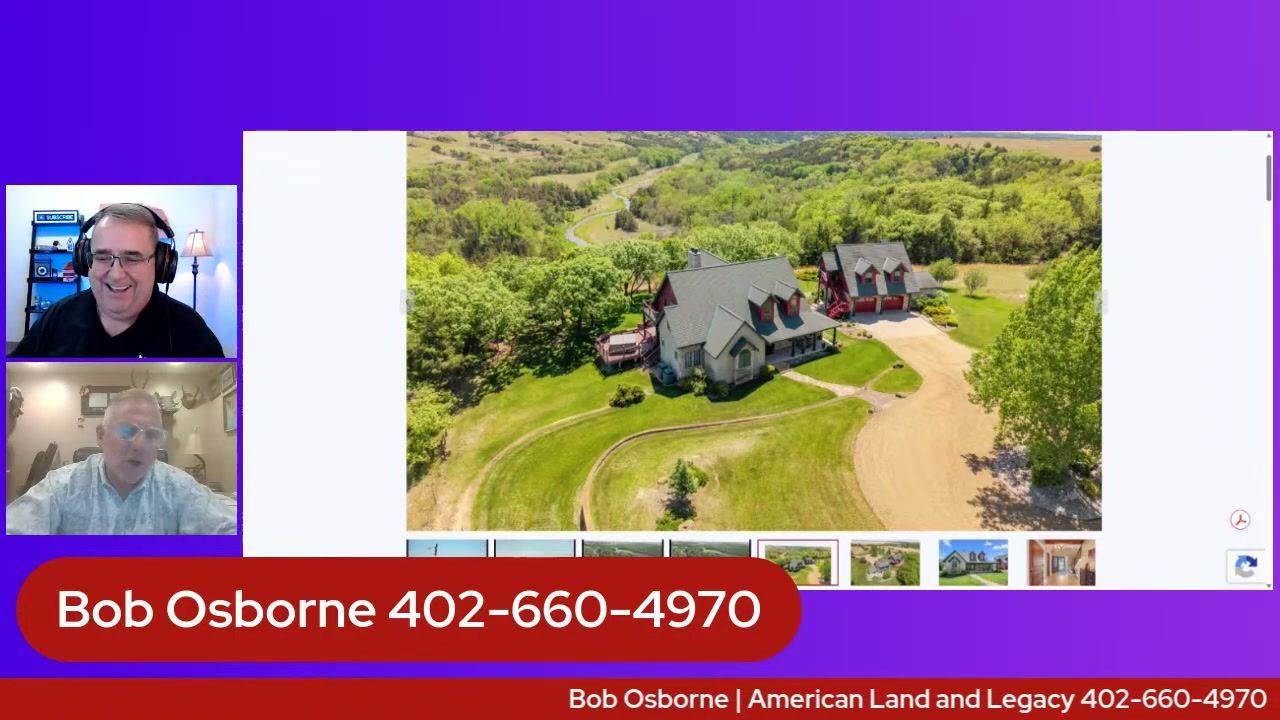
Eagle Creek Ranch sits 20 minutes north of O'Neill, close enough to the South Dakota border that you can feel the landscape shift. This is 1,300-plus acres of working ranch with a 3-bedroom home, fully furnished, ready for you to walk in with a bottle of wine and a cooler of steaks. A natural spring-fed creek runs through the property. There's a registered grass runway that can handle a turboprop if you fly in from Omaha or Denver. Thirteen miles of ATV and UTV trails loop through the hills and timber.
The property is listed at $5.6 million. That's not a typo. For context, a comparable ranch in Aspen would run you $60 million or more. This one comes with a working cattle operation, CRP program income, and a haying operation that generates revenue while you're not there. The current owners don't use it for hunting, but the habitat is there if that's your thing. It's big enough for two families to co-own and still have space to disappear.
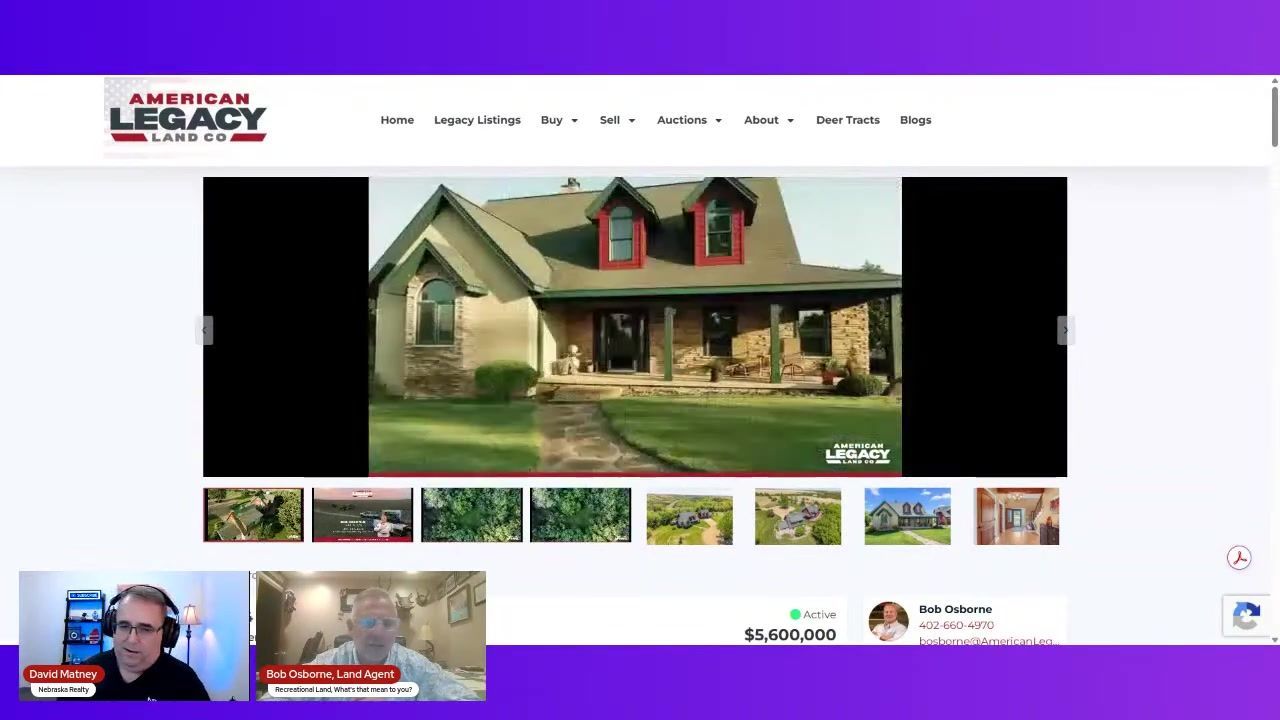
Bob markets this property through the Realtors Land Institute network, which reaches buyers in Colorado, Wyoming, and New Mexico who are looking for value outside the Front Range. The drone and video work on the listing is some of the best I've seen. You get a sense of scale and privacy that's hard to convey in still photos. The O'Neill Airport is 20 miles away and can handle turboprops, so access is easier than you'd think for out-of-state buyers.
This is the high end of the recreational property market in Nebraska, but it shows what's possible. You can own a premier ranch with multiple income streams, room for horses and ATVs, and enough land to host extended family without tripping over each other. The peace and quiet alone is worth the drive.
What Makes a Property Turnkey
Turnkey means you're not hauling a camper out there and hoping the well works. Everything is in place: the home, the utilities, the infrastructure. You're buying a finished product, not a blank slate. That's rare in the recreational land market. Most buyers start with raw acreage and build out over time, adding electricity one year, drilling a well the next, maybe putting in a septic system after that. Eagle Creek Ranch skips all of that. You're paying for the convenience of not having to project-manage a multi-year buildout.
The property also generates income through cattle grazing leases and CRP payments. The owners don't run the cattle themselves; they lease the land to a rancher who handles the operation. That income offsets property taxes and insurance. It's not enough to make the ranch cash-flow positive at $5.6 million, but it takes the edge off the carrying costs. If you're thinking about recreational land as a long-term investment, income potential matters. It's the difference between a property that costs you money every month and one that pays part of its own way.
Long Pine: Where Nebraska Feels Like Colorado
Long Pine is a town of 312 people on Highway 20, somewhere between Norfolk and Valentine. You drive across the prairie for hours, watching the grassland roll past, and then the road drops into a valley full of pine trees. There's a trout creek running through town, browns, brooks, and rainbows, year-round fishing. The area is called Hidden Paradise, and the name fits. It feels like you took a wrong turn and ended up in the Rockies.
Recreational properties around Long Pine range from $200,000 to over $1 million, depending on acreage and what's on the land. Buyers come from all over Nebraska: North Platte, Plattsmouth, even Omaha. It's a 5- to 6-hour drive from the eastern part of the state, which makes it a long haul for a weekend trip. But a lot of buyers are working remotely now. Fiber optic internet has reached most of rural Nebraska, thanks to federal broadband expansion programs. You can leave Omaha on a Thursday afternoon, work from Long Pine on Friday, and have the weekend to fish or hike before driving back Sunday night.
The landscape change is dramatic. You're cutting across the state on Highway 20, and for the first couple hours it's all prairie and grassland. Then you hit the pine valley and it's a different world. The trout creek is natural, not stocked, which means the fishing is as good as anything you'll find in Colorado. The town itself is small enough that you know your neighbors, but not so remote that you're completely cut off. There's a cafe, a gas station, the basics.
Bob mentioned buyers who use Long Pine as a remote work retreat. They're not hunting or fishing every day. They're logging into Zoom calls from a cabin in the pines, taking a walk along the creek at lunch, and enjoying the quiet. That's a different use case than the traditional hunting-land buyer, but it's becoming more common. Recreational property isn't just about deer season anymore. It's about having a place to go when you need to get out of the city.
Why Long Pine Appeals to Remote Workers
Fiber optic internet changes the equation. Ten years ago, buying land in Long Pine meant accepting that you'd be offline most of the time. Now you can stream video, take calls, and work a full day without worrying about your connection dropping. That opens up recreational property to a whole new group of buyers who need reliable internet but want the peace and space that comes with rural land.
The drive is still long, 5 or 6 hours from Omaha, but if you're only commuting once a week, it's manageable. Some buyers are out there Thursday through Monday, working remotely Friday and Monday, and treating the weekend as a true getaway. Others are semi-retired and spending weeks at a time in Long Pine, coming back to Omaha or Lincoln only when they need to. The flexibility of remote work makes that possible in a way it wasn't before.
What to Know Before You Start Looking
Bob's first question to any new buyer is always the same: What do you want to do with the land? That's not a sales pitch. It's a filter. If you don't know what you're looking for, you're going to waste a lot of time looking at properties that don't fit. Some buyers want hunting land. Others want a place to ride ATVs or horses. Some want to birdwatch, or tend bees, or just sit on a porch and watch the sunset. All of those are valid uses, but they require different types of property.
The second question is budget. Recreational land in Nebraska averages $4,500 to $11,000 per acre, depending on location and what's on the land. A 12-acre parcel might run you $54,000 to $132,000. A 77-acre parcel could be $165,000 if it's raw land in a less-traveled area, or $576,000 if it has water, timber, and good access. You need to know what you can afford before you start looking, because the range is wide.
The third question is how far you're willing to travel. If you're in Omaha and you want to use the property every weekend, you're probably looking within a 2- to 3-hour radius. If you're planning to visit once a month or a few times a year, you can go farther. Distance affects not just convenience but also how you'll use the land. A property 6 hours away is a destination, not a weekend retreat.
Bob also asks about must-haves versus nice-to-haves. Do you need electricity at the road, or are you okay running a generator? Do you need a well, or can you haul water? Do you need a septic system, or are you fine with a camper setup? The answers to those questions determine what properties are even worth looking at. If you need utilities in place, you're looking at a much smaller pool of listings and a higher price per acre.
The Must-Have vs. Nice-to-Have List
This is the same exercise you'd do when buying a house, but the stakes are different. With a house, you can compromise on the number of bedrooms or the size of the garage. With recreational land, compromising on access or water can mean the difference between a property you can use and one that sits empty because it's too much work to get there or make it functional.
Must-haves are non-negotiable. If you need year-round access, you can't buy a property with a shared road that doesn't get plowed in winter. If you need water for livestock or a garden, you can't buy a property where drilling a well is a gamble. Nice-to-haves are things you'd like but can live without: mature timber, a creek, a view, proximity to public hunting land. Those features add value, but they're not deal-breakers if the property checks the other boxes.
Bob recommends writing this list down before you start looking. It keeps you honest. It's easy to fall in love with a property that has a beautiful view and then realize six months later that you can't afford to run electricity to it. The list keeps you focused on what you actually need versus what looks good in photos.
Financing and Down Payments
You're not getting a conventional mortgage for recreational land. Most lenders won't touch it. You're working with farm and ag lenders who specialize in rural property. They understand land values, income potential, and the risks involved. The typical down payment is 20%, and rates are usually a point or two higher than a conventional home loan.
Some lenders offer first-time land buyer programs that can reduce the down payment or offer more flexible terms. Bob works with buyers to connect them with lenders who understand the recreational market. If the property has farm income, CRP payments, grazing leases, hay production, that can help with financing. The lender sees the income stream and factors it into the loan approval. It's not enough to make the property cash-flow positive in most cases, but it reduces the perceived risk.
Financing takes longer than a typical home purchase. Expect 45 to 60 days to close, sometimes longer if there are title issues or survey work that needs to be done. Lenders want to see a survey, a clear title, and proof of access before they'll fund the loan. If any of those pieces are missing, the timeline stretches out.
Why Farm and Ag Lenders Are Different
These lenders understand that recreational land isn't a primary residence. They're not expecting you to live there full-time or generate enough income to cover the mortgage. They're looking at the land value, the potential for appreciation, and whether you have the financial capacity to carry the loan even if the property doesn't generate income. That's a different risk profile than a conventional mortgage, and it requires a different underwriting process.
Farm and ag lenders also understand conservation programs like CRP and WRP. If the property is enrolled in one of those programs, the lender knows what the annual payment is and how long the contract runs. That income can be factored into your debt-to-income ratio, which can help you qualify for a larger loan. It's not a huge difference, but it can be the margin that makes a deal work.
Access, Surveys, and Shared Roads
Access is the first thing Bob checks before he shows a property to a client. If you can't get to the land, it doesn't matter how beautiful it is. Legal access means there's a recorded easement or a public road that touches the property. Landlocked parcels exist, and they're usually cheap for a reason. You're at the mercy of a neighbor to grant you access, and that can fall apart if the neighbor sells or decides they don't want you driving across their land anymore.
Shared roads are common in rural areas. Two or three landowners split the cost of maintaining a private lane that connects to a public road. That sounds simple until you start asking who pays for gravel, who plows in winter, and who fixes the gate when it breaks. Bob recommends meeting the other landowners before you buy. You're going to be sharing that road with them for as long as you own the property, and you need to know if they're reasonable people or if they're going to make your life difficult.
Surveys matter more with land than with houses. When Bob lists a property, he walks the boundaries with a survey in hand and flags the corners with pink tape. Buyers want to know exactly where their property line is, especially if they're planning to fence it or build near the edge. A survey also protects you from boundary disputes with neighbors. If the fence line doesn't match the legal description, you need to know that before you close.
What to Ask About Shared Roads
Who maintains it? Who pays for gravel or rock? Is there a written agreement, or is it just a handshake deal? What happens if one of the landowners stops contributing? These are the questions that come up after you buy, and by then it's too late to negotiate. Bob tries to get answers before his clients make an offer, because a shared road can turn into a nightmare if the other landowners aren't cooperative.
Gates are another issue. If the road is gated, who has a key? Is it a combination lock, or does everyone have their own padlock? What's the protocol for closing the gate behind you? These sound like small details, but they matter when you're driving out there in the dark after a long day and you can't remember the combination or you left your key at home.
Utilities: The Costs Nobody Warns You About
Electricity is the big one. If power is at the road, you're looking at $20 to $30 per foot to run it to your building site. If you're 200 feet from the road, that's $4,000 to $6,000. If you're 600 feet back, it's $12,000 to $18,000. Then you need an electrician to install a meter base and connect everything, which is another few thousand dollars. Underground is more expensive than overhead, but it's worth it if you're in an area that gets ice storms or high winds. Overhead lines come down. Underground lines don't.
Insurance is cheaper than most people expect, but it's not optional. You need an umbrella policy that covers liability in case someone gets hurt on your property. A guest flips an ATV, breaks an arm, and suddenly you're looking at a $15,000 medical bill. The umbrella policy costs $200 to $400 a year and covers those situations. It also protects you if a neighbor's cattle get onto your land and cause damage, or if a hunter trespasses and gets injured. It's cheap peace of mind.
Property taxes on recreational land are lower than on a house, but they're not zero. Expect to pay a few hundred to a few thousand dollars a year, depending on the county and the assessed value. If the property is enrolled in a conservation program, the taxes may be lower because the land is classified as agricultural rather than residential.
Why Underground Power Is Worth the Cost
Overhead lines are cheaper to install, but they're vulnerable. A heavy snow, an ice storm, a windstorm, any of those can bring the lines down. If you're 20 minutes from town and the power goes out, you're waiting days for the utility company to get out there and fix it. Underground lines eliminate that risk. They cost more upfront, but they save you the headache of dealing with outages every time the weather turns bad.
Bob recommends budgeting for underground if you're planning to build a cabin or spend extended time on the property. If you're just using it for weekend camping trips, overhead might be fine. But if you're working remotely or planning to retire there, underground is the way to go.
Water Rights, Wells, and Septic Systems
Water is not guaranteed. Just because the neighboring properties have wells doesn't mean your property can support one. In some parts of Nebraska, water rights are restricted. You need to write your offer contingent on finding water, or you could end up owning land you can't use. Drilling a well costs $10,000 to $20,000, depending on depth and whether you hit water on the first try. Some sellers will split that cost 50/50 with the buyer, but that's negotiable.
Septic systems are required if you're planning to stay overnight. A basic system costs $8,000 to $15,000, depending on soil conditions and local regulations. If the soil doesn't perk well, you might need a more expensive engineered system. The county health department will test the soil before they issue a permit, and that test tells you whether a standard septic system will work or whether you need to spend more.
A lot of buyers start with a camper setup and add utilities over time. Year one, you're hauling water and using the camper's holding tanks. Year two, you drill a well. Year three, you put in a septic system. Year four, you build a cabin. It's a phased approach that spreads the cost out over several years and lets you use the property while you're improving it.
Why Water Contingencies Matter
If you buy land assuming you can drill a well and then find out the water table is too deep or the county won't issue a permit, you're stuck. You can't build, you can't camp long-term, and you can't sell the property for what you paid. Writing the offer contingent on finding water protects you from that scenario. The seller might push back, but it's a reasonable request. If they're confident there's water, they'll agree to the contingency.
Bob has worked with sellers who agreed to split the cost of drilling a well because they wanted the deal to close and they knew water was a risk. That's a win-win. The buyer gets some cost relief, and the seller gets the property sold. It's also a signal that the seller is being honest about the property's limitations.
Income Potential Through CRP and Grazing Leases
Some recreational properties generate income. The Conservation Reserve Program (CRP) pays landowners to take land out of production and plant native grasses or trees. The contracts run 10 to 15 years, and the annual payment is based on the county's average rental rate for cropland. It's not a fortune, but it's enough to cover property taxes and insurance in most cases. If you buy a property enrolled in CRP, the contract transfers to you.
The downside is you can't build on CRP land. You can't put up a cabin, you can't run ATVs through it, and you can't graze livestock on it during the contract period. If your goal is to have a hunting cabin and some open land to ride around on, CRP might not fit. But if you're looking for income and you're okay waiting 10 years to develop the property, it's a good option.
Grazing leases are another income source. You lease the land to a rancher who runs cattle on it. The lease payment is usually a few dollars per acre per month, depending on the quality of the grass and the local market. The rancher handles all the management, fencing, water, moving the cattle, and you collect a check. It's passive income that offsets your carrying costs.
Haying is similar. You lease the land to someone who cuts and bales the hay, and they pay you a percentage of the crop or a flat fee per acre. It's less common than grazing leases, but it's an option if the land is flat enough to run equipment on.
Why CRP Isn't for Everyone
If you're buying recreational land because you want to use it now, CRP doesn't work. You're locked into a 10- to 15-year contract that restricts what you can do with the land. You can't build, you can't clear trees, and you can't change the land use without breaking the contract and paying back the government for all the payments you received. That's a big penalty.
But if you're buying land as a long-term investment and you're okay with the restrictions, CRP is a way to make the land pay for itself while you wait. When the contract expires, you can develop the property or re-enroll in the program. It's a trade-off between income now and flexibility later.
Hunting, Birdwatching, and Other Uses
Hunting is the most common use for recreational land, but it's not the only one. Bob works with clients who buy land for birdwatching, butterfly and bee observation, horseback riding, ATV and UTV trails, and remote work retreats. Some buyers aren't hunters at all. They just want a place to go where they can be outside and not hear traffic or see neighbors.
Central Nebraska is a major stopover for sandhill cranes during the spring migration. Thousands of cranes land along the Platte River to rest and feed before continuing north. People come from around the world to watch the cranes, and some buyers purchase land specifically to have a front-row seat to the migration. In the fall, the cranes fly over central Nebraska on their way south, riding thermals to gain altitude. It's a different experience than the spring migration, but it's still worth seeing.
Bob mentioned working with clients who want land for target shooting. They're not hunting; they're setting up a long-rifle range or a handgun range. That requires enough acreage to create a safe backstop and enough distance from neighbors that noise isn't an issue. It's a niche use, but it's becoming more common as shooting ranges near urban areas get crowded or shut down.
Why Hunting Isn't the Only Draw
The traditional recreational land buyer is a hunter looking for a place to chase deer or pheasants. But the market is shifting. Remote work, fiber optic internet, and a growing interest in outdoor recreation are bringing in buyers who don't hunt but still want land. They're looking for space, privacy, and a place to unplug. That's a different buyer profile, and it's expanding the market for recreational land in ways that weren't possible 10 years ago.
Bob also mentioned the rise of apps that let landowners lease their property to hunters on a day-use basis. You check in at 7 AM, you get a text confirming access, and your card is charged for the day. It's a way to generate income from land you're not using every weekend, and it's easier than managing a full-season lease. The downside is you don't get to scout the property ahead of time, but for casual hunters who just want a place to go on a Wednesday afternoon, it works.
Which Type of Recreational Property Is Right for You
If you want a turnkey property where you can show up and start using it immediately, you're looking at the high end of the market. Eagle Creek Ranch is the example. Everything is in place: the home, the utilities, the infrastructure. You're paying for convenience and for the fact that someone else did the hard work of developing the property. That's $5.6 million in this case, but smaller turnkey properties exist in the $500,000 to $1 million range.
If you want raw land that you can develop over time, you're looking at $200,000 to $400,000 for 40 to 80 acres, depending on location. You'll spend the first few years adding utilities, drilling a well, and maybe putting in a septic system. It's a longer timeline, but it's more affordable upfront and it gives you control over how the property develops. You're building it to fit your needs, not adapting to what someone else built.
If you want income-producing land, look for properties enrolled in CRP or with existing grazing leases. The income won't make you rich, but it offsets carrying costs and makes the property easier to hold long-term. The trade-off is you're restricted in what you can do with the land while the contract is active.
If you want a remote work retreat, focus on properties with fiber optic internet and good access. Long Pine is the example. You're 5 or 6 hours from Omaha, but you can work from there and enjoy the scenery when you're off the clock. The drive is long, but if you're only commuting once a week, it's manageable.
The Trade-Offs Nobody Talks About
Turnkey properties cost more, but they save you years of project management. Raw land is cheaper, but you're committing to a multi-year buildout that requires time, money, and patience. Income-producing land pays for itself, but it limits your flexibility. Remote work retreats give you the best of both worlds, space and connectivity, but they require a long drive or a willingness to spend extended time away from home.
There's no perfect property. Every option has trade-offs. The key is knowing which trade-offs you're willing to accept and which ones are deal-breakers. Bob's job is to help buyers figure that out before they start looking, because once you buy, you're committed.
Conclusion
Buying recreational land in Nebraska isn't like buying a house. You're not getting a conventional mortgage, you're not working with a typical real estate agent, and you're not dealing with the same set of issues. Access, utilities, water, and income potential all matter in ways they don't with residential property. The buyers who do well are the ones who take the time to understand what they're getting into before they make an offer.
Bob's advice is to start with a clear goal, a realistic budget, and a list of must-haves versus nice-to-haves. Then find a land agent who specializes in recreational property and who's willing to walk you through the process. The market is active right now. Properties are selling in days, not weeks, and buyers who wait too long lose out. But rushing into a purchase without doing your homework is worse than missing out on a property.
If you're thinking about buying recreational land in Nebraska, reach out to Bob Osborne at American Legacy Land Company. His number is 402-660-4970, and his email is bosborne@americanlegacylandco.com. He works with buyers across the state and in surrounding states, and he's connected to a network of land agents who can help you find what you're looking for even if it's outside Nebraska. Whether you're looking for hunting land, a remote work retreat, or just a place to get away, Bob can walk you through what's available and what it takes to make it happen.
If you're relocating to Omaha or thinking about buying or selling in the metro, I'm here to help. Call or text me at 402-490-6771, or email davidmatney@nebraskarealty.com. Let's set up a time to talk about what you're looking for and how I can help you find it.
FAQ
What is the average cost per acre for recreational land in Nebraska?
Recreational land in Nebraska averages $4,500 to $11,000 per acre, depending on location, access, and what's on the land. Properties with water, timber, and good road access cost more. Raw grassland in less-traveled areas costs less. Typical recreational parcels range from 12 to 77 acres, with prices from $54,000 to over $500,000.
Do I need a special type of loan to buy recreational land?
Yes. You'll work with farm and ag lenders who specialize in rural property. Conventional mortgage lenders typically won't finance recreational land. Expect a 20% down payment and interest rates a point or two higher than a conventional home loan. Some lenders offer first-time land buyer programs with more flexible terms.
What should I look for in terms of access to the property?
You need legal access, which means a recorded easement or a public road that touches the property. Landlocked parcels are risky because you're dependent on a neighbor to grant you access. If the property has a shared road, ask who maintains it, who pays for gravel, and whether there's a written agreement. Meet the other landowners before you buy.
How much does it cost to run electricity to a rural property?
Electricity costs $20 to $30 per foot to run from the road to your building site. If you're 200 feet back, that's $4,000 to $6,000. If you're 600 feet back, it's $12,000 to $18,000. Underground installation costs more than overhead but protects the lines from weather damage. Budget another few thousand dollars for an electrician to install the meter base and connect everything.
Can I generate income from recreational land?
Yes. Some properties are enrolled in the Conservation Reserve Program (CRP), which pays you to plant native grasses or trees and leave the land undisturbed. Contracts run 10 to 15 years. You can also lease the land for cattle grazing or haying. Income from these programs typically covers property taxes and insurance but won't make the property cash-flow positive.
What is the Conservation Reserve Program and how does it affect what I can do with the land?
CRP is a federal program that pays landowners to take land out of production and plant native grasses or trees. The contracts run 10 to 15 years, and the annual payment is based on the county's average cropland rental rate. While the land is enrolled, you can't build on it, run ATVs through it, or graze livestock. If you break the contract, you have to pay back all the payments you received. CRP is a good option if you want income and you're okay waiting to develop the property, but it's not a fit if you want to use the land now.
DAVID MATNEY
David Matney is a trusted Realtor® and local expert with over 20 years of experience in Omaha’s real estate market.