The Omaha real estate market has reached another important milestone. In Douglas and Sarpy Counties, the median closed sales price hit $350,000 in May, an all time high for the combined existing and new construction market.
That does not mean every home costs $350,000. A median means half of the homes sold above that number and half sold below it. We prefer the median over an average because one massive luxury sale can pull an average upward and give us a distorted picture. The average sale price was about $393,000, but the median gives us a much cleaner read on what is actually happening in the Omaha real estate market.
Table of Contents
- Record Prices in the Omaha Real Estate Market
- Existing Homes and New Construction Are Moving Differently
- Mortgage Rates, Inflation, and Buying Power
- Why Omaha Has a Local Advantage
- Inventory Is Tight, but New Construction Counts Need Context
- What Buyers and Sellers Should Do Now
Record Prices in the Omaha Real Estate Market
Over the last five years, the rise has been remarkable. In May 2021, the median closed sales price for Douglas and Sarpy Counties was around $260,000. Now it stands at $350,000. That is a major change in a relatively short time.
Still, it is important not to confuse today’s price growth with the wild appreciation we experienced during the pandemic era. The overall median price was up 2.3% year over year. That is much more normal than the 10% to 15% annual jumps we saw when homes were selling in a day and buyers were waiving inspections and appraisals.
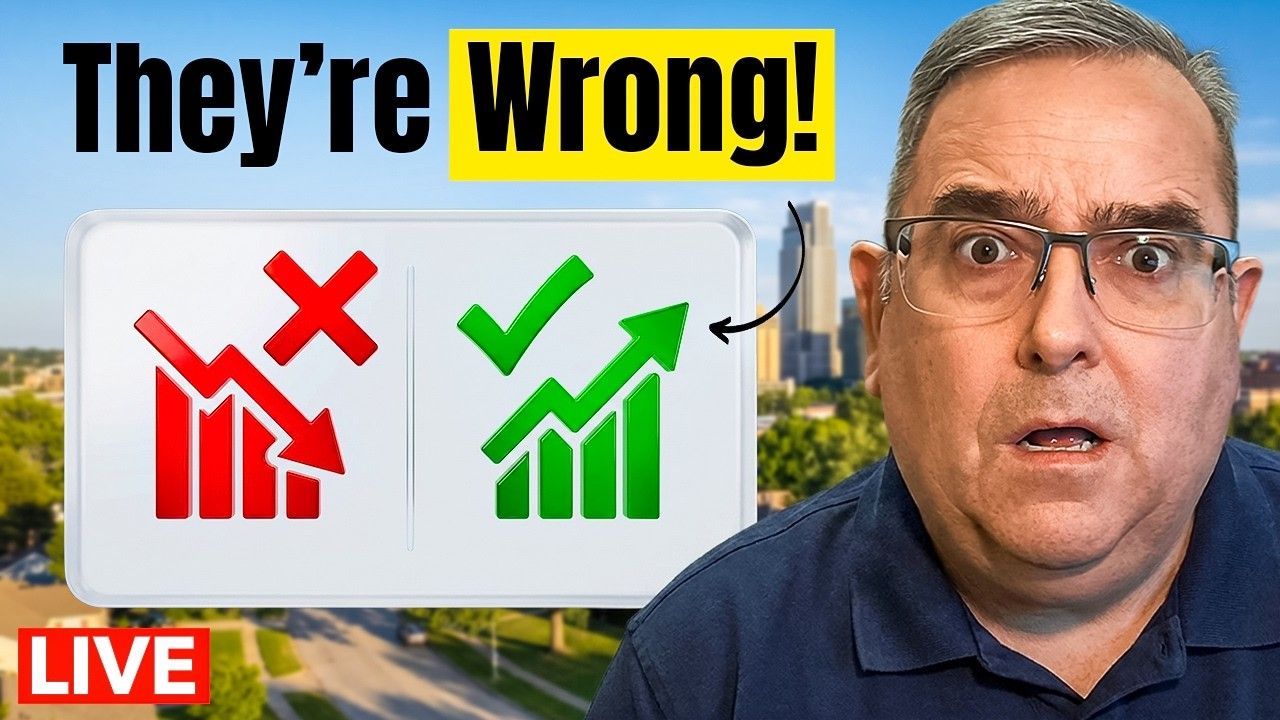
The Omaha real estate market is not showing a price crash. It is showing slower, more sustainable appreciation. That distinction matters. Prices can continue rising even while affordability remains difficult and the total number of sales is lower than it was a few years ago.
Affordability is absolutely a challenge, especially for first time buyers. We should not sugarcoat that. But we also should not give up hope. Getting into homeownership may take more preparation, more savings, a different price range, or use of available assistance programs. The path is harder, but it is not automatically closed.
Existing Homes and New Construction Are Moving Differently
One of the biggest mistakes we can make is treating every market statistic as though it tells the same story. The existing-home market and the new-construction market are behaving differently right now.
Existing homes had a median price of about $325,000, up 3.2% year over year. New-construction prices, meanwhile, were down 5.8%. That may sound alarming at first, but it does not necessarily mean builders are taking a beating.
Builders adjust their product to the marketplace. If rates increase and payment sensitivity rises, builders can offer smaller plans, different finishes, incentives, or lower priced homes. Builders are in business to make money. They are not going to keep producing a product that is not selling.
New construction represented roughly one quarter of local sales. In May, there were 903 total closed sales in Douglas and Sarpy Counties, and 233 of those were new homes. New-construction sales were up 10%, while existing-home sales were down 3.8%.
That is a useful reminder that the Omaha real estate market is made up of several smaller markets. A buyer considering a resale home in Millard may have a completely different negotiating position from someone looking at a new build in Gretna, Papillion, Elkhorn, or west Omaha.
There is also a seasonal difference. Existing-home sales tend to peak during the summer, slow in winter, and build again in spring. Builders can stay more consistent throughout the year because when a completed home is ready and there is a buyer, they want to close it.
Mortgage Rates, Inflation, and Buying Power
Home prices get the headlines, but a mortgage payment is driven by terms just as much as price. For most buyers, the rate changes what they can afford.
Earlier in the year, 30 year fixed mortgage rates briefly dipped below 5%. That brought buyers off the sidelines because lower rates increase purchasing power. Then rates moved sharply higher, reaching around 6.64% just a month later. A half-point rate increase may not sound dramatic, but it can make a substantial difference in a monthly payment and total borrowing capacity.
That is why a lower priced home is not automatically more affordable than a higher priced home purchased at a lower rate. Back in August 2020, Omaha’s median price was roughly $242,000 and some borrowers received 30 year fixed mortgages around 2.25%. Those terms created tremendous buying power.
When rates rose into the 6% and 7% range, sales volume cooled. For the past three years, monthly closed sales have not broken 1,200. During the pandemic and pre-pandemic peaks, the local market regularly exceeded 1,400 monthly closings and sometimes topped 1,500.
Inflation is a big reason rates remain important. When oil prices rise, transportation and grocery costs can rise with them. More pressure on household budgets means fewer people feel comfortable taking on a home purchase. Inflation moved from 3.8% in April to 4.2% in May in the national data discussed here, well above the Federal Reserve’s preferred 2% range.
When inflation runs hot, the Federal Reserve typically works to cool the economy by tightening the money supply and keeping rates elevated. That is why national and global events can influence the Omaha real estate market even though local real estate is, at its core, local.
Watch the 10 Year Treasury, Not Just Headlines
For a practical read on mortgage-rate direction, we can watch the 10 year Treasury yield. Mortgage rates generally follow the 10 year Treasury, though not perfectly. The difference between them is called the spread.
The good news is that the mortgage spread has improved. It was around 3% in 2023, around 2.6% in 2024, 2.3% in 2025, and roughly 1.97% in the current data. A narrower spread helps mortgage rates stay lower than they otherwise would be for a given Treasury yield. That does not make housing cheap, but it is a meaningful improvement in the financing picture.
Why Omaha Has a Local Advantage
National housing-start data may make for scary headlines. Starts were down significantly, reaching a six year low in the data reviewed. Builders slow down when rates rise and uncertainty increases. There is a lag between shifting conditions and the number of homes being started.
But national data is not the same thing as local data. The Omaha real estate market has several important strengths, beginning with employment. While unemployment rose nationally, the Omaha area rate declined from 3.0% to 2.7%. Douglas County moved from 3.2% to 2.8%.
Jobs create home buyers. Interest rates affect where those buyers can purchase, but a stable job base supports demand. Omaha and the surrounding metro benefit from a diverse economy that includes healthcare, finance, insurance, transportation, rail, trucking, military employment at Offutt Air Force Base, and major employers throughout Douglas and Sarpy Counties.
That diversity matters in a downturn. Omaha did not experience the same level of price collapse seen in some other markets during the Great Financial Crisis. Local prices fell from roughly $140,000 to $130,000, rather than experiencing a severe crash.
We also see growth all around town. Cranes, medical facilities, apartment buildings, infrastructure, and new subdivisions are signs of an active metro. National builders such as D.R. Horton entering Nebraska are also a vote of confidence. Large builders study job growth, demand, land, and buyer behavior very carefully before committing capital to a market.
Inventory Is Tight, but New Construction Counts Need Context
Inventory is one of the clearest signals in the Omaha real estate market. During the Great Financial Crisis, when Omaha was smaller, there were roughly 5,000 to 6,000 homes on the market. Today, there are about 1,800.
The existing-home market sits at approximately 1.4 months of inventory. If no additional homes came on the market, it would take about 1.4 months to sell the current supply. That is firmly a seller’s market.
- Under 3 months of supply generally indicates a seller’s market.
- 3 to 6 months generally indicates a balanced or neutral market.
- More than 6 months generally indicates a buyer’s market.
New construction requires extra care when reading the data. There were 806 active new-construction listings, but some of those properties may be at the foundation stage, framing stage, or already under contract. A listing can represent a hole in the ground rather than a finished house ready for immediate occupancy.
That is why a reported five months of new-construction supply can be misleading. Builders use models to show their finished product, then often build after securing a contract. They do not want completed homes sitting around long enough to have a birthday, because holding costs and full property taxes begin to matter.
Existing inventory is more straightforward, and it remains tight. Homes are also selling very near their final list price. The median sale-to-list-price ratio was around 100%. Sellers should understand that this does not mean every home can be overpriced. A home initially listed at $325,000 that later sells at $300,000 after a price reduction is still measured against the final list price.
What Buyers and Sellers Should Do Now
The Omaha real estate market is smaller in transaction volume than it was during the low-rate frenzy, but there is still demand. Many owners with 3% mortgages are reluctant to move unless they truly need to. That keeps resale inventory constrained.
At the same time, real estate is still a life-event business. People move for jobs, marriage, divorce, retirement, a growing family, a smaller home, or to be closer to children and grandchildren. Cash buyers and repeat buyers may be far less rate-sensitive than first-time buyers.
Demographics also continue to support demand. The large echo-boom generation, the children of baby boomers, is now in its late 30s and early 40s. That is a prime homebuying age. Demand does not disappear simply because rates are higher.
For Buyers
- Focus on payment, rate, loan terms, and long-term plans, not just the sticker price.
- Compare existing homes and new construction carefully because builders may offer a different value proposition through product adjustments or incentives.
- Do not assume the median sale price must be the price of a first home. A starter home is still a starting point for building equity.
- Stay prepared. When rates improve, more buyers may return quickly.
For Sellers
- Price based on current competition and recent comparable sales, not on a headline about record median prices.
- Remember that tight inventory helps, but condition, location, presentation, and realistic pricing still matter.
- Expect buyers to be payment-conscious. A well-priced home will draw attention faster than an aspirational listing that needs multiple reductions.
- Understand whether your next move involves an existing home, a new build, or a temporary housing plan before putting your property on the market.
We should always be careful with sensational headlines. A claim that foreclosures rose sharply, for example, needs context after the foreclosure moratorium years. Returning to more normal levels is not the same thing as a wave of distressed inventory.
The bottom line is straightforward. The Omaha real estate market is still a seller’s market for existing homes, prices have reached a record median, new construction is adjusting to buyer payments, and local job stability remains a positive force. Rates and inflation will continue to shape affordability, but local supply and local demand are what determine how this market performs.
Frequently Asked Questions
Is the Omaha real estate market crashing?
No. The latest figures show record median prices and tight existing-home inventory. Price growth has slowed to a more normal pace, but the local data does not indicate a market crash.
What is the median home price in the Omaha real estate market?
The median closed sales price for the combined Douglas and Sarpy County market was $350,000 in May. Existing homes had a median price of about $325,000.
Is Omaha a buyer’s market or seller’s market?
The existing-home segment remains a seller’s market, with approximately 1.4 months of inventory. Under three months of supply is generally considered seller’s-market territory.
Why are mortgage rates so important for Omaha home buyers?
Mortgage rates directly affect monthly payments and purchasing power. Even a half-point change can materially alter the price range a financed buyer can afford.