Foreclosures Are Rising in 2026, Is a Housing Crash Next? Omaha Market Reality Check
Foreclosure headlines are everywhere right now, and I get why that makes people nervous. When you see activity ticking up after years of historic lows, it's easy to wonder if we're about to relive 2008. I've been getting calls from buyers asking if they should wait for prices to drop and from sellers wondering if they need to rush to list before the market tanks. Here's what I'm seeing in Omaha and why the story behind these numbers matters more than the numbers themselves.
The short version is this: yes, foreclosures are rising. No, that doesn't mean we're heading for a crash. The context is completely different this time, and understanding that difference is what separates smart real estate decisions from panic moves. I recently walked through a HousingWire article that breaks down what's driving this uptick, and I want to share what it means for anyone buying or selling in the Omaha metro right now.
We're not in 2008 territory. The fundamentals holding up today's market are stronger, homeowner equity is at record levels, and the lending standards that created the last crisis simply don't exist anymore. But that doesn't mean foreclosures don't matter or that certain buyers won't see opportunities. Let's talk about what's actually happening and what it means for your next move.
Table of Contents
Why Foreclosures Are Rising in 2026
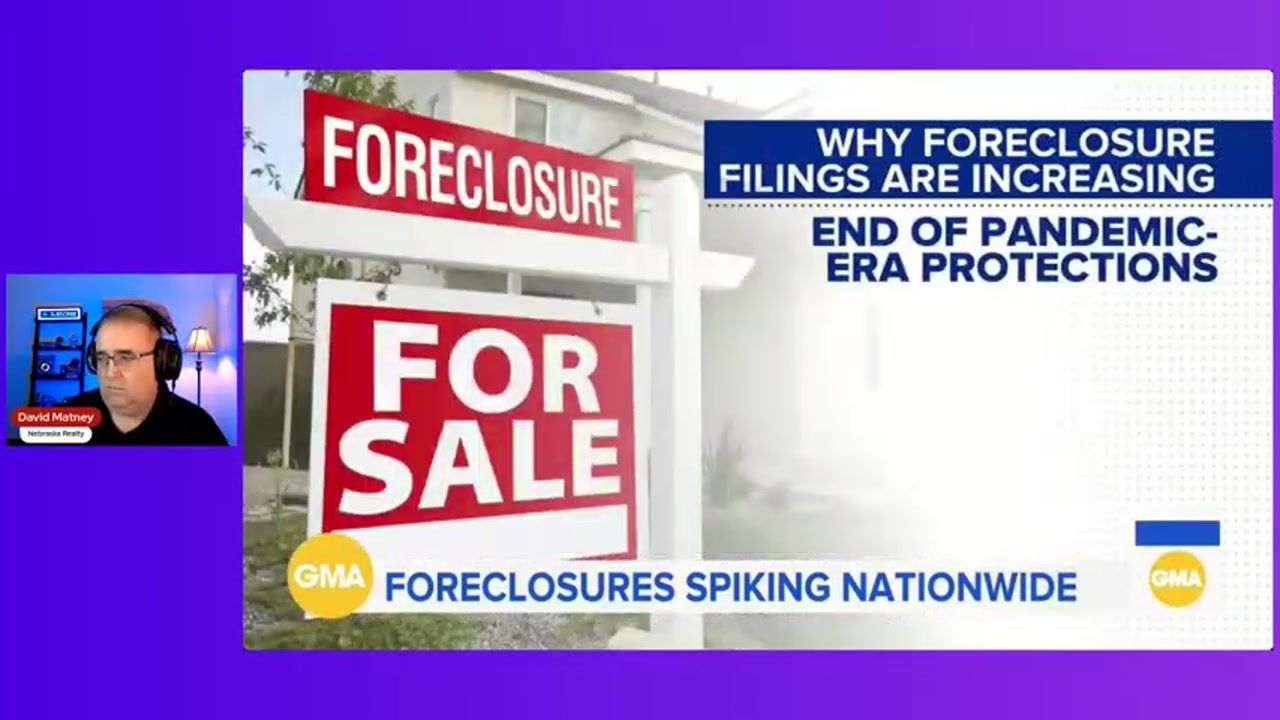
Foreclosure activity is climbing because we're coming off an artificially suppressed period. During the pandemic, federal and state moratoriums put a freeze on foreclosure proceedings. Homeowners who were struggling got forbearance options, and lenders weren't allowed to move forward with foreclosures even when borrowers fell behind. That created a backlog. Now that those protections have expired and forbearance programs have ended, the foreclosures that were delayed are working their way through the system.
This isn't a sudden wave of new defaults. It's the resolution of old ones. The people entering foreclosure now are often dealing with situations that started months or even years ago. Some took forbearance during COVID, couldn't get back on track, and are now facing the consequences. Others are dealing with job loss, medical bills, or life changes that made it impossible to keep up with payments. These are real hardships, and I don't want to minimize that. But the key point is that this rise in foreclosure activity is largely administrative catch-up, not a sign that the broader market is collapsing.
Another factor is that interest rates have been higher than they were during the pandemic boom. Homeowners who bought at the peak with adjustable-rate mortgages or who stretched their budgets are feeling the squeeze. If you bought in 2021 or 2022 and your financial situation changed, you might not have the equity cushion to sell your way out of trouble if you overpaid in a bidding war. That's a real issue for a small segment of buyers, but it's not the systemic problem we saw in 2008 when millions of people were underwater on homes they never should have qualified for in the first place.
How Today's Market Is Different from 2008
The 2008 housing crash was fueled by reckless lending. Banks were handing out subprime mortgages to anyone with a pulse. No income verification, no down payment, adjustable rates that reset to unaffordable levels after a teaser period. People were buying homes they couldn't afford, and when the music stopped, foreclosures flooded the market. Home values plummeted because there was no real demand underneath all that speculative froth. It was a systemic failure.
Today's market doesn't have those problems. Lending standards are strict. If you got a mortgage in the last few years, you had to prove your income, show your assets, and qualify at today's rates. The vast majority of mortgages written since 2008 are fixed-rate, so there's no payment shock coming. Homeowners aren't sitting on ticking time bombs. They know what their payment is, and if they could afford it when they bought, they can likely still afford it now unless their personal situation changed.
Homeowner equity is another huge difference. In 2008, millions of people owed more than their homes were worth. Today, the average homeowner has record equity. Even if someone needs to sell, they can usually do so without bringing money to the table. That means fewer distressed sales and fewer homes dumped onto the market at fire-sale prices. In Omaha, I'm seeing homeowners who bought three or four years ago sitting on significant appreciation. If they need to move, they have options. They're not trapped.
Inventory is still tight in most markets, including Omaha. We don't have a glut of homes sitting unsold. We have the opposite problem: not enough homes for the number of buyers who want them. A modest increase in foreclosures isn't going to flip that dynamic overnight. It might add a few more listings in certain price ranges or neighborhoods, but it's not going to crash prices across the board.
What Rising Foreclosures Mean for Omaha Buyers and Sellers
For buyers, a rise in foreclosures could mean more inventory in specific pockets of the market. Foreclosed homes often sell below market value because banks want to move them quickly. If you're willing to buy a property that needs work or deal with the quirks of buying a bank-owned home, you might find opportunities. But don't expect a flood of deals. Foreclosures are still a small percentage of overall sales, and competition for well-priced distressed properties can be fierce.
In Omaha, I'm not seeing foreclosures dominate any particular neighborhood yet. The uptick is real, but it's not reshaping the market. If you're a buyer who's been waiting for prices to drop, I'd caution against holding out for a crash that may never come. Interest rates and your personal situation matter more than trying to time a bottom that might not exist. If you find a home that works for your budget and your life, that's the right time to buy.
For sellers, rising foreclosures don't mean you need to panic and list immediately. If your home is priced right and shows well, you'll still get activity. The buyers who are serious and qualified are still out there. What you don't want to do is overprice in a market where inventory is slowly increasing. Homes that sit too long start to look stale, and buyers wonder what's wrong. Work with an agent who knows your neighborhood and can position your home competitively.
If you're a homeowner who's struggling, don't wait until foreclosure is your only option. There are alternatives: loan modifications, short sales, or even just selling before you fall too far behind. The earlier you act, the more options you have. I've worked with clients who were able to sell, pay off their mortgage, and walk away with a little cash instead of a foreclosure on their record. That makes a huge difference for your financial future.
Should You Wait for a Crash or Buy Now?
I get this question constantly, and I understand the temptation to wait. If foreclosures are rising, maybe prices will drop and you'll get a better deal in six months or a year. Here's the problem with that strategy: you're betting on something that might not happen, and in the meantime, you're paying rent or living in a situation that doesn't work for you. Time in the market beats timing the market, and that's true for real estate just like it is for stocks.
The fundamentals don't support a crash. We don't have the oversupply, the bad loans, or the speculative mania that defined 2008. What we have is a market that's adjusting after a wild few years. Prices might flatten or dip slightly in some areas, but a broad collapse isn't in the cards based on what I'm seeing. If you wait for a crash that doesn't come, you might end up paying more later or missing out on a home you loved because someone else didn't wait.
If you're thinking about buying in Omaha, focus on what you can control. Can you afford the payment? Does the home meet your needs? Are you planning to stay long enough that short-term market swings won't matter? If the answers are yes, then buy. If you're stretching your budget or buying purely as a speculative play, then wait. But don't wait because you're hoping for a crash. Make the decision based on your life, not on headlines.
For sellers, the same logic applies. If you need to move, sell. If you're just testing the market to see if you can get a ridiculous price, you might be disappointed. But if you're priced right and ready to move on, there are still buyers out there. The market isn't frozen. It's just more balanced than it was two years ago, and that's actually healthier for everyone.
Conclusion
Foreclosures are rising, and that's worth paying attention to. But rising foreclosures don't equal a housing crash, especially when the underlying market is as different from 2008 as ours is today. Homeowners have equity, lending standards are tight, and inventory is still constrained in most places. In Omaha, I'm seeing a market that's stabilizing, not collapsing. There will be opportunities for buyers who are ready to act and challenges for sellers who overprice, but the sky isn't falling.
If you're trying to figure out what this means for your situation, let's talk. I can walk you through what's happening in your specific neighborhood, what your home is worth right now, and what your options are if you're thinking about buying or selling. The national headlines don't always match the local reality, and Omaha has its own story. Book a call with me and we'll figure out the right move for you, whether that's buying now, waiting, or getting your home ready to list. The worst thing you can do is make a decision based on fear instead of facts.
FAQ
Are foreclosures spiking in Omaha right now?
Foreclosure activity is up compared to the artificially low levels we saw during the pandemic, but it's not a spike in the sense of a crisis. We're seeing the resolution of delayed cases and some new filings from homeowners who are struggling, but it's not reshaping the market. Omaha's foreclosure rate is still relatively low compared to historical norms, and it's not concentrated in any one area that I'm tracking.
Is this the start of another 2008-style crash?
No. The conditions that caused 2008 don't exist today. We don't have subprime lending, we don't have millions of homeowners underwater, and we don't have a glut of inventory. Homeowners today have significant equity, and lending standards are strict. A modest rise in foreclosures doesn't mean the market is about to collapse. It means we're normalizing after an unusual period.
Should I wait to buy a home until prices drop?
If you're waiting for a crash, you might be waiting a long time for something that doesn't happen. Focus on whether buying makes sense for your life and your budget right now. If you find a home you love and can afford, that's the right time to buy. Trying to time the market perfectly is a gamble, and you could end up paying more later or missing out on the right home.
Can I get a good deal on a foreclosed home in Omaha?
Maybe. Foreclosed homes often sell below market value, but they also tend to need work and come with complications. You'll be competing with investors and other buyers who know how to navigate bank-owned properties. If you're willing to do your homework and possibly take on some repairs, there can be opportunities. Just don't expect a flood of bargains. Foreclosures are still a small slice of the overall market.
What should I do if I'm struggling to make my mortgage payment?
Don't wait until you're in foreclosure to act. Talk to your lender about options like loan modification or forbearance. Consider selling before you fall too far behind. most homeowners have equity, so selling might let you pay off your mortgage and avoid a foreclosure on your record. The earlier you address the problem, the more options you have. Reach out to a local agent or a housing counselor who can walk you through your choices.
Are Omaha home prices going to drop because of foreclosures?
I don't expect a significant drop in Omaha home prices due to foreclosures. The increase in foreclosure activity is modest, and we still have more buyers than homes in most price ranges. Prices might flatten or dip slightly in some neighborhoods, but a broad decline isn't likely based on current fundamentals. Every neighborhood is different, so if you want to know what's happening in a specific area, let's look at the data together.
DAVID MATNEY
David Matney is a trusted Realtor® and local expert with over 20 years of experience in Omaha’s real estate market.