If we are weighing the pros and cons of Gretna, NE, we are really comparing a fast-growing suburb feel with the convenience of being close to Omaha. Gretna sits southwest of Omaha in Sarpy County and has grown from a small railroad town into a community that feels more established every year.
We will break down the strongest positives people mention, the tradeoffs that catch newcomers off guard, and the practical details that matter most if you are considering a move to Gretna. This is the kind of decision where a little local context goes a long way.
Table of Contents
- Overview Of Gretna, Ne And Where It Is
- Gretna Location And Commute
- Top Pros Of Living In Gretna, Ne
- Top Cons Of Living In Gretna, Ne
- How To Decide What Matters Most For Your Family
- Practical Tips Before You Move To Gretna, Ne
- FAQ About The Pros And Cons Of Gretna, Ne
- Bottom Line
Overview of Gretna, NE and where it is
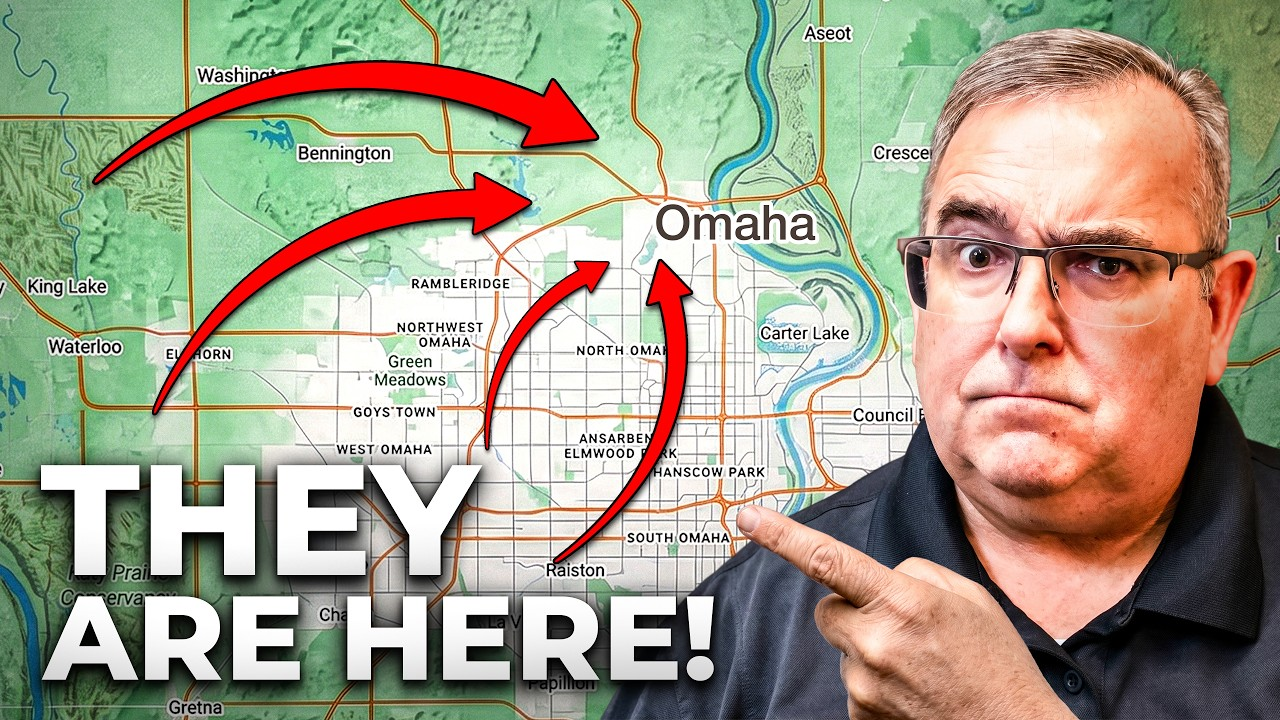
Gretna is located just southwest of Omaha in Sarpy County. It began as a small town formed in 1886 when the Burlington railroad ran a short line between Omaha and Ashland. Today, the town has a population a little over 5,000 based on the 2020 census, but the bigger story is the rapid development around it.
One thing we always clarify when talking about Gretna is that people use the name in different ways. Some people mean the city limits. Others mean the broader area, especially the school district. It is possible to live in the Gretna School District without actually being in the town of Gretna, particularly in newer subdivisions.
That matters because schools influence property values, and school boundaries can extend beyond what you might expect.
Gretna Location And Commute
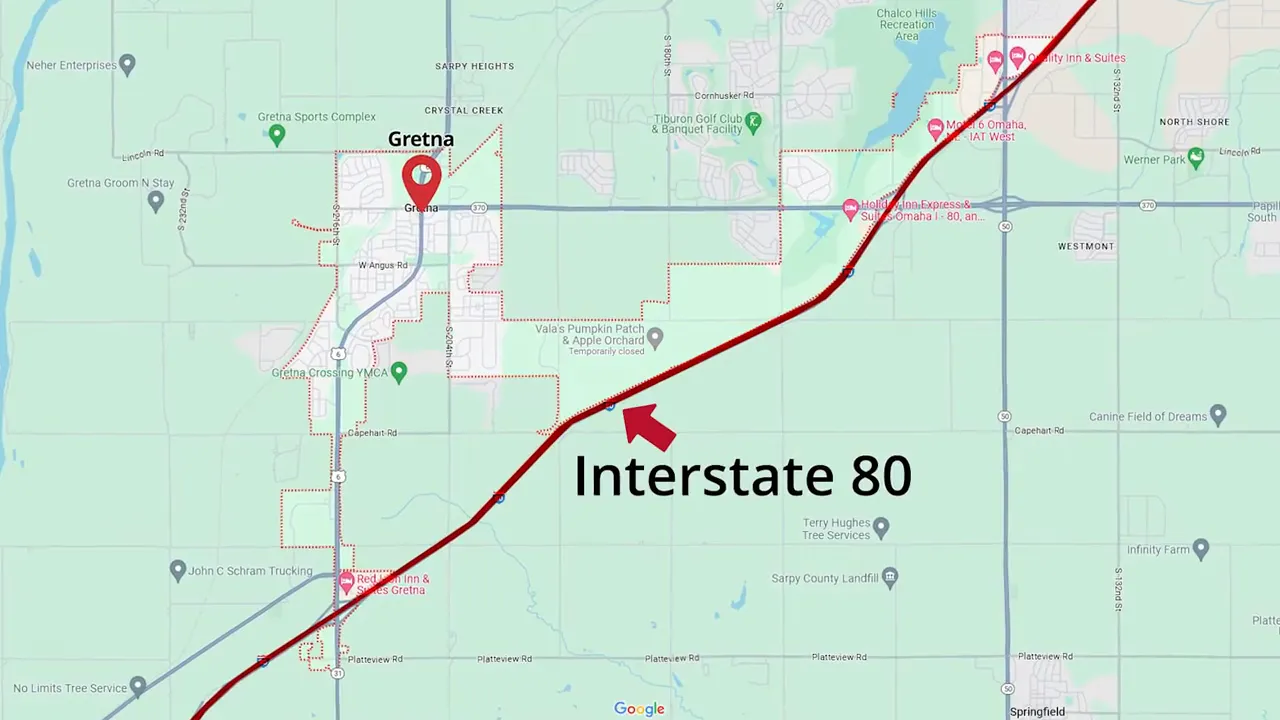
Gretna is near Interstate 80, which connects Omaha to Lincoln. That makes it popular for households with two jobs in two different cities. For example, one spouse may work in Omaha while the other works in Lincoln.
In general, we see travel times of about:
- 30 minutes to downtown Omaha
- 40 minutes to downtown Lincoln
Gretna is also connected by Highway 370 to the Bellevue and Offutt Air Force Base area, and Highway 6 connects Gretna to Elkhorn. If you drive Highway 370 or Highway 6, you will also notice the level of growth happening along those corridors.
Top Pros Of Living In Gretna, Ne
Here are the five biggest pros we hear most often when people talk about the pros and cons of Gretna, NE.
Pro 1: Strong schools and a high-performing district
For many families, schools are the deciding factor. Gretna is in the Gretna Public Schools system, and at the time of this recording it included:
- 8 elementary schools
- 2 middle schools
- 2 high schools
Gretna also added a new high school, Gretna East. The Nebraska Department of Education classifies school districts within categories such as excellent, great, good, and need support to improve. Gretna has been categorized in the highest band labeled excellent.
Performance signals include:
- 98 percent graduation rate
- English, math, and science test results that outperform peer districts and the state overall
Of course, we still treat each child as unique. A district can perform exceptionally on paper and still be a different experience depending on grade level, school assignment, and your child’s needs.
Pro 2: Low crime and a sense of safety
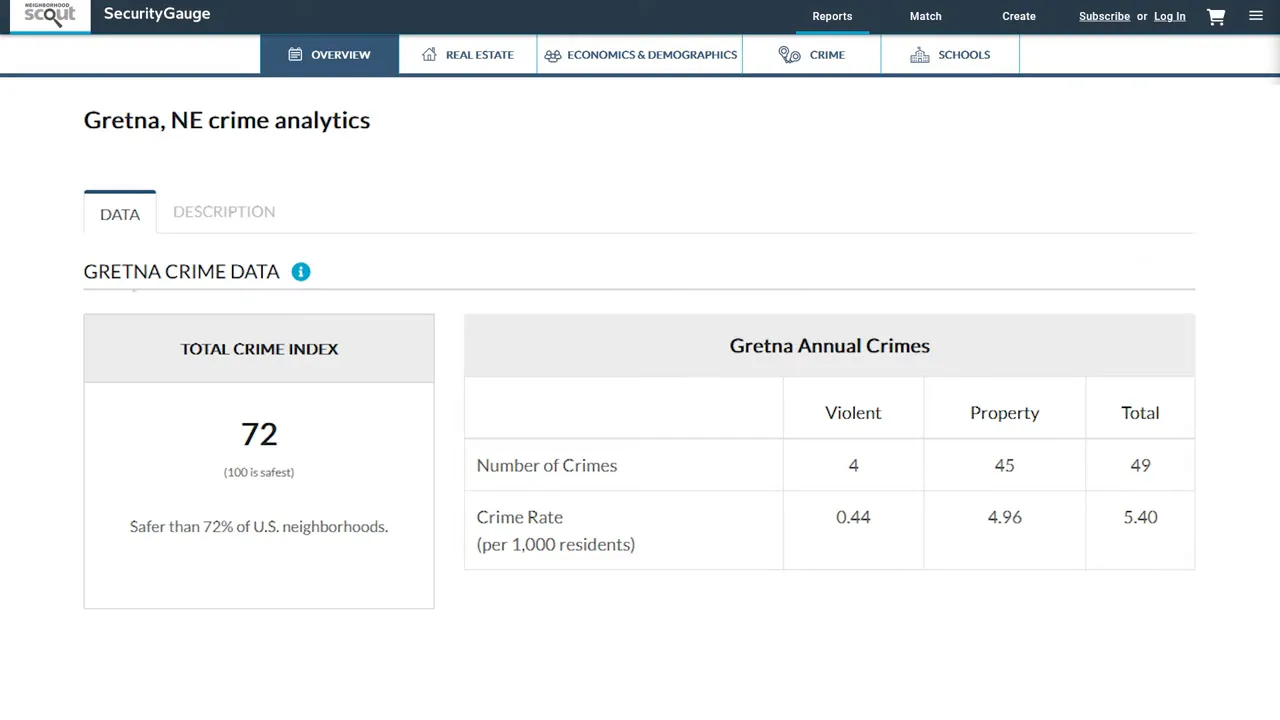
Safety is another major reason people choose Gretna. NeighborhoodScout.com data lists a total crime index of 72, meaning Gretna is safer than 72 percent of neighborhoods based on their dataset.
For violent crime, the numbers cited were:
- 0.44 violent crime per 1,000 residents
- State median mentioned: 2.83
- National median mentioned: 4
The same source calculates a 1 in 2,268 chance of becoming a victim of violent crime for Gretna residents, compared to a 1 in 354 chance in the state of Nebraska.
We also see that comparisons to places in other states can look very different. NeighborhoodScout.com included Portland, Oregon as an example, where they cite a 1 in 134 chance of becoming a victim of violent crime.
Pro 3: A growing community with real amenities
Gretna has been in a growth spurt, and growth is not just about housing. It is about businesses, parks, and community gathering spaces showing up.
For example, Gretna is home to the largest Hy-Vee store in the region, with approximately 135,000 square feet and described as about 3 acres inside.
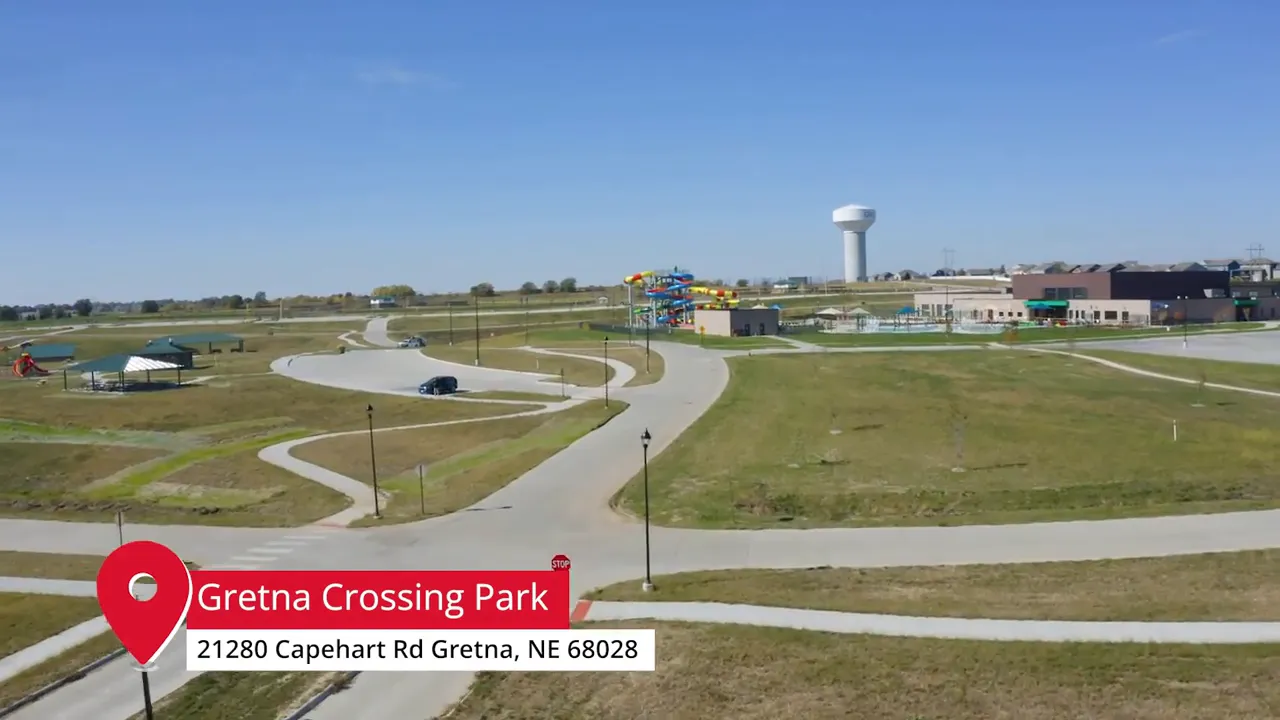
Outdoor recreation also keeps expanding. Gretna Crossing Park opened in September 2023 and spans about 157 acres. It includes:
- dog park
- fishing pond
- 18-hole disc golf course
- soccer, baseball, and softball fields
- theater, picnic shelters, playground
- walking and biking trails
- an outdoor water park
This is the kind of amenity mix that supports a suburban lifestyle without needing to drive into Omaha for every outing.
Pro 4: Small-town atmosphere with a friendly community feel
Even with new development, Gretna still has a close-knit, neighborly vibe. That can be a big pro if you want a calmer day-to-day pace while still living close enough to access big-city convenience.
For buyers exploring financing options, there was also a note that some parts of Gretna may be eligible for USDA financing with zero down. That is the kind of detail we always encourage people to confirm with their local lender, since eligibility can vary by property.
Pro 5: Proximity to Omaha and major employment
Gretna is not isolated. It is close enough to Omaha that you still get access to shopping, dining, entertainment, and jobs without living directly in the city.
If our household needs to be in Omaha for work or errands, that short drive time tends to feel like a win. This is a key reason Gretna appeals to dual-city commuters and to people who want “suburb comforts” without giving up the resources of Omaha.
Top Cons Of Living In Gretna, Ne
Now let us look at the five cons that tend to matter most when people evaluate the pros and cons of Gretna, NE.
Con 1: Limited public transportation
In practical terms, Gretna is a car-oriented community. Public transportation is limited, so most residents plan their routine around driving.
If you rely on transit, this is something to consider carefully. Even if amenities are close, the overall layout usually works best with a vehicle.
Con 2: Commute to Omaha can add up
Even though Gretna is close to Omaha, commuting time still matters. If you work in downtown Omaha, the commute can be at least 35 minutes depending on conditions and routes.
And if your work is highly specialized or concentrated in certain industries, Gretna itself may not have every job type you want. That can mean a longer commute depending on your field.
Con 3: Rapid growth brings traffic and community change
Growth is exciting, but it also comes with tradeoffs.
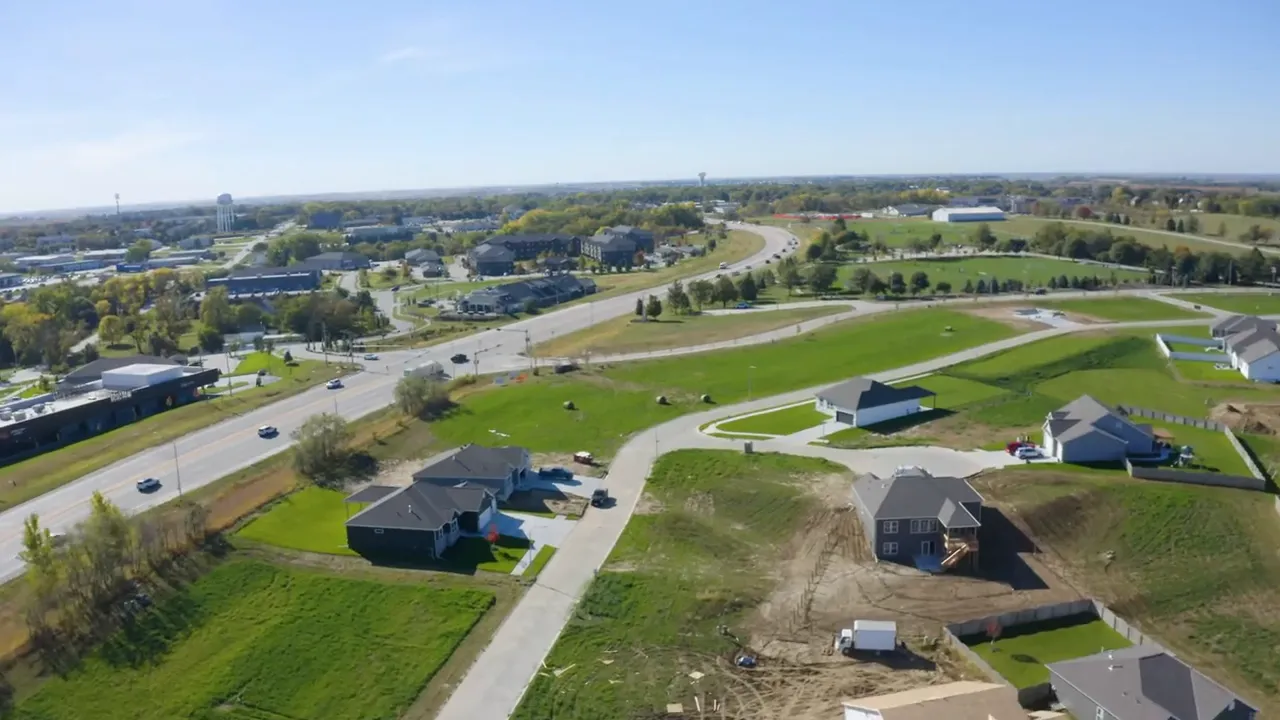
As more people move in, we typically see increased traffic and pressure on infrastructure. Residents may also notice changes to the character of neighborhoods, especially when open land gets replaced by subdivisions and commercial corridors.
A real example described was the way Highway 370 changed over time. About 20 years ago, Highway 370 was described as a two-lane road and the Vala's Pumpkin Patch was more out in the country. Today, Highway 370 is a divided four-lane highway and Vala's is almost surrounded by a subdivision.
The upside is access and development. The downside is that “small and rural” tends to shrink as the area densifies.
Con 4: Limited health care facilities
Compared to Omaha, Gretna may have fewer health care facilities and specialists. That can mean traveling to Omaha for certain medical services.
If your family uses specialists regularly or you want the widest provider network close to home, factor that into your decision. It might not be a dealbreaker, but it is a reality to plan around.
Con 5: Fewer entertainment options
One of the biggest “lifestyle” gaps between Gretna and a larger city is entertainment. Gretna has community events and outdoor activities, but it may not offer the same depth of cultural or urban entertainment options you would find in Omaha.
In fact, there was an example of clients who moved from Gretna back to Omaha because they wanted the entertainment options available downtown Omaha. That does not mean Gretna is boring. It means if your social life depends on a bigger-city lineup, you may miss Omaha’s variety.
How To Decide What Matters Most For Your Family
The pros and cons of Gretna, NE tend to line up clearly based on lifestyle. Here is a simple way we suggest sorting priorities.
Choose Gretna if you care most about
- School performance and a district that is categorized as excellent
- Safety and a low violent crime profile
- Growing amenities like parks, retail, and recreation
- Suburban community feel without being far from Omaha
Double-check Gretna if you care most about
- Transit-free living without a car
- Short commutes to Omaha or employer locations right in town
- Low traffic and slower change(since growth can reshape roads and neighborhoods)
- Specialist care nearby without traveling
- Urban entertainment that is available frequently and close by
Practical Tips Before You Move To Gretna, Ne
Even if you are sold on Gretna, we recommend a few steps to avoid surprises.
- Verify school district boundaries.
Because the town boundary and school district boundary do not always match, we suggest confirming the exact school assignment for the home you are considering.
- Ask about taxes and mill levy differences.
With lots of new school capacity being built for growth, newer subdivisions can sometimes come with higher tax rates (mill levies) compared to homes closer to Omaha.
- Plan your commute route.
If you work in Omaha, test your drive times at realistic hours. Commutes are one of those “small” factors that become big quickly.
- Check health care access.
If you already have doctors you want to keep, confirm where you will go for specialists and how far the trips are likely to be.
- Look for the kind of entertainment you actually use.
If you prefer events, trails, and local recreation, Gretna can fit well. If you want frequent downtown options, you may need Omaha more often than you expect.
If you’re thinking about making the move to Gretna and want help sorting out neighborhoods, schools, and what to expect during the buying process, I can help. Reach out to me anytime at 402-490-6771.
FAQ About The Pros And Cons Of Gretna, NE
Do you need a car to live in Gretna, NE?
Most residents plan around having a car. Public transportation is limited, so a vehicle is usually the most practical option.
How far is Gretna from Omaha?
Gretna is roughly 30 minutes to downtown Omaha under typical conditions, though commute time can be longer at peak hours.
What are Gretna schools like?
The Gretna School District is categorized as excellent by the Nebraska Department of Education. It was cited with a 98 percent graduation rate and test performance that outperforms both peer districts and the state.
Is Gretna a safe place to live?
NeighborhoodScout.com data cited Gretna as safer than 72 percent of neighborhoods, with low violent crime metrics and a lower-than-state violent crime likelihood.
What makes Gretna a good fit for families?
Families often point to strong schools, community recreation options like Gretna Crossing Park, and the small-town feel while still being close to Omaha.
What are the biggest downsides of living in Gretna?
Common tradeoffs include limited public transportation, commute time to Omaha, growth-related traffic and change, fewer health care facilities and specialists compared to Omaha, and fewer entertainment and cultural options.
Does growth affect taxes in Gretna?
It can. New development and additional school construction can lead to higher mill levies in some newer subdivisions compared to areas closer to Omaha.
Are parts of Gretna eligible for USDA financing?
Some parts of Gretna were noted as potentially eligible for USDA financing with zero down. Eligibility depends on the specific property, so it is best to confirm with a local lender.
Bottom Line
The pros and cons of Gretna, NE come down to this: Gretna offers a strong school reputation, a safer community profile, and growing amenities, all while staying close enough to Omaha for work and big-city convenience. At the same time, it is car-dependent, it still has commute realities, and the pace of growth can bring traffic and shifting neighborhood character.
If we align those tradeoffs with our personal priorities, Gretna can be an excellent fit for the right family. And if we plan ahead with school boundaries, taxes, commute times, and health care access, we reduce the chances of surprises after moving.
Read More: Moving to Omaha: 9 Things No One Tells You Before You Pack