Nebraska Homeowners Insurance: What Every Omaha Buyer Needs to Know
Homeowners insurance in Nebraska has gotten a whole lot more complicated, and a whole lot more expensive, than many people realize.
For a lot of us, insurance used to feel like one of those boxes you just checked during a real estate transaction. Get a quote, send it to the lender, move on. But that approach can get expensive in a hurry, especially in Nebraska, where storms, hail, roofing issues, deductibles, and policy exclusions can turn a “cheap” policy into a very costly surprise.
If we are buying, selling, relocating, or already own a home in Omaha or anywhere else in Nebraska, this is one topic we cannot afford to ignore.
Here is the big takeaway up front: don’t shop for homeowners insurance by price alone. In Nebraska, the details matter. Roof age matters. Deductible structure matters. Replacement cost versus actual cash value matters. Cosmetic exclusions matter. Flood and water endorsements matter. And if we do not ask the right questions before closing, we may learn those lessons the hard way later.
Table of Contents
- Why Nebraska Homeowners Insurance Is So Expensive
- The Biggest Factors Driving Your Premium
- Why You Should Shop Insurance Before Closing
- Replacement Cost vs Actual Cash Value
- Understanding Wind and Hail Deductibles
- What to Do After a Storm Hits
- Common Coverage Gaps Homeowners Miss
- Endorsements Worth Asking About
- Special Cases: Rentals, Vacant Homes and Flips
- Top Insurance Mistakes Nebraska Homeowners Make
- Impact-resistant shingles can help
- Trees, roofs, and outside inspections
- FAQ
- Final thought
Why Nebraska Homeowners Insurance Is So Expensive
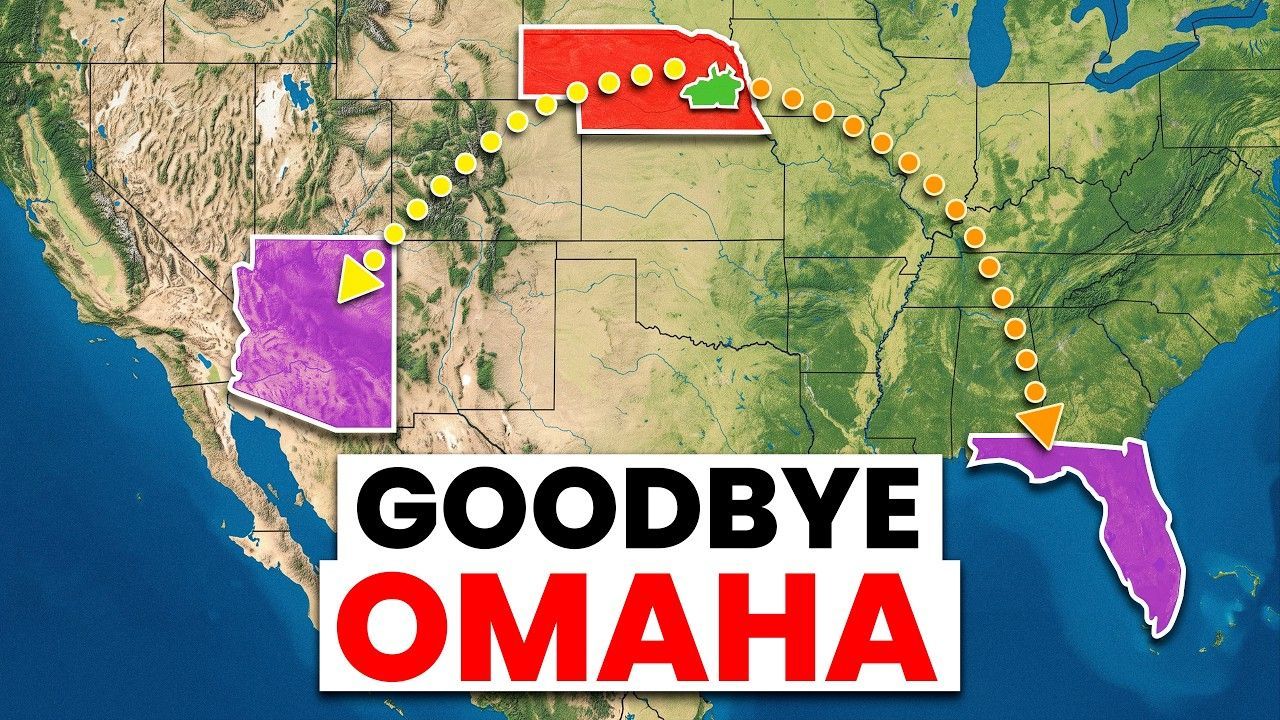
If you are relocating to Omaha from a place like Arizona, the first thing that may hit you is sticker shock.
A house there might be insured for a few hundred dollars a year. Here, a similar home can cost several thousand. That is not because Nebraska insurance carriers are just making up numbers. It comes down to risk, and in our part of the country the biggest risk is weather.
We are in tornado alley. We deal with hail. We deal with wind. We deal with storms that can rip through one neighborhood, hammer a few blocks, skip another section, and leave a trail of roof claims behind. After several years of severe storms and major losses, carriers had to raise rates to recoup those costs.
That is especially true when entire neighborhoods with high-value homes are hit hard. If insurers are paying out massive claims on expensive houses, those losses ripple through the market.
At one point, Nebraska had some of the highest home insurance premiums in the country. Higher than places many people assume would top the list, like California, Florida, or Hawaii. That surprises people, but when we look at the storm frequency and claim volume, it starts to make more sense.
The encouraging news is that things have shown some signs of stabilizing. Fewer severe claims over the last year or so have opened up the market up a bit. More carriers are writing policies again, and restrictions have eased in some cases. But we are still in a market where insurance deserves close attention.
The Biggest Factors Driving Your Premium
In Nebraska, one factor rises above almost everything else: the roof.
Roof age is one of the biggest variables in determining:
- Which carriers will insure the property
- Whether you can get full replacement cost coverage
- How high the premium will be
- Whether you get pushed into less favorable options
Beyond the roof, carriers also look closely at:
- Age of the home
- Electrical systems, especially older knob-and-tube wiring
- Plumbing, including galvanized steel
- Location and zip code
- Construction type
- Pools, trampolines, and certain dog breeds
- Claims history
- Credit-based insurance factors
Two houses in the same neighborhood can get very different quotes. That catches people off guard all the time.
It is not just square footage. It is how the house is built, the age and type of roof, whether updates have been made, and what kind of risks the carrier sees.
One more important point on roofs: wood shake roofs are a different animal. Those can be especially challenging to insure. And with standard asphalt shingles, the age thresholds vary by carrier. One company may get nervous at five years. Another may go to ten. Another might still offer options at fifteen. That is one reason working with a broker who can compare multiple carriers can really help.
Why You Should Shop Insurance Before Closing
It is never too early to start getting quotes.
In fact, one of the smartest things we can do as buyers is get insurance estimates before we are under contract, or at least as soon as possible afterward. Quotes are free. There is no reason to wait until the last minute and then get blindsided.
If we are comparing two houses, getting insurance estimates on both can help us understand the total monthly cost. That does not mean a few hundred dollars should automatically make the decision for us, but surprises at closing are no fun.
And yes, even homes that look similar can quote very differently.
Some brokerages now have quick online quote tools that can give a general estimate in about a minute. Those are not final numbers, because carriers still run reports and verify things like prior claims and insurance score factors, but they are a very useful starting point.
If we are buying in Nebraska, we should know the insurance number early enough to factor it into:
- Monthly payment planning
- Budget decisions
- Negotiations around roof condition
- Whether the house is even a fit for our long-term costs
Replacement Cost vs Actual Cash Value
This is one of the most important insurance conversations we can have, especially in Nebraska where roof claims are common.
Replacement cost means the insurer pays the cost to replace the roof with similar materials and quality, minus the deductible. There is no depreciation subtracted.
Actual cash value means the insurer factors in depreciation. So if the roof is older, the payout can be dramatically lower than many homeowners expect.
Here is the simple version.
- If a roof replacement costs $15,000 and the deductible is $5,000, replacement cost coverage may pay about $10,000.
- Under actual cash value, the insurer first applies the deductible and then reduces the payout based on depreciation.
If the roof is ten years old and the depreciation schedule is 3% per year, that is roughly 30% depreciation. That difference can hurt.
This is exactly the kind of detail many people miss when they focus only on premium. The cheaper policy may not be cheaper at all when a claim happens.
And that is really the point. Insurance only feels boring right up until the moment we need it.
Understanding Wind and Hail Deductibles
Another Nebraska-specific issue that catches people by surprise is the wind and hail deductible.
Most home policies have at least two deductibles:
- All peril deductible for most covered losses like theft or certain water claims
- Wind and hail deductible for storm-related damage
In many storm-prone areas, carriers have shifted from flat wind and hail deductibles to percentage-based deductibles, often 1% or 2%.
That percentage is usually based on Coverage A, which is the insured value of the dwelling.
For example:
- On a $400,000 home, a 1% wind and hail deductible is $4,000
- On a $400,000 home, a 2% wind and hail deductible is $8,000
That is a big deal.
A lot of people hear “deductible” and assume it is still something like $1,500 or $2,500. Not necessarily. In Nebraska, especially for storm coverage, it may be much higher.
There is usually a tradeoff here. Higher deductibles often mean lower premiums. Lower deductibles can mean better protection but a higher annual cost. The key is understanding what we are choosing and not mistaking a lower premium for better value.
What to Do After a Storm Hits
When a storm rolls through, the first step is obvious but important: make sure everyone is safe.
After that, it helps to slow down a little and not immediately start filing claims without good information.
A smarter process looks like this:
- Make sure the family and property are safe.
- Call your insurance agent.
- Contact a trusted local roofer.
- Have the damage inspected before deciding how to proceed.
The “trusted local” part matters.
After a major storm, out-of-town storm chasers show up fast. They may not understand the Nebraska market, the timing of prior hail events, or what is truly functional damage versus cosmetic damage. That can create real problems if a claim gets filed for something old or non-covered.
And here is another issue many homeowners do not realize: a zero-paid or denied claim can still show up on your insurance history.
That history is tracked through something called a CLUE report, which is basically an insurance claims record. If we rack up multiple claims, even smaller ones, carriers may start to see us as a higher risk.
That is why it is smart to get a reputable roofing contractor and a trusted agent involved before making assumptions. They can help us understand whether the likely payout justifies filing the claim.
Common Coverage Gaps Homeowners Miss
There are a few gaps that come up again and again.
Cosmetic damage exclusions
This one surprises a lot of homeowners.
If hail dents your siding, gutters, or roof but does not impair function, some carriers may classify that as cosmetic damage and not cover it. In other words, the house still works, it just does not look great.
Some carriers offer endorsements for this kind of “marring” coverage, but not all do. If this matters to us, we need to ask before binding the policy.
Flood insurance
Flood insurance is usually a separate policy, and standard homeowners insurance generally does not cover outside water coming in from runoff, overflowing water, or flooding.
Lenders often catch this if the property sits in a flood zone, but we should not rely on someone else to raise the issue. Flood maps can change, and it is wise to know where the property stands.
Water backup and sump pump overflow
This is different from flood coverage.
Water or sewer backup, sump pump overflow, or water coming up through a drain is often handled through a separate endorsement on the homeowners policy. It is not automatically included in every case.
Service line coverage
If the problem is between the street and the house, that may fall under service line coverage. Tree roots in the line are one example people in older neighborhoods definitely know about.
Some utility-related providers offer this protection separately, which can be useful because claims there may not hit your homeowners insurance record the same way.
Endorsements Worth Asking About
There are a handful of endorsements that are often worth discussing, depending on the house and our situation.
- Sewer backup coverage
- Service line coverage
- Extended replacement cost for extra cushion above Coverage A
- Ordinance or law coverage to help with bringing repairs up to current code
- Scheduled personal property for valuable rings, collectibles, comics, cards, and similar items
- Umbrella liability coverage for broader liability protection above underlying policies
That last one is especially important for homeowners with more assets, rental properties, boats, land, or other exposures. If a liability claim exceeds the limits on the base policy, umbrella coverage can help protect what we own.
Insurance may not be glamorous, but liability protection is one of those things that matters a lot once life gets messy.
Special Cases: Rentals, Vacant Homes and Flips
Not every property should be insured with a standard owner-occupied homeowners policy.
Rental properties
Rental dwellings need a different setup. The coverages can be similar in some ways, but the risk profile is different, and so is the policy form.
If we own rental property, we should be having a separate conversation about liability, dwelling coverage, endorsements, and whether replacement cost or actual cash value applies.
Flip properties
Fix-and-flip projects are different again. They are usually insured under a separate policy built for that kind of shorter-term, investment-focused use.
The good news is that these policies exist and are not unusual. The key is simply not trying to force the wrong type of policy onto the property.
Vacant homes
If an owner-occupied house becomes vacant for a while, that can matter. Some carriers are uncomfortable once a property has been empty for more than 30 or 60 days. Others have vacant property options.
The important thing is communication. If a house is going to sit empty because of a move or a delayed sale, we should call the agent and make sure the coverage still fits the situation.
Top Insurance Mistakes Nebraska Homeowners Make
If we had to narrow it down, these are probably the three biggest mistakes.
1. Not shopping around
Rates and coverage vary widely by carrier. Some companies are stronger on auto. Some are better for certain homes. Some are more flexible with roof age or endorsements. It pays to compare.
2. Not talking to a real person they trust
Insurance is full of little levers. Discounts for impact-resistant shingles. Discounts for bundled home and auto. Discounts for devices like cameras or water shutoff monitors. Better deductibles. Better endorsements. A trusted agent can help sort all of that out.
3. Focusing only on the cheapest premium
This is the classic mistake. A lower premium does not mean better value. It may just mean higher deductibles, depreciated roof coverage, cosmetic exclusions, or missing endorsements.
The goal is not the cheapest policy.
The goal is the best coverage at the best overall cost.
Impact-resistant shingles can help
One bright spot in a hail-heavy state is that impact-resistant shingles can sometimes lower premiums. These are typically class 3 or class 4 shingles, designed to better withstand hail.
Not every carrier handles them the same way, but many offer meaningful discounts. In some cases, the savings can be substantial. If we are replacing a roof anyway, it is worth asking what premium reduction might come from upgrading to an impact-resistant product.
Trees, roofs, and outside inspections
One more Nebraska reality check: carriers may inspect the outside of the home after the policy is written.
They are looking for obvious risks, and that can include overhanging limbs, dead trees, visible roof wear, or property conditions that increase the chance of loss.
If they find a problem, they may require it to be fixed within a certain period to keep the policy in force.
So yes, trees can matter. Especially if they are hanging over the roof looking like they are one storm away from becoming part of the living room.
Want to compare homeowners insurance options before you get surprised at closing? Call/text 402-490-6771 to get started. The right questions now can help you lock in better coverage for the overall cost.
FAQ
Why are homeowners insurance rates so high in Nebraska?
The biggest reason is storm risk. Nebraska sees frequent hail, wind, and tornado-related losses, and those claims drive premiums higher across the market.
When should we start shopping for homeowners insurance during a home purchase?
As early as possible. Getting quotes before or immediately after going under contract helps avoid surprises and gives us a clearer picture of the total monthly cost.
What is the difference between replacement cost and actual cash value?
Replacement cost pays to replace damaged property with similar materials minus the deductible. Actual cash value subtracts depreciation, which can reduce claim payouts significantly, especially on older roofs.
What does a 1% or 2% wind and hail deductible mean?
It means the deductible is based on a percentage of the insured dwelling amount, not a flat dollar figure. On a $400,000 home, 1% is $4,000 and 2% is $8,000.
Does standard homeowners insurance cover flood damage?
Usually no. Flood insurance is generally a separate policy that covers water entering from the outside due to flooding, runoff, or overflow.
Is sewer backup the same thing as flood coverage?
No. Sewer backup and sump-pump overflow are usually handled through a separate endorsement on the homeowners policy. Flood insurance is for outside water coming in.
Do impact-resistant shingles reduce insurance premiums?
They often can. Many carriers offer discounts for class 3 or class 4 impact-resistant shingles, though the amount varies by company.
Can denied or zero-paid claims still affect future insurance?
Yes. Claims activity can appear on insurance history reports, which is one reason it is wise to inspect damage carefully before filing unnecessarily.
What should we do first after a major hailstorm?
Make sure everyone is safe, then contact a trusted insurance agent and a reputable local roofer to inspect the property and help determine the best next step.
Do vacant homes need different insurance coverage?
Sometimes yes. Many carriers have rules about how long a home can sit vacant under a standard homeowners policy, so it is important to notify the agent if the occupancy changes.
Final thought
Insurance is one of those things that feels simple right up until it is not.
In Nebraska, where hailstorms and wind events are part of life, the fine print matters. Roof age matters. Deductibles matter. Endorsements matter. Claims history matters. And the cheapest quote on paper is not always the best protection when the weather turns ugly.
If we start early, ask better questions, and work with someone who will actually walk through the details with us, we can make far better decisions and avoid some very expensive surprises.
That is really the whole game.
Not just getting insured — getting insured intelligently..
READ MORE: Moving to Omaha, NE? 12 Things to Know Before You Move
DAVID MATNEY
David Matney is a trusted Realtor® and local expert with over 20 years of experience in Omaha’s real estate market.