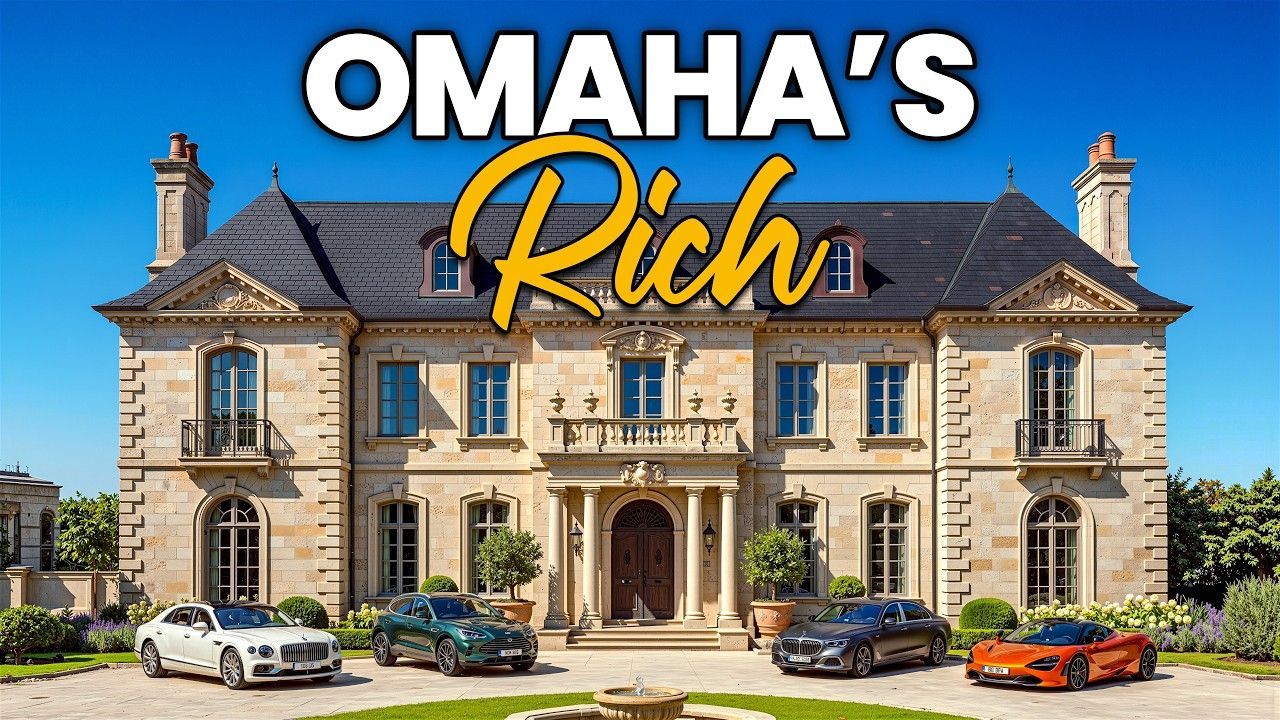
The most expensive neighborhoods in Omaha reveal how history, privacy, and lifestyle shape value far more than square footage alone. From century-old mansions along tree-lined streets to gated lakeside retreats and established suburban enclaves, these neighborhoods attract buyers who want pedigree, space, and a market where relationships matter as much as listings. This guide breaks down the character, pricing signals, and purchase tactics you need to know if you are targeting the most expensive neighborhoods in Omaha.
Table of Contents
- Introduction
- Fairacres — Omaha's Old-Money Enclave
- Regency — Omaha's Original Masterplanned Luxury Community
- Linden Estates — Exclusivity, Scale, and Privacy
- Gold Coast — Historic Mansions and Midtown Lifestyle
- Dundee–Happy Hollow — Walkability, Parks, and Cultural Prestige
- How to Compete for Homes in the Most Expensive Neighborhoods in Omaha
- Common Pitfalls and How to Avoid Them
- Which Omaha Neighborhoods Offer Turnkey Luxury Homes vs. Renovation Opportunities?
- High-End Home Prices in Omaha: What to Expect at the Top of the Market
- Final Considerations When Buying in Omaha’s Most Expensive Neighborhoods
- FAQs About the Most Expensive Neighborhoods in Omaha, NE
- Next Steps
Introduction
When people talk about the most expensive neighborhoods in Omaha they usually mean places with one or more of the following qualities: legacy architecture, oversized lots, extreme privacy, or a lifestyle amenity such as a private lake or tennis club. Those factors create scarcity. Scarcity creates a low velocity market where homes can trade infrequently and often off market. That dynamic rewards buyers who prepare in advance and work through local networks rather than relying on public listings alone.
Across these enclaves you will see consistent themes:
- Low turnover — Only a handful of true trophy properties come up each year.
- Off-market activity — Private introductions, builder relationships, and agent networks drive many transactions.
- Specialized due diligence — Historic masonry, slate roofs, custom systems, and shoreline issues demand expert inspections.
- Pricing is case-by-case — Comps can be misleading in a micro market. Condition, pedigree, and location often outweigh simple price per square foot.
Fairacres — Omaha's Old-Money Enclave
Fairacres is one of the signature entries when listing the most expensive neighborhoods in Omaha. Nestled just south of Dundee and west of Midtown, its boundaries roughly run from Underwood Avenue on the north to Dodge Street on the south and between 67th and 69th Street east to west. Drive down Fairacres Road and the neighborhood’s pedigree is immediate: original brick paving, deep setbacks, sweeping lawns, and mature trees give it a distinctly private, estate-like atmosphere.
Fairacres is formally recognized on the National Register of Historic Places. That recognition preserves architectural integrity and also elevates the address value. The median sale price here sits around $1.3 million as of July 2025, and the transcript referenced about $33 per square foot — a reminder that low-velocity markets often produce skewed statistics. There were just two sales in a given month, so averages and medians can be driven by the particulars of each closing.
Buyers drawn to Fairacres are buying more than a house; they are buying stewardship of history. Expect to bring in specialized inspectors for masonry, original wood windows, and slate or tile roofs. Budgeting for ongoing restoration and system upgrades is crucial. Another premium to watch for is Fairacres Road frontage itself. Properties on that original brick often command a 5 to 10 percent premium because the street carries prestige that matters to collectors and legacy buyers.
Regency — Omaha's Original Masterplanned Luxury Community
Regency is frequently listed among the most expensive neighborhoods in Omaha for buyers who want lifestyle and location. Created in the late 1960s and 1970s, the neighborhood was laid out around amenities rather than just lot lines: a private lake, a tennis club, trails, and easy access to shopping centers like One Pacific Place. Located east of I-680 and south of Dodge, Regency offers the rare combination of central convenience and a park-like, secluded setting.
Homes here were typically custom-built from the 1970s through the 1990s and many have been updated in recent years. As of July 2025 the median sale price hovered near $795,000 with roughly $226 per square foot. Interior modernization matters: buyers will often subtract the cost of a major remodel if a home retains an original 1970s floor plan, but turnkey, modernized Regency properties command a measurable premium.
Access and competition in Regency are intense. Turnover is limited and the best properties sometimes trade through private channels. For buyers seeking one of the most expensive neighborhoods in Omaha, being prepared with financing, inspection teams, and strong local agent relationships is non-negotiable.
Linden Estates — Exclusivity, Scale, and Privacy
Linden Estates represents the suburban extreme of the most expensive neighborhoods in Omaha: large custom homes on oversized lots, extensive landscaping, and a gated, quiet character. Developed primarily in the 1980s and 1990s and limited to around 120 homes, Linden Estates sits in central West Omaha just north of West Dodge Road and offers direct access to employment corridors while maintaining the feeling of a private retreat.
Typical homes range from about 5,000 to 10,000 square feet or more and span Mediterranean, modern, and classic traditional styles. Mature trees and expansive privacy separate Linden Estates from newer subdivisions. As of July 2025 the median sale price sat near $1.23 million with an average of about $235 per square foot. Top-end estates often sell in the $2 million to $3 million range, placing Linden Estates among Omaha’s priciest neighborhoods.
Buyers in Linden Estates prioritize lot size and privacy over proximity to walkable amenities. The community is rarefied and listings are infrequent. Off-market sales and agent networks play a significant role in which properties reach the open market. Architectural features that command premiums include timeless custom design, outdoor living spaces, pools, guest houses, and high-end finishes.
Gold Coast — Historic Mansions and Midtown Lifestyle
The Gold Coast is one of the most culturally and architecturally significant of the most expensive neighborhoods in Omaha. Centered near 38th Street and spanning Midtown, it was the city’s original millionaires row during the late 1800s and early 1900s. Here you will find revival-style mansions, ornate apartment buildings, and landmark properties such as Joslyn Castle that anchor the neighborhood’s identity.
Gold Coast offers a different flavor of luxury than gated suburbs. It delivers heritage, architecture, and Midtown walkability. Location places you minutes from the Blackstone District, the Med Center, and cultural institutions. As of July 2025 median sales in the neighborhood around the Joslyn Castle area registered at about $253,000 and near $147 per square foot. Those numbers are misleading because the median is pulled down by smaller homes and condos. When a true trophy mansion becomes available, it typically sells well above the median, often pushing into the million-dollar range, and frequently trades privately.
Historic ownership comes with specific obligations: stonework, tuckpointing, electrical and HVAC retrofits, and roof restoration can be costly. Comping a historic mansion requires a case-by-case evaluation focusing on pedigree and condition rather than relying on neighborhood medians.
Dundee–Happy Hollow — Walkability, Parks, and Cultural Prestige
Dundee and Happy Hollow blend small-town walkability with rich architectural variety, making them essential when discussing the most expensive neighborhoods in Omaha for buyers who value community. Originally a streetcar suburb, the area developed between the late 1800s and mid-1900s and today features Craftsman bungalows, Tudor Revival houses, Prairie School designs, and larger estates near Memorial Park.
The Dundee–Happy Hollow Historic District spans from Harney Street in the south to Hamilton Street in the north and from 46th Street east to Happy Hollow Boulevard west. At its core is Dundee Village, a walkable collection of shops, cafés, and local services, with Memorial Park serving as a neighborhood gathering place.
Market data as of July 2025 show a median sale price near $310,000 with about $240 per square foot, and homes averaging just nine days on market. Those quick sales reflect strong demand and diverse housing stock. Larger restored properties, particularly those on Happy Hollow Boulevard near Memorial Park, regularly sell for between $800,000 and $1 million+.
Dundee’s value proposition is different from the secluded lots of Linden Estates. Here buyers trade square footage for cultural life, walkability, and historic charm. Warren Buffett’s longtime residence in the neighborhood has reinforced Dundee’s reputation, but long-term demand tracks to the area’s architecture and lifestyle rather than celebrity alone.
How to Compete for Homes in the Most Expensive Neighborhoods in Omaha
Buying in any of the most expensive neighborhoods in Omaha requires planning and a strategy beyond a standard agent search. These micro markets are often relationship-driven and favor buyers who can demonstrate immediate readiness and specialized knowledge.
Here are practical steps to prepare:
- Obtain proof of funds and pre-underwriting — Sellers in low-turnover neighborhoods often require financials before granting showings. Have bank statements, a pre-underwriting letter, or proof of cash available.
- Prearrange inspections — Retain inspectors experienced with historic masonry, slate roofs, tree-lined properties, or lakefront challenges. Quick access to boutique inspectors gives you an edge when timing matters.
- Secure insurance quotes when needed — For lakefront homes or older estates with unique features, having an insurance quote ready demonstrates seriousness and speeds closing.
- Build local relationships — The best opportunities often circulate through agent networks and private introductions. Working with local agents who have established relationships increases your chances of seeing listings off market.
- Calibrate your offer strategy — In these neighborhoods, the highest offer is not always the winning offer. Clean terms, fast due diligence periods, and proof of funds can beat marginally higher bids with contingencies.
If you have questions or want help targeting any of these neighborhoods—private tours, off‑market intel, or introductions to local inspectors and lenders—reach out. Call or text 402-490-6771
Common Pitfalls and How to Avoid Them
Out-of-town buyers and buyers unfamiliar with micro-market dynamics make predictable errors. Avoid these mistakes:
- Assuming comps are reliable — Low volume means that median and price-per-square-foot figures often fail to reflect rare trophy sales. Evaluate each property individually.
- Underestimating renovation costs — Century-old homes require restoration budgets, not just cosmetic updates. Include contingency for specialized repairs.
- Showing up without documentation — Sellers in the most expensive neighborhoods in Omaha expect pre-qualification and proof of funds. Be prepared before stepping through the door.
- Neglecting off-market channels — Relying only on public listings will make you miss many of the best properties.
Which Omaha Neighborhoods Offer Turnkey Luxury Homes vs. Renovation Opportunities?
Preferences vary by enclave. Historic districts such as Fairacres and the Gold Coast often attract buyers who accept renovation as part of ownership. The focus there is on preservation and restoration. By contrast, communities like Regency and Linden Estates typically reward move-in-ready homes. Buyers in those suburbs pay premiums for modernized interiors and contemporary floor plans.
View Homes For Sale in Omaha, NE
High-End Home Prices in Omaha: What to Expect at the Top of the Market
By national standards Omaha’s luxury ceiling is modest. Even top trophy estates rarely exceed the multi-million-dollar levels seen in coastal markets. Still, within a local context, properties in the most expensive neighborhoods in Omaha represent the pinnacle of scarcity and prestige. In Linden Estates and other top enclaves, $2 million to $3 million homes are widely regarded as trophy properties. In Midtown and historic districts, true mansions command premium valuations that reflect unique provenance rather than simple price-per-square-foot comparisons.
Final Considerations When Buying in Omaha’s Most Expensive Neighborhoods
Choosing one of the most expensive neighborhoods in Omaha is as much about lifestyle as it is about dollars and cents. Decide whether you value:
- Heritage and architecture with Midtown convenience
- Park-like, amenity-driven lifestyle with Regency
- Space, scale, and privacy with Linden Estates
- Walkability, community, and cultural identity with Dundee–Happy Hollow
Once you know what you value, align your team and your documents accordingly. Low-velocity markets reward preparedness: have financials ready, inspection experts on speed dial, and an agent network that can uncover off-market options.
FAQs About the Most Expensive Neighborhoods in Omaha, NE
What exactly defines the most expensive neighborhoods in Omaha?
They are neighborhoods where history, privacy, oversized lots, or exclusive lifestyle amenities concentrate value. These areas often have low turnover, frequent off-market sales, and buyer demand driven by prestige and scarcity rather than purely by square footage.
How do median prices reflect the market in these neighborhoods?
Medians can be misleading. In low-volume markets a few sales can skew the numbers. Trophy properties frequently trade above neighborhood medians, and many desirable homes never hit public listings. Case-by-case valuation that considers pedigree and condition is essential.
Do many homes sell off market in these neighborhoods?
Yes. Off-market introductions are common. The best opportunities often surface through agent relationships, private introductions, or builder networks rather than on public websites.
What documents should a buyer have ready before requesting a showing?
Proof of funds or a lender pre-underwriting letter, and for specialized properties an insurance quote if applicable. Sellers in these enclaves will often request financial verification before allowing showings.
How should I budget for maintenance on historic homes?
Budget for restoration-level items: roofing (slate or tile), masonry and tuckpointing, updated HVAC and electrical, and preservation of original windows and woodwork. Use specialists to estimate realistic costs before committing.
Which neighborhoods are best for buyers who want move-in readiness?
Regency and Linden Estates generally favor move-in-ready homes with updated interiors. Fairacres and the Gold Coast more often contain properties that require or invite historic restoration.
How rare are multi-million-dollar homes in Omaha?
Multi-million-dollar homes exist but are relatively scarce compared to larger coastal markets. In Linden Estates and a handful of trophy properties across Omaha, homes can reach $2 million to $3 million, representing local market peaks.
Can out-of-town buyers compete effectively?
Yes, if they prepare. The winning out-of-town buyers come with pre-underwriting, local inspection teams, proof of funds, and an agent who has established relationships in these neighborhoods.
Next Steps
If your goal is to pursue any of the most expensive neighborhoods in Omaha, start by clarifying the lifestyle you want and assembling a team that includes a local agent, specialized inspectors, and financial documentation. The neighborhoods discussed here each offer a distinct form of luxury — whether you seek historic pedigree, central walkability, or suburban scale and privacy. In this market, preparation, local connections, and a realistic renovation plan are often the difference between getting the home you want and missing the opportunity entirely.
Read More: Pros and Cons of Living in Omaha in 2026: A Practical Guide