If you are tracking Omaha home prices, the short story is this: prices have stabilized, inventory is up, and interest rates are moving in a more favorable direction. But local nuance matters more than headlines. The Omaha market responds to supply, demand, price levels, and mortgage rates at the local level. Understanding the numbers for Douglas and Sarpy counties will give you the real picture of where Omaha home prices are heading and what that means for buyers and sellers in 2026.
Table of Contents
- Why local data matters for Omaha home prices
- Omaha Inventory snapshot
- Price snapshot: stability, not a crash
- Mortgage rates and buyer purchasing power
- Sales activity, days on market, and months of supply in Omaha
- Other local and economic indicators that affect Omaha home prices
- Practical advice for Omaha buyers and sellers in 2026
- What to watch next for Omaha home prices
- Putting the data into a decision framework
- Frequently asked questions
- Final perspective
Why local data matters for Omaha home prices
National conversations about interest rate forecasts, institutional buyers, or policy changes generate noise. Real estate is local. Omaha home prices are driven by what happens in neighborhoods, employment trends, local construction, and buyer demand within Douglas and Sarpy counties. A national narrative can be misleading if it doesn’t match the local supply and demand balance.
Think of it this way: supply up and demand down tends to push price pressure downward. Supply down and demand up pushes prices upward. Right now, one of those factors—supply—is shifting in Omaha, and that affects Omaha home prices directly.
Omaha Inventory snapshot
Current active inventory in Douglas and Sarpy counties stands at 1,989 homes. That is an increase of 9.3% compared to 2025 and the highest active count since December 2015. More homes on the market gives buyers more choices, more negotiation leverage, and fewer multiple-offer scenarios.
New construction vs existing homes
- New construction active listings: 958 (up 1.8% vs 2025). Note that new construction inventory can be misleading. Many listings represent homes in early construction stages or builder marketing inventory that may already be under contract.
- Existing homes active listings: 1,030 (up 17.2% vs 2025). This is where most buyer choice comes from and where increased competition has the clearest impact on Omaha home prices.
More existing inventory typically stabilizes prices. For sellers, it means more competition and greater importance on correct pricing and condition. Overpricing is the single biggest reason homes do not sell; marketing cannot compensate for an inflated price.
Price snapshot: stability, not a crash
The median closed sales price for Douglas and Sarpy counties is currently $315,000, essentially flat compared to 2025. In short, Omaha home prices have stabilized rather than collapsed. Stability is healthy after periods of rapid appreciation or volatility.
Breaking the median down:
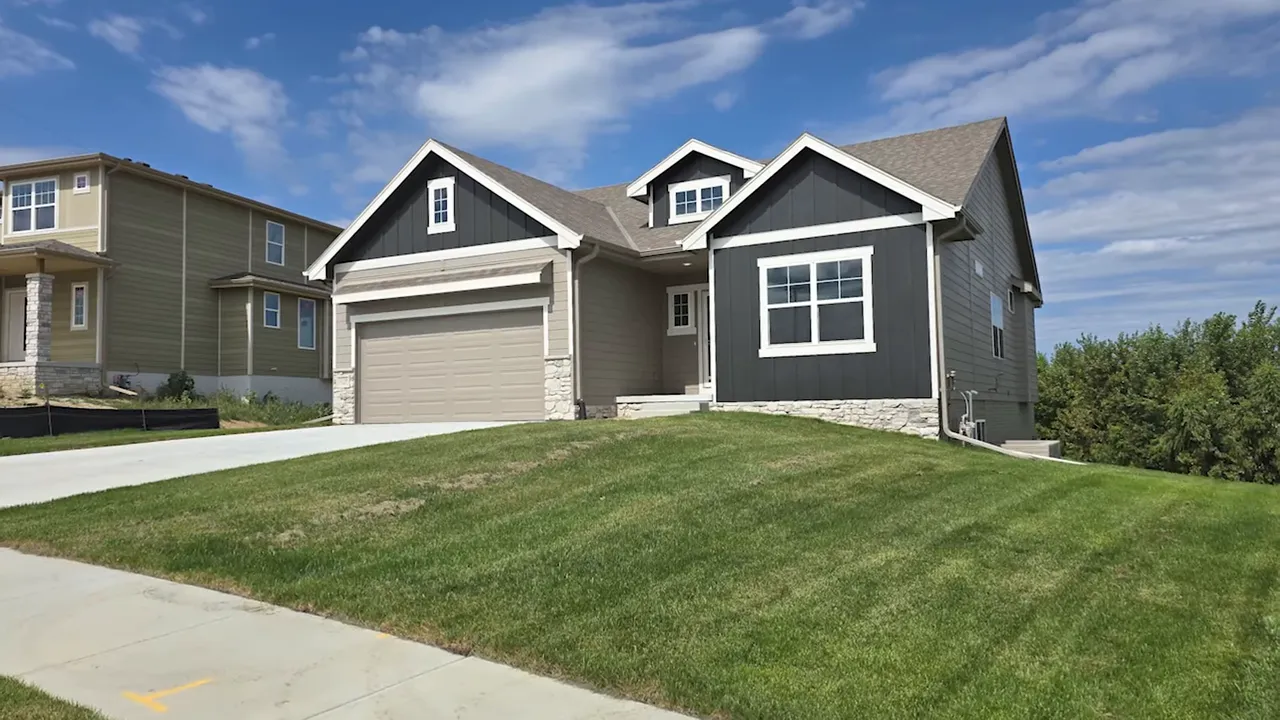
- New construction median closed price: about $431,480(up 6.4% vs 2025). Builders are adjusting pricing to market conditions.
- Existing homes median closed price: $295,000(up 0.7% vs 2025).
A 12-month rolling view shows new construction peaked mid-2023 and has eased, while existing-home prices are edging up slowly. That pattern suggests a market rebalancing rather than a dramatic downturn.
Why concessions matter for the true price
One subtle but important factor that doesn’t always show up in median price charts is seller concessions. When a seller pays a buyer's closing costs, the gross sale price can overstate the effective dollars changing hands.
Example: A listed sale at $300,000 with a seller-paid concession of $5,000 results in a net of $295,000. The recorded median may show $300,000, but the buyer effectively paid less out of pocket. Concessions boost affordability for buyers and can moderate reported price growth for Omaha home prices when they become common.
Mortgage rates and buyer purchasing power
Interest rates are a major driver of buyer demand and therefore Omaha home prices. Right now, typical 30-year conventional rates are hovering around 6%. That is materially lower than peaks in recent years and the lowest rates in roughly three years. When rates fall, buying power increases and more sidelined buyers re-enter the market.
A useful technical point is the spread—the gap between the US Treasury yield and average 30-year fixed mortgage rates. The spread has tightened recently, which supports lower mortgage rates even if Treasury yields move. A tighter spread is a reason many observers are optimistic about housing activity in 2026.
Mortgage applications and early signs of demand
Mortgage purchase applications are up to start 2026, indicating renewed buyer interest. More purchase applications typically translate into more closed sales and ultimately put upward pressure on Omaha home prices if inventory growth does not keep pace.
Sales activity, days on market, and months of supply in Omaha
Closed sales and market velocity are important for understanding price momentum.
- Closed sales in December: 801 (up 7.5% vs 2025). Increased sales are a positive sign for market health.
- New construction sales: down 3.2% year-over-year.
- Existing sales: up 9.7% year-over-year.
- Median days on market for existing homes: 13 days. That is still a quick turnaround, though longer than the hottest seller markets. Longer days favor buyers’ negotiating position.
- Months of supply: 2.2 months. Under 3 months is typically considered a seller’s market. 4–6 months is balanced, and 6+ months favors buyers. At 2.2 months, Omaha still leans seller-favored, but rising inventory is pushing the market toward balance.
Other local and economic indicators that affect Omaha home prices
A few additional numbers worth monitoring:
- Lumber prices: Around $537 per 1,000 board feet, relatively stable over the past three years. Stable material costs help builders maintain predictable pricing for new construction, which filters into Omaha home prices for new homes.
- Inflation: Running near 2.7%. The Federal Reserve targets around 2%. Lower inflation helps keep interest rates from spiking, which supports affordability.
- GDP and recession risk: The economy showed about 2.3% growth in the third quarter of 2025. A recession is defined as two consecutive quarters of negative growth, which is not the current situation. Economic growth supports employment and housing demand in Omaha.
- Local construction and cranes: Visible construction activity and new projects are good signals. Cranes indicate job creation, investment, and long-term demand for housing in Omaha, all positive for Omaha home prices over time.
Practical advice for Omaha buyers and sellers in 2026
Advice for buyers
- If you are financially ready and plan to stay in a property for at least 5–7 years, moving now can make sense. That time horizon helps ride out short-term rate or price volatility.
- Keep reserves for unexpected repairs and closing costs. Concessions do help, but lenders and underwriting still require buffers.
- Shop mortgage rates and consider locking when rates are attractive for your situation. A lower rate increases purchasing power without changing your monthly budget.
- Focus on neighborhoods and property condition. With more inventory, buyers can be selective and use inspections to control risk.
Advice for sellers
- Price to the market and price to condition. The market is less forgiving of overpriced homes than it was at the peak. Marketing cannot overcome a price that buyers consider too high.
- Handle obvious repairs before listing. Visible deferred maintenance triggers buyer doubt about unseen issues and reduces offers.
- Understand concessions. Offering credits for closing costs can widen your buyer pool, but recognize how concessions affect your net proceeds.
- Be realistic about timing. Expect slightly longer marketing windows and more negotiation. Position your home as the best value in its price band.
What to watch next for Omaha home prices
- Inventory trends: If inventory growth slows or reverses while purchase applications continue to climb, prices could resume upward pressure.
- Mortgage rate moves: Even modest drops from 6% to the high 5s can meaningfully boost buyer affordability and demand.
- Local job news: Major employer expansions or contractions materially influence Omaha home prices. New employers and job growth support price gains; large layoffs can do the opposite.
- Concession frequency: An increase in seller-paid closing costs can mask true price pressure. Track net proceeds when possible.
- New construction closings and deliveries: If builders slow deliveries, existing-home demand could absorb inventory and push prices higher.
Putting the data into a decision framework
Deciding whether to buy or sell is a personal choice that blends financial readiness, life timing, and market conditions. Use a simple checklist:
- Do you have stable income and emergency reserves? If yes, you can consider buying.
- Can you commit to 5–7 years in the property? That reduces risk from short-term price or rate volatility.
- Is the property priced competitively for its condition and neighborhood? If yes and you are selling, listing now can capture active buyer demand.
- Are interest rates and your mortgage terms acceptable for your monthly budget? If yes, affordability is clearer.
Follow these elements rather than trying to time the market perfectly. Markets move; timing attempts often cost more than acting prudently.
Frequently asked questions
Are Omaha home prices falling?
No. Omaha home prices are largely stable. The median closed price in Douglas and Sarpy counties sits around $315,000, essentially flat year-over-year. Increased inventory has moderated upward pressure, but the market is not experiencing a broad price collapse.
Is now a good time to buy in Omaha?
If you are financially ready, plan to live in the home for at least 5 to 7 years, and have reserves, now can be a good time. Interest rates have come down from their recent peaks, mortgage applications are increasing, and inventory gives buyers more negotiating power. Make sure your financing is in order before making offers.
Should sellers lower their price because inventory is up?
Inventory increases mean more competition. Sellers should price to condition and market comparables. That does not always mean lowering price below fair market value, but it does mean being realistic. Proper preparation, minor repairs, and accurate pricing attract better offers.
How much do concessions affect reported prices?
Concessions reduce a buyer's out-of-pocket costs and lower the effective net proceeds to the seller. A $5,000 seller concession on a $300,000 sale makes the net equivalent $295,000. Recorded median sale prices may not fully reflect concessions, so track net proceeds where possible to understand real price trends.
What will move Omaha home prices the most in 2026?
Three factors matter most: mortgage rates, inventory changes, and local job growth. A sustained drop in rates or quick absorption of inventory would push prices up. Conversely, rising inventory paired with stagnant demand would create downward pressure.
How long are homes taking to sell in Omaha?
Median days on market for existing homes is about 13 days. That indicates a reasonably active market but slower than hyper-competitive peaks. Expect quick showings in desirable price ranges and longer marketing times in more competitive bands.
Final perspective
Omaha home prices today are the product of a local market that is balancing more inventory against steady demand and improving mortgage conditions. Prices are flat overall, with nuanced movement between new construction and existing homes. For buyers, this environment provides more choices and negotiating power. For sellers, accurate pricing and strong condition are essential to winning offers.
Watch inventory trends, mortgage rates, and local employment news. Those signals will tell you more about where Omaha home prices are headed than national headlines. If you want help running numbers for a specific neighborhood or property, get detailed, localized information to support your decision.